

ADVERTISEMENT

Sweet memories of our vanishing salt beds

Why the country's salt industry needs a major comeback

Published Mar 21, 2024 02:17 pm

For many generations, my family never had to buy salt. Like almost everyone in our barrio, Pulanglupa, we were given free salt for our household needs by neighbors who owned the hundreds of salt beds, which were landmarks as famous as our town’s bamboo organ. Well, not exactly free. We had to work for it.

Salt harvesting coincided with summer vacation. Helping around the salt beds gave children something to do besides kite flying, fishing, fruit picking, and hunting quail in freshly harvested rice fields. We helped our playmates' fathers and uncles perform four major tasks First, we filled up the saltbeds with sea water that had been exposed to the summer sun in shallow ponds to increase salinity. Called pagtatasik, it was hard on the back and waist. By noontime, a sheet of solid salt would have formed on the surface and had to be broken into grains by slapping with bamboo poles. This had to be repeated at mid-afternoon when the sun was hotter than usual.

At sunset, it was time to scrape the grains of salt from the mat of broken pottery laid down like mosaic artwork. The process is called pagkayod, Tagalog for scrape. Each child had a wood-and-bamboo scraper to gather the salt grains into pyramid- like piles, which would allow the wet salt to drain overnight and be ready to transfer to the main kamalig (store room) to await buyers. 

At the end of each day, we kids were each rewarded with merienda and a kilo of salt. Our parents al- lowed us to save the salt in sacks. We each had several sacks of salt by the end of summer. The rainy season brought salt buyers to our barrio. Our salt stocks were sold just in time for the Christmas holiday season when we had to spend our own
savings on carnival rides, chocolates, and gifts for our friends.

During the rainy season, we had other reasons to hang around the salt beds, which by then would be under several feet of brackish water and teeming with bangus, tilapia, prawns, and crab, the only fish we were not allowed to catch. No problem, there was plenty of banak (mullet), bidbid (ladyfish), talimusak (goby), and the seasonal talangka (small crabs).
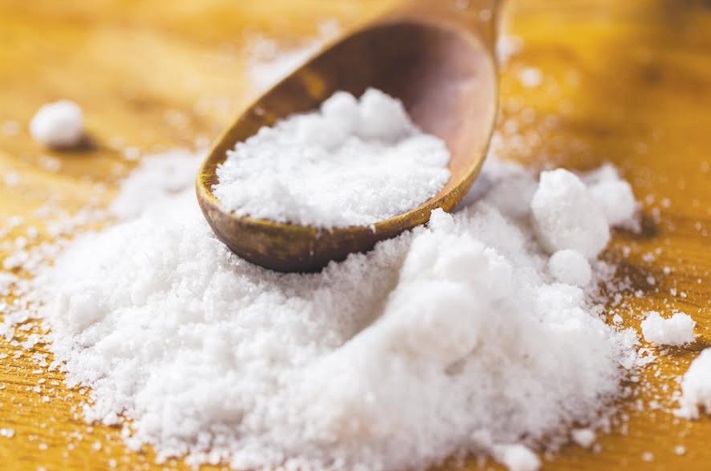
Sugar.jpg
SALTY ESSENTIALS. To meet the demands of salt consumption nationwide, over 850,000 metric tons of salt is imported each year

A very special treat for me was oysters, which grew along the walls of the concrete kantarilya (dike) that controlled the water allowed into the ponds from the Zapote River. 

Sadly, all of these sweet memories are now just that. The salt beds are gone, replaced by high-rise con- dominium buildings and ugly steel-and-concrete commercial units. The Zapote River is a silted muddy shadow of what it used to be. And the salt beds? Now and then, on my rare visits to my hometown, I pick up a few broken pieces of brown clay pots, the kind that used to line the salt beds. No amount of legislation can bring back the “irasan” of my youth. 

But there is hope for the local salt industry. President Ferdinand R. Marcos Jr. has signed into law the “Philippine Salt Industry Develop ment Act,” which aims to strengthen and revitalize the salt industry in the oysters, which grew along the walls of the concrete kantarilya (dike) that controlled the water allowed into the ponds from the Zapote River.

The law signed on March 11 stated that appropriate technology and research and adequate financial, production, marketing, and other support services will be provided to salt farmers to revitalize the salt industry, attain increased production, achieve salt-sufficiency, and become a next exporter of salt.

A Philippine Salt Industry Development Roadmap will be formulated and established to ensure the attainment of the objectives of the law. A “Salt Council” will also be created to ensure the unified and integrated implementation of the salt roadmap and accelerate the modernization and industrialization of the Philippine salt industry.

Salt, a basic commodity, is a dying local industry in the Philippines and the country is forced to spend precious dollars to import 90 percent of our needs, at least 850,000 metric tons every year. The Philippines only
produces a scant 100,000 metric tons of local salt. 

A major culprit is the ASIN law that mandated consumable salt must be iodized and made it illegal to sell uniodized salt in any form. Columnist Boo Chanco points out that the country only needs to dedicate less than one percent of the country’s shoreline to genuine salt-making to get rid of all of our imported salt.

Sixty percent of salt is used for cooking our food and finds its way as table salt and as a mix for seasonings but it has more industrial applications in the making of plastics, paper, coconut fertilizer, ice plant ingredients, etc. In fact, there are over 1,000 uses of salt.

Senate agriculture, food, and agrarian reform committee chairperson Cynthia Villar said the Philippines was producing around 240,000 metric tons of salt annually in the 1960s and the 1970s. The ASIN Law passed in 1995, Villar said, became a deterrent to our salt industry's development.

Related Tags

Sol Vanzi MB Lifestyle Online Health and Wellbeing
ADVERTISEMENT
.most-popular .layout-ratio{ padding-bottom: 79.13%; } @media (min-width: 768px) and (max-width: 1024px) { .widget-title { font-size: 15px !important; } }

{{ articles_filter_1561_widget.title }}

.most-popular .layout-ratio{ padding-bottom: 79.13%; } @media (min-width: 768px) and (max-width: 1024px) { .widget-title { font-size: 15px !important; } }

{{ articles_filter_1562_widget.title }}

.most-popular .layout-ratio{ padding-bottom: 79.13%; } @media (min-width: 768px) and (max-width: 1024px) { .widget-title { font-size: 15px !important; } }

{{ articles_filter_1563_widget.title }}

{{ articles_filter_1564_widget.title }}

.mb-article-details { position: relative; } .mb-article-details .article-body-preview, .mb-article-details .article-body-summary{ font-size: 17px; line-height: 30px; font-family: "Libre Caslon Text", serif; color: #000; } .mb-article-details .article-body-preview iframe , .mb-article-details .article-body-summary iframe{ width: 100%; margin: auto; } .read-more-background { background: linear-gradient(180deg, color(display-p3 1.000 1.000 1.000 / 0) 13.75%, color(display-p3 1.000 1.000 1.000 / 0.8) 30.79%, color(display-p3 1.000 1.000 1.000) 72.5%); position: absolute; height: 200px; width: 100%; bottom: 0; display: flex; justify-content: center; align-items: center; padding: 0; } .read-more-background a{ color: #000; } .read-more-btn { padding: 17px 45px; font-family: Inter; font-weight: 700; font-size: 18px; line-height: 16px; text-align: center; vertical-align: middle; border: 1px solid black; background-color: white; } .hidden { display: none; }
function initializeAllSwipers() { // Get all hidden inputs with cms_article_id document.querySelectorAll('[id^="cms_article_id_"]').forEach(function (input) { const cmsArticleId = input.value; const articleSelector = '#article-' + cmsArticleId + ' .body_images'; const swiperElement = document.querySelector(articleSelector); if (swiperElement && !swiperElement.classList.contains('swiper-initialized')) { new Swiper(articleSelector, { loop: true, pagination: false, navigation: { nextEl: '#article-' + cmsArticleId + ' .swiper-button-next', prevEl: '#article-' + cmsArticleId + ' .swiper-button-prev', }, }); } }); } setTimeout(initializeAllSwipers, 3000); const intersectionObserver = new IntersectionObserver( (entries) => { entries.forEach((entry) => { if (entry.isIntersecting) { const newUrl = entry.target.getAttribute("data-url"); if (newUrl) { history.pushState(null, null, newUrl); let article = entry.target; // Extract metadata const author = article.querySelector('.author-section').textContent.replace('By', '').trim(); const section = article.querySelector('.section-info ').textContent.replace(' ', ' '); const title = article.querySelector('.article-title h1').textContent; // Parse URL for Chartbeat path format const parsedUrl = new URL(newUrl, window.location.origin); const cleanUrl = parsedUrl.host + parsedUrl.pathname; // Update Chartbeat configuration if (typeof window._sf_async_config !== 'undefined') { window._sf_async_config.path = cleanUrl; window._sf_async_config.sections = section; window._sf_async_config.authors = author; } // Track virtual page view with Chartbeat if (typeof pSUPERFLY !== 'undefined' && typeof pSUPERFLY.virtualPage === 'function') { try { pSUPERFLY.virtualPage({ path: cleanUrl, title: title, sections: section, authors: author }); } catch (error) { console.error('ping error', error); } } // Optional: Update document title if (title && title !== document.title) { document.title = title; } } } }); }, { threshold: 0.1 } ); function showArticleBody(button) { const article = button.closest("article"); const summary = article.querySelector(".article-body-summary"); const body = article.querySelector(".article-body-preview"); const readMoreSection = article.querySelector(".read-more-background"); // Hide summary and read-more section summary.style.display = "none"; readMoreSection.style.display = "none"; // Show the full article body body.classList.remove("hidden"); } document.addEventListener("DOMContentLoaded", () => { let loadCount = 0; // Track how many times articles are loaded const offset = [1, 2, 3, 4, 5, 6, 7, 8, 9, 10]; // Offset values const currentUrl = window.location.pathname.substring(1); let isLoading = false; // Prevent multiple calls if (!currentUrl) { console.log("Current URL is invalid."); return; } const sentinel = document.getElementById("load-more-sentinel"); if (!sentinel) { console.log("Sentinel element not found."); return; } function isSentinelVisible() { const rect = sentinel.getBoundingClientRect(); return ( rect.top < window.innerHeight && rect.bottom >= 0 ); } function onScroll() { if (isLoading) return; if (isSentinelVisible()) { if (loadCount >= offset.length) { console.log("Maximum load attempts reached."); window.removeEventListener("scroll", onScroll); return; } isLoading = true; const currentOffset = offset[loadCount]; window.loadMoreItems().then(() => { let article = document.querySelector('#widget_1690 > div:nth-last-of-type(2) article'); intersectionObserver.observe(article) loadCount++; }).catch(error => { console.error("Error loading more items:", error); }).finally(() => { isLoading = false; }); } } window.addEventListener("scroll", onScroll); });

Sign up by email to receive news.