






 Philippines
National
Pinoy pride: Japanese astronaut carries out 2 Filipino-designed experiments aboard ISS
Philippines
National
Pinoy pride: Japanese astronaut carries out 2 Filipino-designed experiments aboard ISS
Pinoy pride: Japanese astronaut carries out 2 Filipino-designed experiments aboard ISS
By Sonny Daanoy


The Philippine Space Agency (PhilSA) has confirmed the successful execution of two Filipino-conceptualized experiments aboard the International Space Station (ISS).

PhilSA in a statement on March 19 said the experiments "Oloid's Movement in Microgravity" and "The Effectivity of Elastic Resistance Band Exercise when performed in Zero-Gravity" were conducted by Japan Aerospace Exploration Agency (JAXA) astronaut Satoshi Furukawa in the Kibo module of the ISS last February as part of the 2023 Asian Try Zero-G (ATZG) initiative.
In August 2023, the agency announced the selection of the two experiment proposals as part of the 2023 ATZG program organized by JAXA.
READ:
https://mb.com.ph/2023/8/9/2-ph-experiments-to-be-performed-aboard-international-space-station
They were among the 14 submissions received from individuals and teams in the Asia-Pacific region.
Experiments
The results of both experiments will be presented during the ATZG-2023 wrap-up session within the year.
The Oloid's Movement in Microgravity experiment, designed by Rizal Technological University (RTU) student Paul Anton Mahinay, involves a geometrically shaped object exhibiting a lemniscate or rhythmically pulsating figure-eight movement.
This movement is facilitated by the object's center of gravity maintaining a constant distance, resulting in smooth and continuous motion.
"However, due to the conditions of microgravity or zero gravity, the movement of the oloid is proposed to be affected," PhilSA said.
The oloid was manufactured through the partnership between PhilSA and the Department of Science and Technology's (DOST) Advanced Manufacturing Center (AMCen).
Using a cutting-edge 3D printing method called optical stereolithography (SLA), they produced the samples to ensure traceability and a portion of them was coated with space-grade quality black paint.
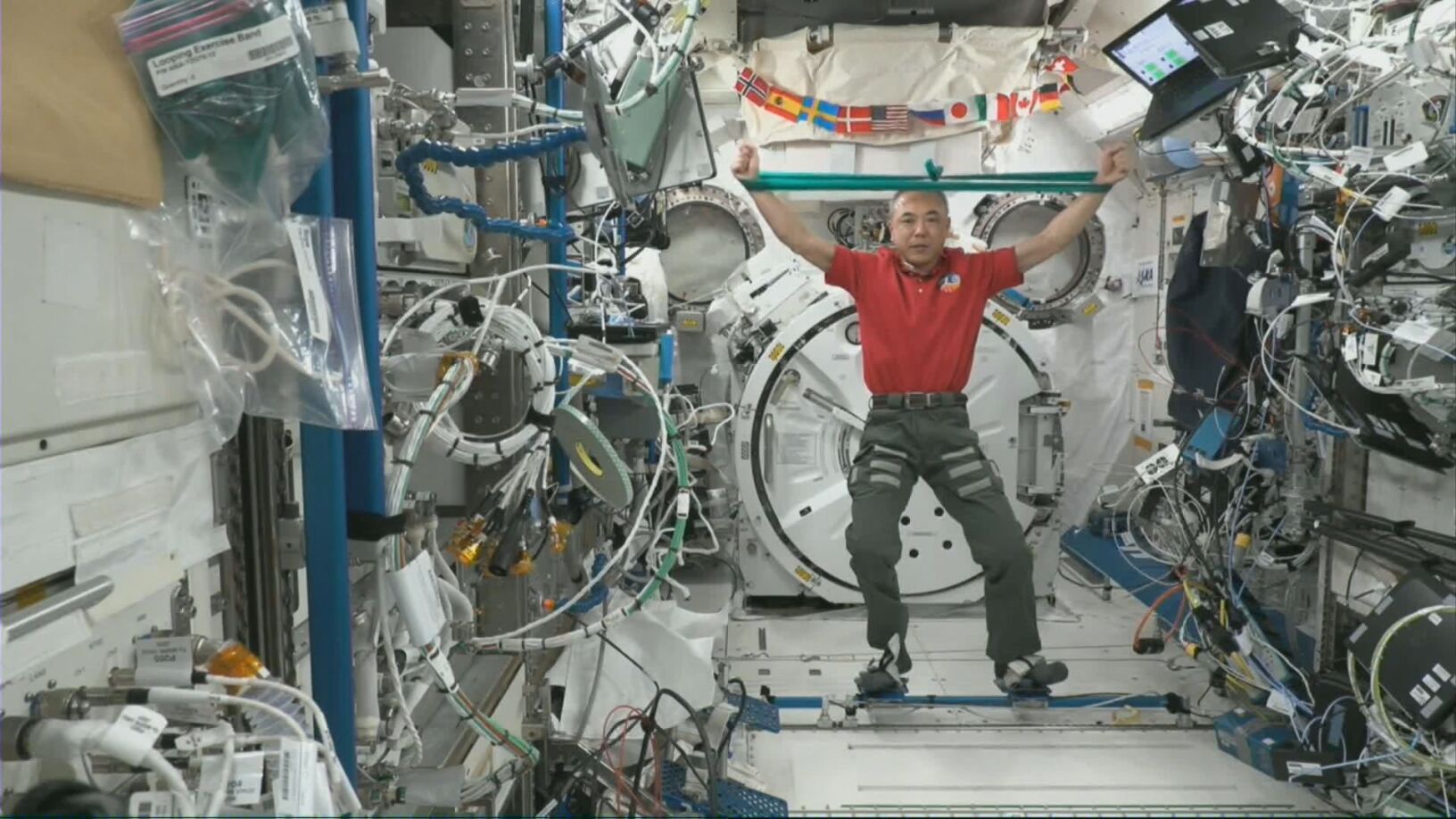
Meanwhile, the Effectivity of Elastic Resistance Band Exercise when performed in Zero-Gravity was proposed by students from the Bataan National High School.
"The exercise involving elastic resistance bands aims to target the back muscles, calf muscles, and quadriceps of astronauts who are prone to atrophy due to microgravity conditions in space," PhilSA said.
The competition attracted more than 245 submissions from 570 participants from various countries across the Asia-Pacific region.