ADVERTISEMENT

Climate change adaptation: Get our act together

Published Feb 8, 2024 11:28 pm

E CARTOON FEB 9, 2024 (1).jpg

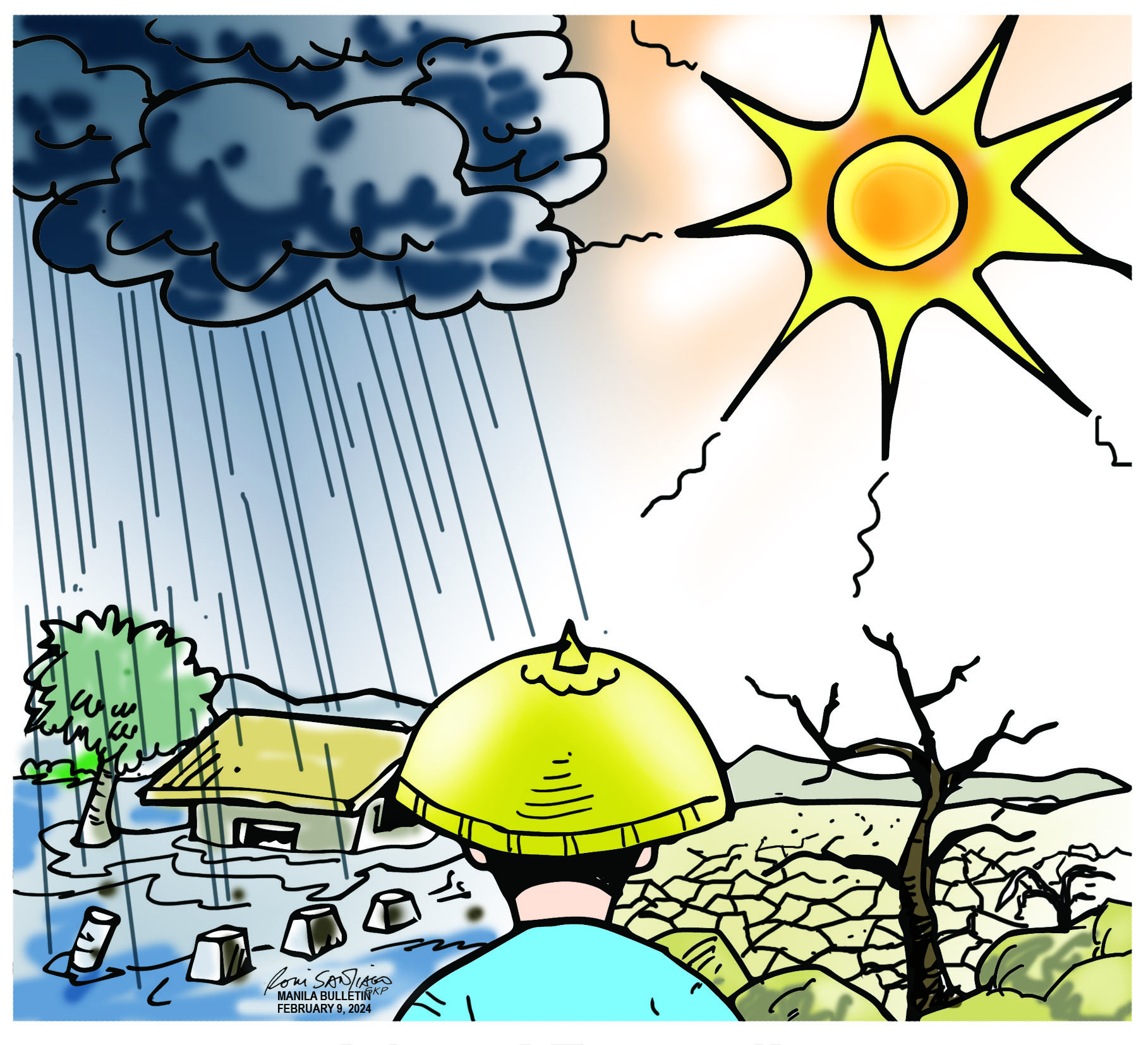
Climate change is real and has impacted the life of everyone in the country and around the world.


We now experience more frequently rising temperatures, shifting rainfall patterns, and  extreme weather — the latest of which were the severe flooding in the Davao Region and massive landslide in Davao de Oro.


All these adverse events point to climate change as the culprit and therefore demands a change in how we conduct ourselves and adapt to this ever-changing environment. It demands the protection, conservation, and the practice of sustainable use of resources.


Climate change calls for a shift in how we design, construct, and manage our infrastructure. We need climate-resilient infrastructures to safeguard lives, livelihoods, and sustainable development programs.  


“We cannot build climate-resilient infrastructure for our children based on the rainfall and temperature records during our parents’ time,” President Ferdinand Marcos Jr. emphasized on Wednesday, Feb, 7. “We must build while bearing in mind the worst the future will bring—of the earth getting hotter, getting wetter — and not on outdated assumptions that no longer apply.”


At the moment, most of the existing infrastructure — be it energy grids, transportation networks, water supply systems, or communication lines — are vulnerable to the ever-changing climate. Rising sea levels threaten coastal cities, intense storms strain power grids, and prolonged droughts affect water availability. We must confront these challenges head-on.


This is why infrastructure planning is vital and should account for future climate scenarios. Government planners and policymakers must assess risks related to extreme weather, sea-level rise, and temperature fluctuations.


New infrastructure projects should be adaptable, allowing adjustments as climate conditions evolve. Bridges and roads, for example, should withstand heavier rainfall and higher temperatures.


Mangroves, wetlands, and forests — which act as mankind’s natural ally — should be protected and restored as these act as buffers against storm surges and erosion. 
It is also necessary to build robust early warning systems to help save lives during extreme events. These systems provide advance notice of floods, cyclones, or heatwaves, allowing communities to prepare and evacuate.


Another vital move is to invest in climate-smart technologies — such as smart grids, green roofs, and flood-resistant materials.


But we can’t realize these without the collaboration of the government and the private sector. It requires a collective effort. 


Governments, businesses, and citizens must prioritize climate-resilient infrastructure. By doing so, we not only protect our physical assets but also contribute to global climate goals. Let us build a future where infrastructure stands strong against the ever-changing environment by adapting, innovating and getting our act together.

Related Tags

Editorial Manila Bulletin
ADVERTISEMENT
.most-popular .layout-ratio{ padding-bottom: 79.13%; } @media (min-width: 768px) and (max-width: 1024px) { .widget-title { font-size: 15px !important; } }

{{ articles_filter_1561_widget.title }}

.most-popular .layout-ratio{ padding-bottom: 79.13%; } @media (min-width: 768px) and (max-width: 1024px) { .widget-title { font-size: 15px !important; } }

{{ articles_filter_1562_widget.title }}

.most-popular .layout-ratio{ padding-bottom: 79.13%; } @media (min-width: 768px) and (max-width: 1024px) { .widget-title { font-size: 15px !important; } }

{{ articles_filter_1563_widget.title }}

{{ articles_filter_1564_widget.title }}

.mb-article-details { position: relative; } .mb-article-details .article-body-preview, .mb-article-details .article-body-summary{ font-size: 17px; line-height: 30px; font-family: "Libre Caslon Text", serif; color: #000; } .mb-article-details .article-body-preview iframe , .mb-article-details .article-body-summary iframe{ width: 100%; margin: auto; } .read-more-background { background: linear-gradient(180deg, color(display-p3 1.000 1.000 1.000 / 0) 13.75%, color(display-p3 1.000 1.000 1.000 / 0.8) 30.79%, color(display-p3 1.000 1.000 1.000) 72.5%); position: absolute; height: 200px; width: 100%; bottom: 0; display: flex; justify-content: center; align-items: center; padding: 0; } .read-more-background a{ color: #000; } .read-more-btn { padding: 17px 45px; font-family: Inter; font-weight: 700; font-size: 18px; line-height: 16px; text-align: center; vertical-align: middle; border: 1px solid black; background-color: white; } .hidden { display: none; }
function initializeAllSwipers() { // Get all hidden inputs with cms_article_id document.querySelectorAll('[id^="cms_article_id_"]').forEach(function (input) { const cmsArticleId = input.value; const articleSelector = '#article-' + cmsArticleId + ' .body_images'; const swiperElement = document.querySelector(articleSelector); if (swiperElement && !swiperElement.classList.contains('swiper-initialized')) { new Swiper(articleSelector, { loop: true, pagination: false, navigation: { nextEl: '#article-' + cmsArticleId + ' .swiper-button-next', prevEl: '#article-' + cmsArticleId + ' .swiper-button-prev', }, }); } }); } setTimeout(initializeAllSwipers, 3000); const intersectionObserver = new IntersectionObserver( (entries) => { entries.forEach((entry) => { if (entry.isIntersecting) { const newUrl = entry.target.getAttribute("data-url"); if (newUrl) { history.pushState(null, null, newUrl); let article = entry.target; // Extract metadata const author = article.querySelector('.author-section').textContent.replace('By', '').trim(); const section = article.querySelector('.section-info ').textContent.replace(' ', ' '); const title = article.querySelector('.article-title h1').textContent; // Parse URL for Chartbeat path format const parsedUrl = new URL(newUrl, window.location.origin); const cleanUrl = parsedUrl.host + parsedUrl.pathname; // Update Chartbeat configuration if (typeof window._sf_async_config !== 'undefined') { window._sf_async_config.path = cleanUrl; window._sf_async_config.sections = section; window._sf_async_config.authors = author; } // Track virtual page view with Chartbeat if (typeof pSUPERFLY !== 'undefined' && typeof pSUPERFLY.virtualPage === 'function') { try { pSUPERFLY.virtualPage({ path: cleanUrl, title: title, sections: section, authors: author }); } catch (error) { console.error('ping error', error); } } // Optional: Update document title if (title && title !== document.title) { document.title = title; } } } }); }, { threshold: 0.1 } ); function showArticleBody(button) { const article = button.closest("article"); const summary = article.querySelector(".article-body-summary"); const body = article.querySelector(".article-body-preview"); const readMoreSection = article.querySelector(".read-more-background"); // Hide summary and read-more section summary.style.display = "none"; readMoreSection.style.display = "none"; // Show the full article body body.classList.remove("hidden"); } document.addEventListener("DOMContentLoaded", () => { let loadCount = 0; // Track how many times articles are loaded const offset = [1, 2, 3, 4, 5, 6, 7, 8, 9, 10]; // Offset values const currentUrl = window.location.pathname.substring(1); let isLoading = false; // Prevent multiple calls if (!currentUrl) { console.log("Current URL is invalid."); return; } const sentinel = document.getElementById("load-more-sentinel"); if (!sentinel) { console.log("Sentinel element not found."); return; } function isSentinelVisible() { const rect = sentinel.getBoundingClientRect(); return ( rect.top < window.innerHeight && rect.bottom >= 0 ); } function onScroll() { if (isLoading) return; if (isSentinelVisible()) { if (loadCount >= offset.length) { console.log("Maximum load attempts reached."); window.removeEventListener("scroll", onScroll); return; } isLoading = true; const currentOffset = offset[loadCount]; window.loadMoreItems().then(() => { let article = document.querySelector('#widget_1690 > div:nth-last-of-type(2) article'); intersectionObserver.observe(article) loadCount++; }).catch(error => { console.error("Error loading more items:", error); }).finally(() => { isLoading = false; }); } } window.addEventListener("scroll", onScroll); });

Sign up by email to receive news.