






 Philippines
Metro Manila
Data is key, disaster preparedness a community effort - Mayor Abby
Philippines
Metro Manila
Data is key, disaster preparedness a community effort - Mayor Abby
Data is key, disaster preparedness a community effort - Mayor Abby


Makati City Mayor Abby Binay on Wednesday, February 28, stressed the importance of conducting thorough research and coordination between the community and the government in obtaining data essential to preparations for natural disasters.
She said this will enable authorities to provide the foundation for risk assessment, early warning, resource planning, community engagement, training, and policy development, as the world continues to face various phenomena brought about by climate change.
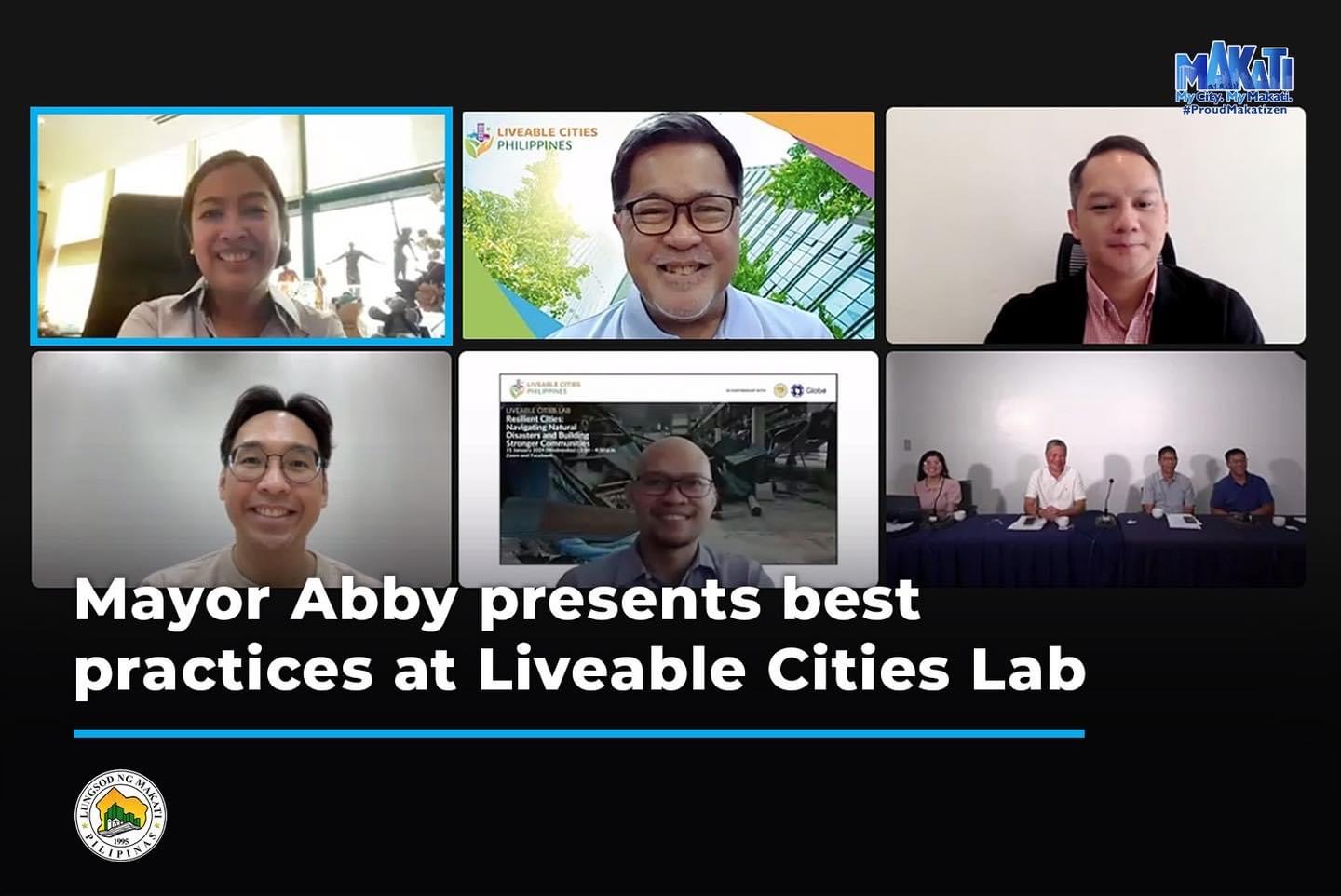
“In achieving success in running a city, you have to bring in all stakeholders, private sector, as well as the community. The government cannot be prepared if the community is not prepared. Preparedness should also be on an individual, household and barangay level, For a city like Makati where we have a lot of businesses, the dynamics is very crucial. Therefore, we embrace data. Data is life. If you do not have the right data, then we will not be able to provide policies and we will not be able to provide accurate service to the community”, Binay said in her speech during an online conference spearheaded by Liveable Cities Lab, a private sector initiative dedicated to advancing sustainable urban development practices.
With the theme "Resilient Cities: Navigating Natural Disasters and Building Stronger, the group invited several key speakers which included Binay, Naga City Mayor Nelson Legacion, Komunidad CEO and Founder Felix Ayque, Globe Telecom’s Head of Technology Innovation Angel Gulmatico, and M360 Head of Acceleration and Innovation Group Miko Ignacio, as they addressed the critical challenges posed by natural disasters and talked on innovative strategies for building resilient cities.
"In recent years, the Philippines has faced increasing threats from a range of natural disasters, including typhoons, floods, earthquakes, and landslides. These events not only jeopardize the safety and well-being of communities but also disrupt economic activities and strain infrastructure systems. Recognizing the urgent need for proactive measures, Liveable Cities Lab guest speakers highlighted the need to enhance the resilience of cities across the nation," the group said.
"In the face of escalating climate risks, it is imperative that we adopt a proactive approach to building resilience in our cities. By bringing together diverse stakeholders and fostering collaboration, we can develop robust strategies that safeguard lives, livelihoods, and the environment," Liveable Cities Philippines Chairman Guillermo Luz.
Transforming city
In her speech, Binay said that the city is not just adapting, but is transforming as it continues to face environmental challenges head-on.
"We aim to set a benchmark for urban resilience, providing that even in the face of nature’s unpredictability, a city can thrive to innovate and lead by example," she noted.
Some of these transformations include embracing renewable energy by transitioning to solar panels in public schools and government buildings in 2023 and Makati’s integration of advanced technologies such as smart sensors and data analytics into governance that was also well regarded by other local and international leaders.
In January, the city government received five Hyundai IONIQ 5 electric cars from Hyundai Philippines that are expected to promote sustainability through the introduction of electric vehicles in the city's public safety fleet.
"As a city, we recognize our critical role in addressing environmental concerns. By introducing electric vehicles into our public safety fleet, we not only enhance our emergency response capabilities but also contribute to reducing air pollution and our overall environmental impact," Binay said
READ MORE: https://mb.com.ph/2024/1/17/makati-lgu-receives-electric-cars-from-hyundai-ph
In 2022, Makati signed an agreement with the Korea International Cooperation Agency (KOICA) to establish a smart transportation system featuring a fleet of electric buses.
The mayor also confirmed the city's plan to purchase several electric motorcycles in 2024.
"By reducing our dependence on fossil fuels, we will not (only) address the root cause of climate change but also foster a healthier, more sustainable environment for our citizens," she said.
In October of last year, the city government was chosen as one of the six finalists in the prestigious World Smart City Awards 2023 in Barcelona, Spain, making it the only city in the country and the whole Asia Pacific Region to be included in the feat.
El Niño phenomenon
During the online conference, Binay said the El Niño phenomenon adds another layer of complexity to their environmental management efforts as it has not only intensified urban heat but also put a strain on water resources and agricultural productivity, "affecting both urban and rural livelihood."
El Niño or warm phase is characterized by unusually warmer-than-average sea surface temperatures in the central and eastern equatorial Pacific. The weather phenomenon raises the likelihood of below-average rainfall conditions which might have adverse impact such as drought and dry spells in several parts of the country.
In response to this, the mayor vowed to double the city's commitment to sustainability and resilience in dealing with this natural phenomenon.
This include enhancing urban infrastructure to better manage water resources, implementing more comprehensive flood control measures, and expanding green spaces to mitigate the heat island effect.
In May last year, Binay spearheaded the creation of a task force in preparation for the upcoming El Niño phenomenon and its adverse effects.
The group, called Task Force ENSO (El Niño Southern Oscillation), is tasked with linking the city government with other entities and groups in ensuring the continuous supply of water and electricity to Makatizens as the weather phenomenon is expected to have a massive effect on these utilities until the first three months of 2024.
READ MORE: https://mb.com.ph/2023/5/21/makati-city-launches-task-force-enso-to-respond-to-el-nino