







Old school Christmas traditions worth reviving
Holiday traditions we would love to see come back
By Sol Vanzi


At A Glance
- When I was a kid, the coming of the Christmas season was announced by the availability of two food items: Bibingka (rice flour cake) and puto bumbong (purple rice cooked in bamboo tubes) at pop-up roadside stalls, the only places where they were cooked and sold, and only during the Christmas season which in those days started in December.<br><br>
Our country's history, enriched by the many cultures from East and West, provides us with traditions uniquely Filipino which are worth preserving for future generations.
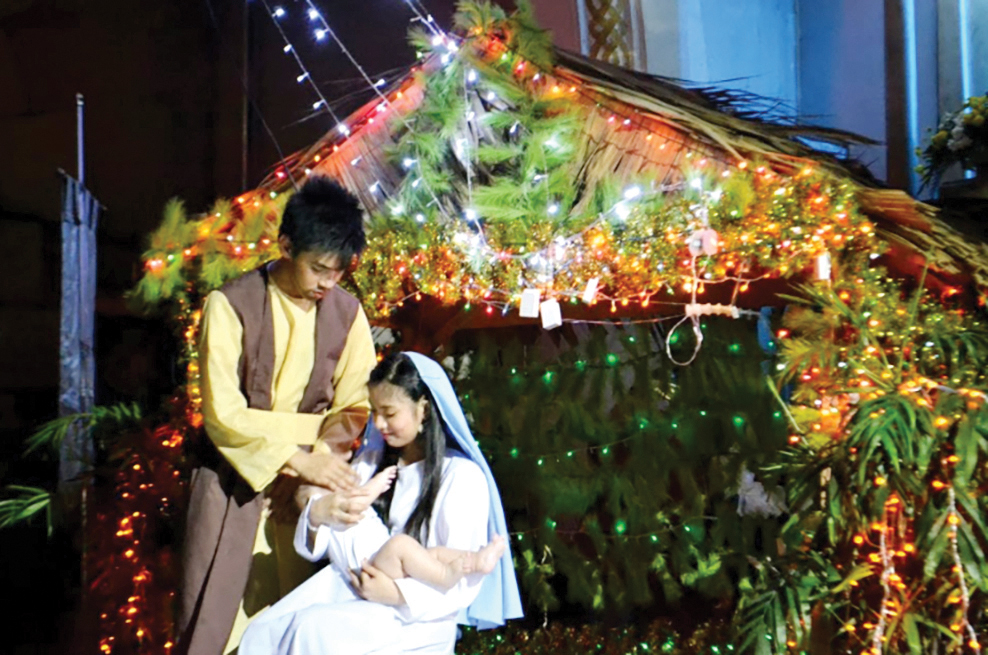
Panunuluyan, “the search”
Christmas being the celebration of the birth of Jesus Christ, parishes all over the country remember in songs and prayers the story of how Joseph and his pregnant wife Mary wandered throughout Bethlehem in search of a room. Unsuccessful, they settled for shelter from the bitter cold in a barn, where the infant Jesus was born and lay in a manger lined with hay.
Dramatization of the epic story, called Panunuluyan in Tagalog, is most colorful and popular in Kawit, Cavite where thousands of local and foreign tourists flock to watch and participate in the Maytinis festival.
Held on Christmas Eve, Maytinis features costumed townfolk playing biblibal roles while aboard elaborately decorated floats. Most notable are scenes of angels announcing to Mary that she would bear a son, the savior Jesus. King Herod, hearing of the birth of a king of all kings from the Three Wise Men, orders the death of all male newborns. Each float features locals in full costume portraying various characters from different Biblical events from both Old and New Testaments.
Aboard one float, young boys dressed as shepherds are awakened by angels who announce the birth of Jesus. They follow a star which leads them to the manger.
Likewise guided by the star are the Magi: Three Wise Men bearing gifts for Jesus.
The Magi brought to Jesus Frankincense, Gold, and Myrrh; each precious gift has a symbolic meaning. Frankincense was used for worship in the temple; it is symbolic of Christ the High Priest. Gold is symbolic of Christ the King. Myrrh, a perfume, was used to anoint dead bodies; it is symbolic of His death for the sake of truth.
The Maytinis parade goes through the town's main roads, stopping in front of several pre-designated homes to interact with the home owner. The parade-procession ends up at the church of St. Mary Magdalene in the center of the historic town. Kawit historians date the Maytinis to the years before the June 12,1898 Proclamation of the First Philippine Republic.
The pandemic prevented Maytinis to be staged in 2020 and 2021, but it resumed in 2022 and is now in final preparations for Maytinis 2023.
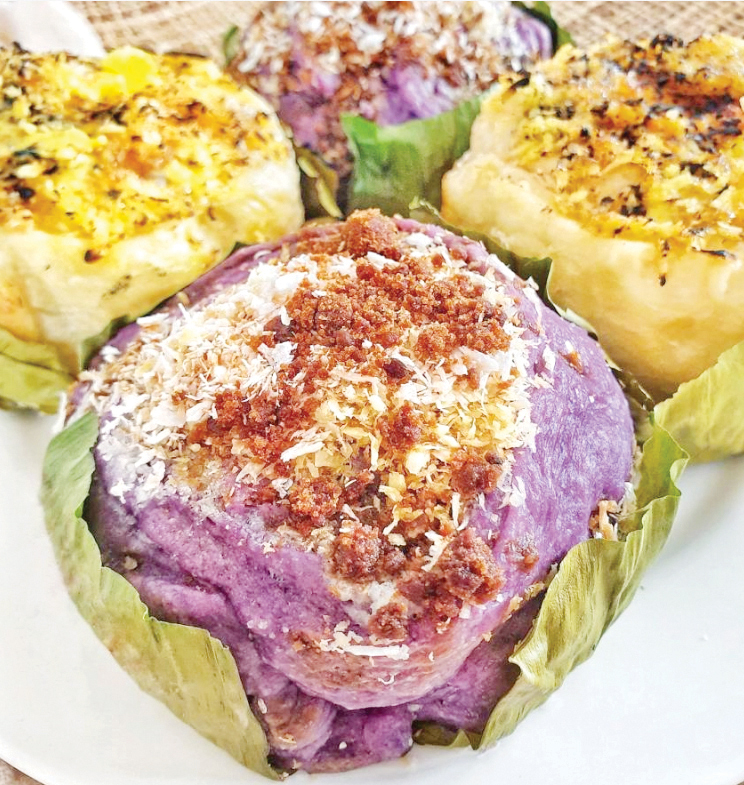
(The White Box | Instagram)
Puto bumbong and bibingka
When I was a kid, the coming of the Christmas season was announced by the availability of two food items: Bibingka (rice flour cake) and puto bumbong (purple rice cooked in bamboo tubes) at pop-up roadside stalls, the only places where they were cooked and sold, and only during the Christmas season which in those days started in December.
These days, the countdown to Christmas begins on Sep. 1, when the Christmas-themed songs of singer-composer Jose Mari Chan are played on radio and TV, over public transport, malls, and restaurants.
Balikbayans who miss the bibingka and puto bumbong of the good old days can satisfy their cravings at the Aristocrat Restaurant and the Ilang Ilang coffee shop of the Manila Hotel, where both items are cooked the traditional way in full view of diners, every day of the week, throughout the year.
One cannot help but thank those responsible for keeping the tradition of these two unique Filipino snacks alive.
Bibingka and puto bumbong are two Pinoy kakanin that are not sold in supermarkets and pasalubong centers. Traditionally, they are sold and cooked in full view of the diners, and never peddled by vendors. They are not cooked in traditional ovens and steamers, but over and under charcoal in homemade cookware, showing off Filipino ingenuity.
“Mano po!”
There has been a decline in the number of Filipinos greeting their parents, grandparents, and godparents by touching the elder's hand to their foreheads or by kissing the back of the older person's hand. Many, especially the middle class, have chosen to adapt the upper class beso-beso, or cheek-kissing.
The older generations are uncomfortable with any form of kissing, no matter how casual the intent.
"It is not very Filipino," say critics of the practice. "Beso-beso is a reminder of our colonial past," they add, referring to our centuries under Spanish colonizers.
Personally, I prefer the old pagmamano practice. When I see my wedding godfarher, former Press Secretary Francisco Tatad anywhere, I grab his right hand and touch it to my forehead, saying "Mano po Ninong." Ninong Kit responds by blessing my bowed head.
The hand-kissing and the subsequent blessing give Ninong Kit and I the feeling of mutual respect that no amount of beso-beso can match. By the way, “mano po” is also the traditional greeting for older cousins, aunts, uncles and persons of authority.
“Po and opo!”
The noontime TV show Showtime has a portion where five-year-olds compete for the title "Little Miss U" by showing off their talents in singing, dancing, modeling, and acting. The acting portion has the contestants ad-libbing reactions to program hosts' statements. I was pleasantly surprised to hear program judges Nino Muhlach and Janice de Belen lecture a contestant for not showing respect for older people.
"You should show respect by using po and opo when talking to older people," the two said, as both proceeded to talk about the importance of observing the practice of using po and opo when talking to elders.
The reverse is also true; it is disrespectful to address an older person or person of authority like a co-equal.
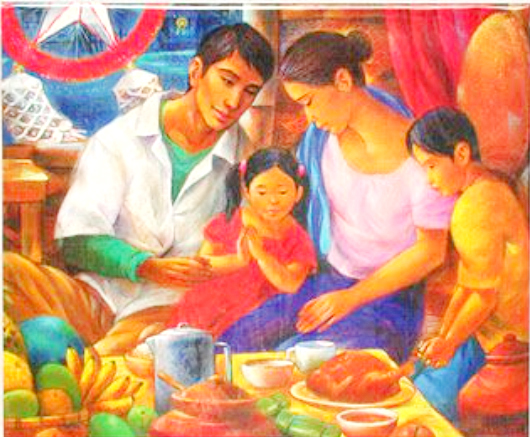
(Rhes Victorio)
Family Christmas meals
For many families, Christmas is the time to sit together for a special meal. Family members who work overseas try to time their vacations to allow them to attend this important family reunion.
Unfortunately, this tradition's popularity is waning; more young family members prefer to use their vacation time to fulfill their dream of traveling overseas or to famous local destinations.
My generation grew up knowing exactly where we would we on Christmas Eve and Christmas Day—with family and visiting our godparents and cousins.
Kakanin ni Lola
My grandmother was known for the kakanins she made to give away to friends and family members on Good Friday, All Saints' Day, and Christmas. She made sure her grandchildren learned by using us as assistants year after year.
Our tasks began by securing enough banana leaves from neighbors. We needed a lot to use as wrappers for suman and tamales. We soaked rice, ground rice, cooked pork for tamales, cut and blanched banana leaves. All the suman and tamales were ready for distribution on Christmas morning.
The suman and tamales were not expensive gifts, but our friends and family consider them more precious than anything store-bought. I try to continue this tradition by cooking batches of dinuguan and bottles of Ginisang Bagoong Alamang to hand out to friends and family.
Christmas is a time for family, friends and traditions that enrich our lives. It is heartening to observe that many of these traditions are kept alive in many parts of the country