ADVERTISEMENT

ICanServe Foundation launches comprehensive breast cancer patient's manual

On this 24th year, ICS is proud to complete the circle and launch "You Can Do This: A Breast Cancer Patient's Manual."

Published Sep 18, 2023 06:54 am
unnamed-min.jpg
Launching “You Can Do This - A Breast Cancer Patient’s Manual”

It’s hard to believe that it’s now been 24 years of ICanServe Foundation, an advocacy group of breast cancer survivors and volunteers, that promotes early breast cancer detection, access to accurate diagnosis and timely treatment, to survivorship and palliative care, to patient navigation, and to hospice care.

Back in 1999, ICS was founded by four breast cancer survivors, led by Kara Magsanoc-Alikpala, Crisann Celdran, Becky Fuentes, and Bet Lazatin. The overriding idea then was to provide valuable information and hope to those suffering from breast cancer, and were bewildered by their situation.
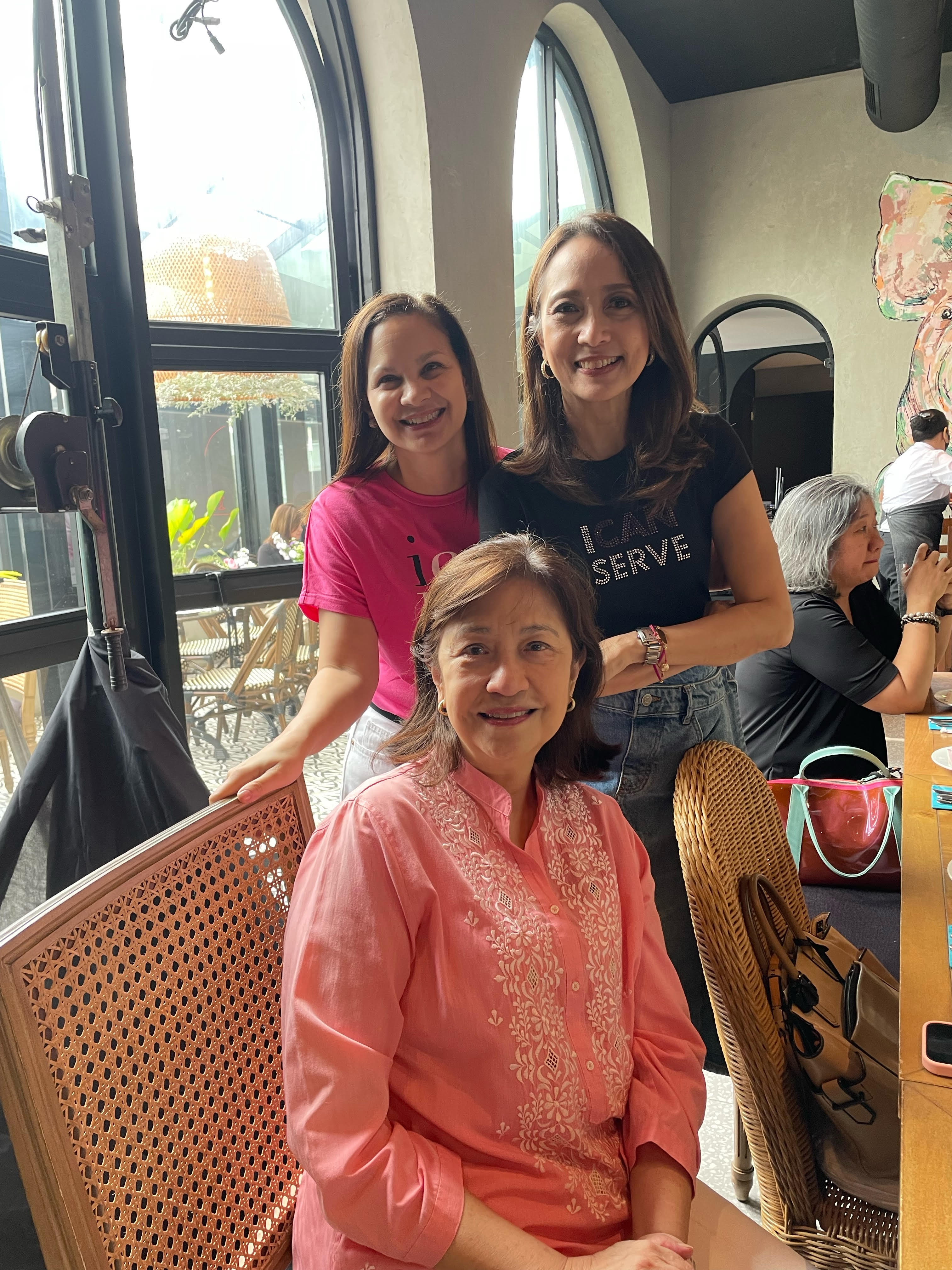
unnamed (1)-min.jpg
Top row from left to right: Crisann Celdran, Kara Magsanoc-Alikpala and Libet C. Virata

On this 24th year, ICS is proud to go full circle and launch “You Can Do This - A Breast Cancer Patient’s Manual.” It’s a comprehensive resource that’s been designed to support breast cancer patients, survivors and their caregivers, and will be available as a free download in both English and Filipino. The manual was launched Sept. 14, 2023.

Crisann Celdran, still active in ICS as Chairperson, calls the manual, “a love letter from survivors to other survivors and their caregivers and families, and one I wish I had access to back when I was diagnosed.”

This is all especially relevant in light of how in 2020, the World Health Organization called breast cancer the most common cancer in the Philippines - detailing the alarming fact that 70 percent of the women diagnosed were in advanced stages of the cancer; and underscoring the need for early detection, when chances of successful treatment and recovery are much higher.
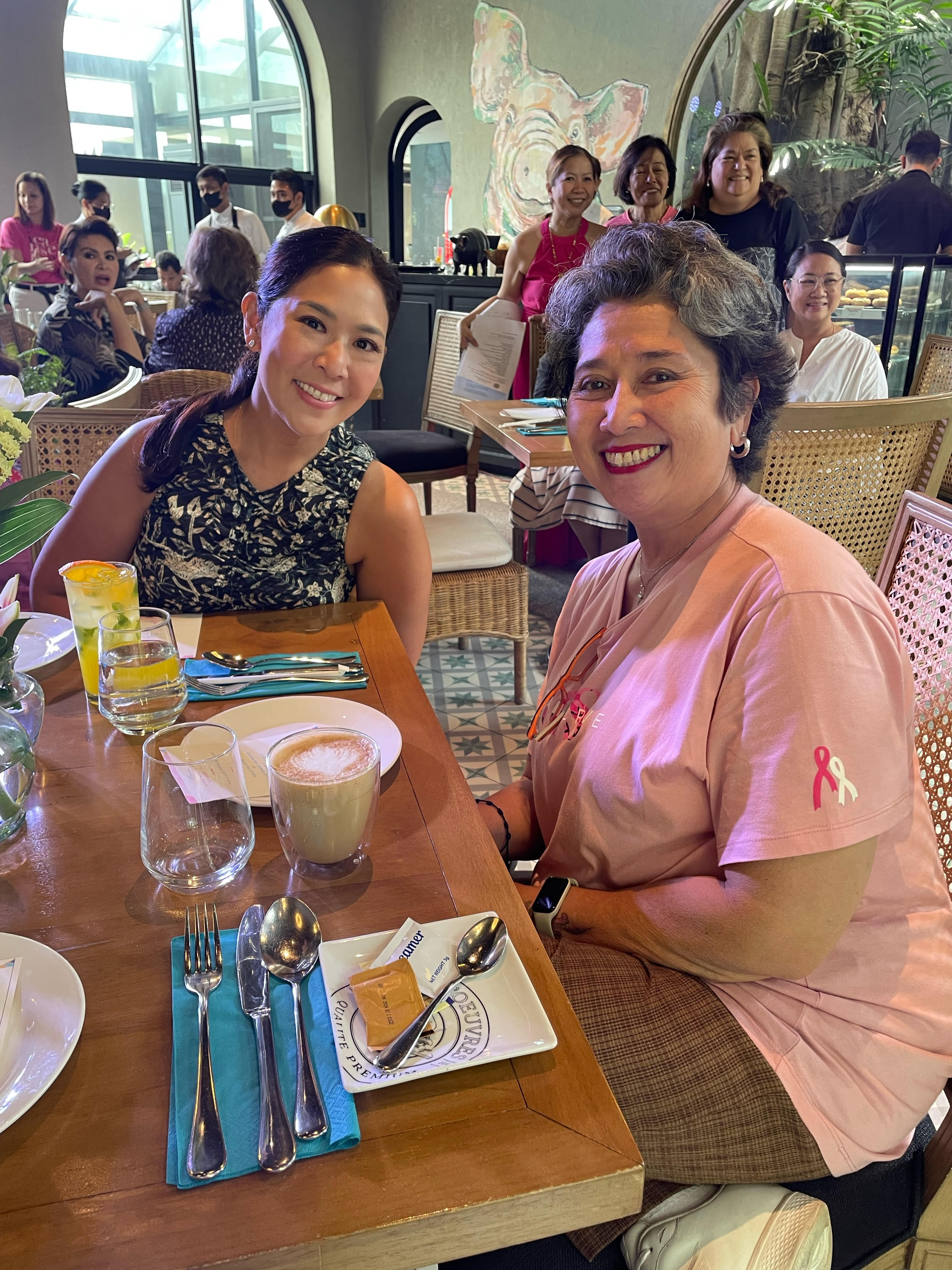
unnamed (2)-min.jpg
Keri Zamora and Alya Honasan

In format, the manual offers practical knowledge and advice for a person’s cancer journey, and shares heartfelt stories from survivors. It’s a source of information and encouragement. From the medical to the personal and practical, a wide range of topics, facts, and information can be gained from the manual. It has been updated with the latest studies from sources such as the American Cancer Society, the National Integrated Cancer Control Council, and the Philippine Cancer Society.

Current ICS President, Nikoy de Guzman, shares, “We hope this manual sends the message that cancer is not a death sentence. Many things can be done to ease the burden of a cancer diagnosis. No one is alone in her fight.”

The manual’s editor, Alya Honasan chimed in with, “The updated manual is written in layman’s terms to help patients as well as their families and support groups at different stages on the (cancer) journey. It’s a solid valuable reminder that no breast cancer survivor is ever completely alone in this experience.”

And Kara Magsanoc-Alikpala observes that, “What sets apart the ICanServe patient manual is that it is Philippine and patient-centered. To this day, there are gaps in information for the rich, the middle class and the poor. Patients often feel side effects or symptoms that are unacknowledged or unaddressed. We want patients, carers, caregivers, and health providers to form a circle of support for patients… this circle equals hope - the one thing you should never take away from a patient.”

To download “You Can Do This: A Breast Cancer Patient’s Manual” visit https://www.icanservefoundation.Org/patients-Manual.

In breast times_Featured image-min.jpg
The author, with Kara and Libet

My sister, Libet C. Virata is a breast cancer survivor, and my mother passed away from cancer back in 1996 at the age of 62; so I’ve always thrown my support to ICanServe and been witness to how it’s grown and evolved over the years.

It’s especially important for the underprivileged, whose resources are limited, and who are very likely contributing to that sad statistic of how over 70 percent are diagnosed at an advanced stage of cancer. Breast cancer is very treatable nowadays, but catching it at an early stage drastically improves the success rate of the treatment.

Related Tags

MB Lifestyle Online health and wellbeing Philip Cu Unjieng
ADVERTISEMENT
.most-popular .layout-ratio{ padding-bottom: 79.13%; } @media (min-width: 768px) and (max-width: 1024px) { .widget-title { font-size: 15px !important; } }

{{ articles_filter_1561_widget.title }}

.most-popular .layout-ratio{ padding-bottom: 79.13%; } @media (min-width: 768px) and (max-width: 1024px) { .widget-title { font-size: 15px !important; } }

{{ articles_filter_1562_widget.title }}

.most-popular .layout-ratio{ padding-bottom: 79.13%; } @media (min-width: 768px) and (max-width: 1024px) { .widget-title { font-size: 15px !important; } }

{{ articles_filter_1563_widget.title }}

{{ articles_filter_1564_widget.title }}

.mb-article-details { position: relative; } .mb-article-details .article-body-preview, .mb-article-details .article-body-summary{ font-size: 17px; line-height: 30px; font-family: "Libre Caslon Text", serif; color: #000; } .mb-article-details .article-body-preview iframe , .mb-article-details .article-body-summary iframe{ width: 100%; margin: auto; } .read-more-background { background: linear-gradient(180deg, color(display-p3 1.000 1.000 1.000 / 0) 13.75%, color(display-p3 1.000 1.000 1.000 / 0.8) 30.79%, color(display-p3 1.000 1.000 1.000) 72.5%); position: absolute; height: 200px; width: 100%; bottom: 0; display: flex; justify-content: center; align-items: center; padding: 0; } .read-more-background a{ color: #000; } .read-more-btn { padding: 17px 45px; font-family: Inter; font-weight: 700; font-size: 18px; line-height: 16px; text-align: center; vertical-align: middle; border: 1px solid black; background-color: white; } .hidden { display: none; }
function initializeAllSwipers() { // Get all hidden inputs with cms_article_id document.querySelectorAll('[id^="cms_article_id_"]').forEach(function (input) { const cmsArticleId = input.value; const articleSelector = '#article-' + cmsArticleId + ' .body_images'; const swiperElement = document.querySelector(articleSelector); if (swiperElement && !swiperElement.classList.contains('swiper-initialized')) { new Swiper(articleSelector, { loop: true, pagination: false, navigation: { nextEl: '#article-' + cmsArticleId + ' .swiper-button-next', prevEl: '#article-' + cmsArticleId + ' .swiper-button-prev', }, }); } }); } setTimeout(initializeAllSwipers, 3000); const intersectionObserver = new IntersectionObserver( (entries) => { entries.forEach((entry) => { if (entry.isIntersecting) { const newUrl = entry.target.getAttribute("data-url"); if (newUrl) { history.pushState(null, null, newUrl); let article = entry.target; // Extract metadata const author = article.querySelector('.author-section').textContent.replace('By', '').trim(); const section = article.querySelector('.section-info ').textContent.replace(' ', ' '); const title = article.querySelector('.article-title h1').textContent; // Parse URL for Chartbeat path format const parsedUrl = new URL(newUrl, window.location.origin); const cleanUrl = parsedUrl.host + parsedUrl.pathname; // Update Chartbeat configuration if (typeof window._sf_async_config !== 'undefined') { window._sf_async_config.path = cleanUrl; window._sf_async_config.sections = section; window._sf_async_config.authors = author; } // Track virtual page view with Chartbeat if (typeof pSUPERFLY !== 'undefined' && typeof pSUPERFLY.virtualPage === 'function') { try { pSUPERFLY.virtualPage({ path: cleanUrl, title: title, sections: section, authors: author }); } catch (error) { console.error('ping error', error); } } // Optional: Update document title if (title && title !== document.title) { document.title = title; } } } }); }, { threshold: 0.1 } ); function showArticleBody(button) { const article = button.closest("article"); const summary = article.querySelector(".article-body-summary"); const body = article.querySelector(".article-body-preview"); const readMoreSection = article.querySelector(".read-more-background"); // Hide summary and read-more section summary.style.display = "none"; readMoreSection.style.display = "none"; // Show the full article body body.classList.remove("hidden"); } document.addEventListener("DOMContentLoaded", () => { let loadCount = 0; // Track how many times articles are loaded const offset = [1, 2, 3, 4, 5, 6, 7, 8, 9, 10]; // Offset values const currentUrl = window.location.pathname.substring(1); let isLoading = false; // Prevent multiple calls if (!currentUrl) { console.log("Current URL is invalid."); return; } const sentinel = document.getElementById("load-more-sentinel"); if (!sentinel) { console.log("Sentinel element not found."); return; } function isSentinelVisible() { const rect = sentinel.getBoundingClientRect(); return ( rect.top < window.innerHeight && rect.bottom >= 0 ); } function onScroll() { if (isLoading) return; if (isSentinelVisible()) { if (loadCount >= offset.length) { console.log("Maximum load attempts reached."); window.removeEventListener("scroll", onScroll); return; } isLoading = true; const currentOffset = offset[loadCount]; window.loadMoreItems().then(() => { let article = document.querySelector('#widget_1690 > div:nth-last-of-type(2) article'); intersectionObserver.observe(article) loadCount++; }).catch(error => { console.error("Error loading more items:", error); }).finally(() => { isLoading = false; }); } } window.addEventListener("scroll", onScroll); });

Sign up by email to receive news.