ADVERTISEMENT

Tighten loose ends in SIM Registration Act

Published Dec 28, 2023 08:08 pm

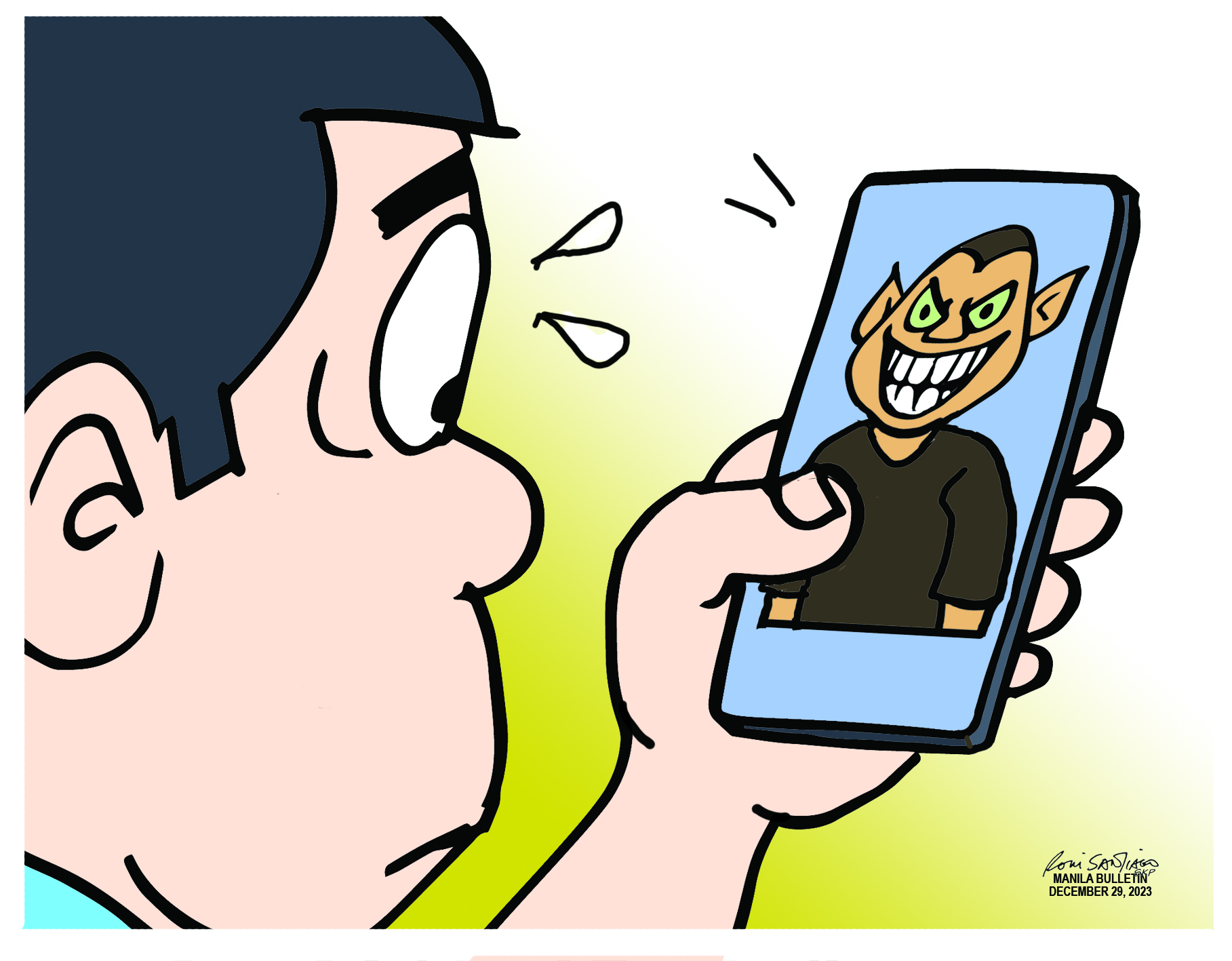
E CARTOON DEC 29, 2023 (1).jpg

Smishing and other scams using mobile technology remain prevalent over a year after the SIM Registration Act was signed into law in October 2022.
The SIM Registration Act is supposed to serve as a deterrent against these types of nefarious activities and a tool to help law enforcement agencies go after criminal elements using mobile technology.


With the use of mobile phones becoming a way of life for Filipinos — from communicating with family, workplace, among others; ordering food and other necessities; booking rides; looking for job opportunities, and many more — expectations were high that the new law would finally put an end to mobile technology fraud that has already victimized a multitude.


Sad to say, not much has been achieved as Filipinos continue to fall prey to smishing artists and other mobile technology scammers. 
Despite all the optimism that the SIM Registration Act will be the answer to mobile users’ call to put a stop to smishing and other forms of mobile technology criminal activities, why is the new law teetering close to failure?


For one, loose ends in the SIM card registration process of telecommunication companies have slowly surfaced.


At the Senate hearing in September 2023, the relative ease in registering SIM cards came to fore.


A ranking National Bureau of Investigation (NBI) official revealed in the hearing that his men tested the telecommunication companies’ registration process by registering SIM cards using photos of a grinning monkey and other animals. No problem, the grinning monkey became a registered SIM card owner.


In the same month, a technology expert revealed during a Presidential Anti-Crime Commission press conference how he was able to register a SIM card using the identity of cartoon character “Bart Simpson.”


Another factor is the ID requirement was relaxed. From strictly requiring the presentation of traditional government-issued IDs — passport, Philippine identification card or the national ID, Social Security Service ID, Government Service Insurance System e-Card, driver's license, National Bureau of Investigation clearance, and police clearance — barangay IDs were later allowed to ease registration requirements.


The problem with barangay IDs is the ease of securing it. Unlike other IDs issued by the government which goes through a tedious process before it can be acquired, one can secure a barangay ID through the endorsement of the community leader. It can also be secured through persuasion from influential members of the society.
Still another challenge is the verification process. Cross-checking the identification of individuals registering their SIM cards and the information they submitted is a problem for lack of a reliable government database. 


Likewise, telcos seem lax in vetting identification documents. Nowhere was this more evident than the revelation of the NBI official and the technology expert.
The SIM Registration Act is a good law. But its implementation leaves a lot to be desired.


With these challenges, we have a long way to go before the objective of the SIM Registration Act is attained.


We express hope that stakeholders will join hands in coming up with measures to tighten loose ends in the SIM Registration Act.

Related Tags

Editorial Manila Bulletin
ADVERTISEMENT
.most-popular .layout-ratio{ padding-bottom: 79.13%; } @media (min-width: 768px) and (max-width: 1024px) { .widget-title { font-size: 15px !important; } }

{{ articles_filter_1561_widget.title }}

.most-popular .layout-ratio{ padding-bottom: 79.13%; } @media (min-width: 768px) and (max-width: 1024px) { .widget-title { font-size: 15px !important; } }

{{ articles_filter_1562_widget.title }}

.most-popular .layout-ratio{ padding-bottom: 79.13%; } @media (min-width: 768px) and (max-width: 1024px) { .widget-title { font-size: 15px !important; } }

{{ articles_filter_1563_widget.title }}

{{ articles_filter_1564_widget.title }}

.mb-article-details { position: relative; } .mb-article-details .article-body-preview, .mb-article-details .article-body-summary{ font-size: 17px; line-height: 30px; font-family: "Libre Caslon Text", serif; color: #000; } .mb-article-details .article-body-preview iframe , .mb-article-details .article-body-summary iframe{ width: 100%; margin: auto; } .read-more-background { background: linear-gradient(180deg, color(display-p3 1.000 1.000 1.000 / 0) 13.75%, color(display-p3 1.000 1.000 1.000 / 0.8) 30.79%, color(display-p3 1.000 1.000 1.000) 72.5%); position: absolute; height: 200px; width: 100%; bottom: 0; display: flex; justify-content: center; align-items: center; padding: 0; } .read-more-background a{ color: #000; } .read-more-btn { padding: 17px 45px; font-family: Inter; font-weight: 700; font-size: 18px; line-height: 16px; text-align: center; vertical-align: middle; border: 1px solid black; background-color: white; } .hidden { display: none; }
function initializeAllSwipers() { // Get all hidden inputs with cms_article_id document.querySelectorAll('[id^="cms_article_id_"]').forEach(function (input) { const cmsArticleId = input.value; const articleSelector = '#article-' + cmsArticleId + ' .body_images'; const swiperElement = document.querySelector(articleSelector); if (swiperElement && !swiperElement.classList.contains('swiper-initialized')) { new Swiper(articleSelector, { loop: true, pagination: false, navigation: { nextEl: '#article-' + cmsArticleId + ' .swiper-button-next', prevEl: '#article-' + cmsArticleId + ' .swiper-button-prev', }, }); } }); } setTimeout(initializeAllSwipers, 3000); const intersectionObserver = new IntersectionObserver( (entries) => { entries.forEach((entry) => { if (entry.isIntersecting) { const newUrl = entry.target.getAttribute("data-url"); if (newUrl) { history.pushState(null, null, newUrl); let article = entry.target; // Extract metadata const author = article.querySelector('.author-section').textContent.replace('By', '').trim(); const section = article.querySelector('.section-info ').textContent.replace(' ', ' '); const title = article.querySelector('.article-title h1').textContent; // Parse URL for Chartbeat path format const parsedUrl = new URL(newUrl, window.location.origin); const cleanUrl = parsedUrl.host + parsedUrl.pathname; // Update Chartbeat configuration if (typeof window._sf_async_config !== 'undefined') { window._sf_async_config.path = cleanUrl; window._sf_async_config.sections = section; window._sf_async_config.authors = author; } // Track virtual page view with Chartbeat if (typeof pSUPERFLY !== 'undefined' && typeof pSUPERFLY.virtualPage === 'function') { try { pSUPERFLY.virtualPage({ path: cleanUrl, title: title, sections: section, authors: author }); } catch (error) { console.error('ping error', error); } } // Optional: Update document title if (title && title !== document.title) { document.title = title; } } } }); }, { threshold: 0.1 } ); function showArticleBody(button) { const article = button.closest("article"); const summary = article.querySelector(".article-body-summary"); const body = article.querySelector(".article-body-preview"); const readMoreSection = article.querySelector(".read-more-background"); // Hide summary and read-more section summary.style.display = "none"; readMoreSection.style.display = "none"; // Show the full article body body.classList.remove("hidden"); } document.addEventListener("DOMContentLoaded", () => { let loadCount = 0; // Track how many times articles are loaded const offset = [1, 2, 3, 4, 5, 6, 7, 8, 9, 10]; // Offset values const currentUrl = window.location.pathname.substring(1); let isLoading = false; // Prevent multiple calls if (!currentUrl) { console.log("Current URL is invalid."); return; } const sentinel = document.getElementById("load-more-sentinel"); if (!sentinel) { console.log("Sentinel element not found."); return; } function isSentinelVisible() { const rect = sentinel.getBoundingClientRect(); return ( rect.top < window.innerHeight && rect.bottom >= 0 ); } function onScroll() { if (isLoading) return; if (isSentinelVisible()) { if (loadCount >= offset.length) { console.log("Maximum load attempts reached."); window.removeEventListener("scroll", onScroll); return; } isLoading = true; const currentOffset = offset[loadCount]; window.loadMoreItems().then(() => { let article = document.querySelector('#widget_1690 > div:nth-last-of-type(2) article'); intersectionObserver.observe(article) loadCount++; }).catch(error => { console.error("Error loading more items:", error); }).finally(() => { isLoading = false; }); } } window.addEventListener("scroll", onScroll); });

Sign up by email to receive news.