ADVERTISEMENT

Don't believe all the bad things you hear about carbs

One of the most studied concepts is the Blue Zone, wherein certain populations tend to live the longest. If carbohydrates are fattening and harmful, these populations should not have aged until their 100s.

Published Oct 28, 2023 01:10 pm

\By Jasmine B. Suiza, RND

Untitled-1.jpg
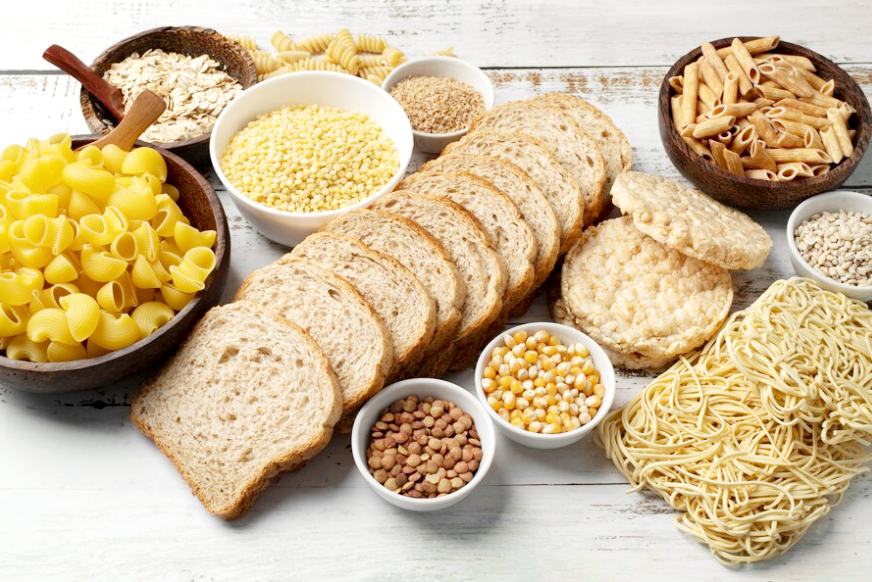
TIME TO CURB CARBS? Food such as bread, rice, grains, pasta, and so on contain carbohydrates for providing energy (Photo Freepik)

No carb diet. Have you heard about this “diet” trend?

One of my acquaintances told me that she would try this trend to help her lose weight. I asked her about the food sources of carbohydrates and IKYK (For the titas and titos out there, it means, ‘I know you know’) what she answered.

Rice. The ultimate culprit. Did you know?

Yes, rice is a carbohydrate, but it is not the only carbohydrate on our plate. In the context of healthy eating, even grains, legumes, fruits, vegetables, and milk contain carbohydrates. To further shed light on carbohydrates, here are five interesting facts about this controversial nutrient.

Carbohydrates are not inherently fattening and harmful.

Some individuals accuse carbohydrates as the major cause of obesity and other chronic diseases. They claim that carbohydrates per se is fattening, regardless of total energy intake. Interestingly, research debunks this misconception. One of the most studied concepts is the Blue Zone, wherein certain populations tend to live the longest. The lifestyle of these populations is characterized by plant-based and high-carbohydrate diets—comprised mostly of fruits, vegetables, whole grains, nuts, and beans. If carbohydrates are fattening and harmful, these populations should not have aged until their 100s.

Carbohydrate is a macronutrient.

Macro means large. The human body needs macronutrients in larger quantities to provide you with energy (aka calories / cal / kcal) that maintain the body’s structure and systems. Carbohydrates, protein, and fat are macronutrients. If you look into the nutrition information of a food packaging, you will see that these three macronutrients in food are contained in large amounts. They also use grams (g) as units, compared to micronutrients like vitamins and minerals that use either micrograms or milligrams.

Carbohydrates have two different types—simple and complex.

Food sources of simple carbohydrates include products made with white flour (breads, cakes, and pastries), refined grains and pastas, potato chips, sugar-rich beverages, and cereals with high sugar contents. Consumption of these processed and refined carbohydrates cause a rise in insulin that triggers fat storage. Obesity and other chronic diseases like diabetes may be related to what we call “insulin resistance.” On the other hand, complex carbohydrates may help maintain weight and improve overall health. Fruits, vegetables, whole grains, nuts, and beans belong to the complex carbohydrates. These food items contain essential vitamins, minerals, phytonutrients, and fiber.

Fiber is a complex carbohydrate.

Have you noticed that you feel fuller if you eat vegetables and fruits? This is because of the fiber that they contain. Fiber cannot be broken down into sugar molecules, and instead, it passes through the bowel undigested. (Hello again, malunggay! Or corn!) This helps ease digestion and gives a longer feeling of fullness or satiety—supporting weight management.

Ever heard of the Glycemic Index? It’s connected to carbohydrates.

Glycemic Index (GI) is a measure of how quickly a food can increase your blood sugar, also called glucose. Only food items that contain carbohydrates can be measured using the GI. Carbohydrate food is classified according to three GI ratings: low (55 or lower), medium (56-69), and high (70 or higher). The lower the GI of a food item, the less it may affect your glucose levels. Typically, food that contains simple carbohydrates or refined sugars has higher GI ratings. On the other hand, food that contains fiber, protein, or fat, has lower GI. This rating is usually helpful for individuals with diabetes, or those who wish to monitor their blood sugar.

Though it has long been a topic of debate in the field of health and nutrition, consuming carbohydrates in moderate amounts are an essential part of a well-rounded diet. To curb or to consume? The (healthy) choice is yours.

Related Tags

Jasmine B. Suiza RND carbohydrates Health and Wellbeing
ADVERTISEMENT
.most-popular .layout-ratio{ padding-bottom: 79.13%; } @media (min-width: 768px) and (max-width: 1024px) { .widget-title { font-size: 15px !important; } }

{{ articles_filter_1561_widget.title }}

.most-popular .layout-ratio{ padding-bottom: 79.13%; } @media (min-width: 768px) and (max-width: 1024px) { .widget-title { font-size: 15px !important; } }

{{ articles_filter_1562_widget.title }}

.most-popular .layout-ratio{ padding-bottom: 79.13%; } @media (min-width: 768px) and (max-width: 1024px) { .widget-title { font-size: 15px !important; } }

{{ articles_filter_1563_widget.title }}

{{ articles_filter_1564_widget.title }}

.mb-article-details { position: relative; } .mb-article-details .article-body-preview, .mb-article-details .article-body-summary{ font-size: 17px; line-height: 30px; font-family: "Libre Caslon Text", serif; color: #000; } .mb-article-details .article-body-preview iframe , .mb-article-details .article-body-summary iframe{ width: 100%; margin: auto; } .read-more-background { background: linear-gradient(180deg, color(display-p3 1.000 1.000 1.000 / 0) 13.75%, color(display-p3 1.000 1.000 1.000 / 0.8) 30.79%, color(display-p3 1.000 1.000 1.000) 72.5%); position: absolute; height: 200px; width: 100%; bottom: 0; display: flex; justify-content: center; align-items: center; padding: 0; } .read-more-background a{ color: #000; } .read-more-btn { padding: 17px 45px; font-family: Inter; font-weight: 700; font-size: 18px; line-height: 16px; text-align: center; vertical-align: middle; border: 1px solid black; background-color: white; } .hidden { display: none; }
function initializeAllSwipers() { // Get all hidden inputs with cms_article_id document.querySelectorAll('[id^="cms_article_id_"]').forEach(function (input) { const cmsArticleId = input.value; const articleSelector = '#article-' + cmsArticleId + ' .body_images'; const swiperElement = document.querySelector(articleSelector); if (swiperElement && !swiperElement.classList.contains('swiper-initialized')) { new Swiper(articleSelector, { loop: true, pagination: false, navigation: { nextEl: '#article-' + cmsArticleId + ' .swiper-button-next', prevEl: '#article-' + cmsArticleId + ' .swiper-button-prev', }, }); } }); } setTimeout(initializeAllSwipers, 3000); const intersectionObserver = new IntersectionObserver( (entries) => { entries.forEach((entry) => { if (entry.isIntersecting) { const newUrl = entry.target.getAttribute("data-url"); if (newUrl) { history.pushState(null, null, newUrl); let article = entry.target; // Extract metadata const author = article.querySelector('.author-section').textContent.replace('By', '').trim(); const section = article.querySelector('.section-info ').textContent.replace(' ', ' '); const title = article.querySelector('.article-title h1').textContent; // Parse URL for Chartbeat path format const parsedUrl = new URL(newUrl, window.location.origin); const cleanUrl = parsedUrl.host + parsedUrl.pathname; // Update Chartbeat configuration if (typeof window._sf_async_config !== 'undefined') { window._sf_async_config.path = cleanUrl; window._sf_async_config.sections = section; window._sf_async_config.authors = author; } // Track virtual page view with Chartbeat if (typeof pSUPERFLY !== 'undefined' && typeof pSUPERFLY.virtualPage === 'function') { try { pSUPERFLY.virtualPage({ path: cleanUrl, title: title, sections: section, authors: author }); } catch (error) { console.error('ping error', error); } } // Optional: Update document title if (title && title !== document.title) { document.title = title; } } } }); }, { threshold: 0.1 } ); function showArticleBody(button) { const article = button.closest("article"); const summary = article.querySelector(".article-body-summary"); const body = article.querySelector(".article-body-preview"); const readMoreSection = article.querySelector(".read-more-background"); // Hide summary and read-more section summary.style.display = "none"; readMoreSection.style.display = "none"; // Show the full article body body.classList.remove("hidden"); } document.addEventListener("DOMContentLoaded", () => { let loadCount = 0; // Track how many times articles are loaded const offset = [1, 2, 3, 4, 5, 6, 7, 8, 9, 10]; // Offset values const currentUrl = window.location.pathname.substring(1); let isLoading = false; // Prevent multiple calls if (!currentUrl) { console.log("Current URL is invalid."); return; } const sentinel = document.getElementById("load-more-sentinel"); if (!sentinel) { console.log("Sentinel element not found."); return; } function isSentinelVisible() { const rect = sentinel.getBoundingClientRect(); return ( rect.top < window.innerHeight && rect.bottom >= 0 ); } function onScroll() { if (isLoading) return; if (isSentinelVisible()) { if (loadCount >= offset.length) { console.log("Maximum load attempts reached."); window.removeEventListener("scroll", onScroll); return; } isLoading = true; const currentOffset = offset[loadCount]; window.loadMoreItems().then(() => { let article = document.querySelector('#widget_1690 > div:nth-last-of-type(2) article'); intersectionObserver.observe(article) loadCount++; }).catch(error => { console.error("Error loading more items:", error); }).finally(() => { isLoading = false; }); } } window.addEventListener("scroll", onScroll); });

Sign up by email to receive news.