







Seven essential care tips for nurturing coconut seedlings
By James Tababa


Ensuring the proper care of coconut seedlings immediately after their purchase from the nursery is of utmost importance for their long-term health and productivity. These young coconut plants are at a critical stage of development, and their early care significantly influences their future growth and yield.
READ: Nutty by nature: This nursery in Davao supplies dwarf coconut varieties across the Philippines
Lloyd Pantollano, the owner of Pantollano Coconut Farm, established in 2012, is a seasoned expert in the cultivation and production of dwarf coconut varieties seedlings. With his years of experience, shared valuable insights on how to care for coconut seedlings after their purchase from a nursery. These tips are essential to ensure the healthy growth and development of coconut trees.
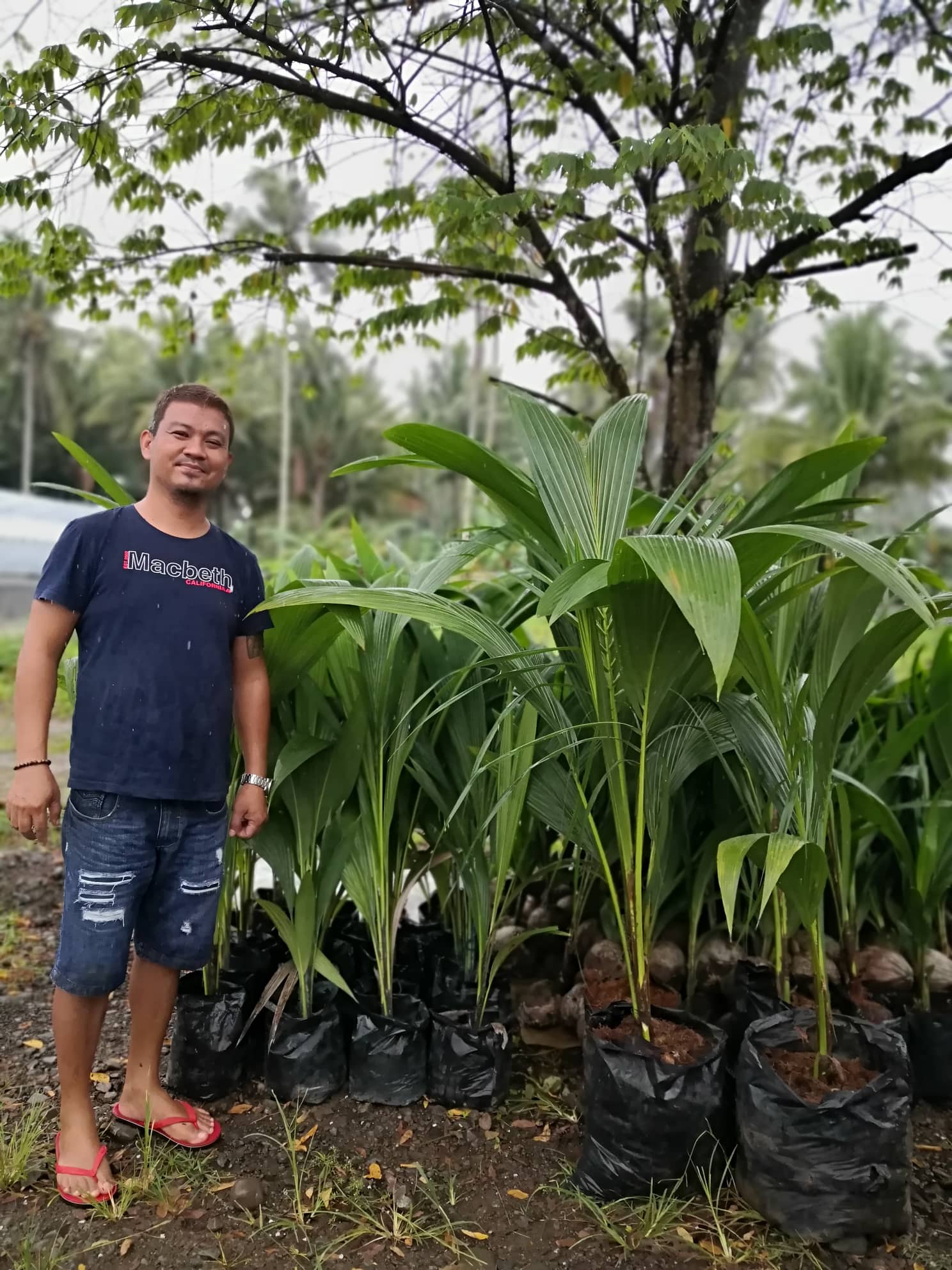
Land preparation
One of the first important steps in nurturing coconut seedlings is proper land preparation. Begin by clearing the land and assessing the area to determine the number of coconut seedlings needed. It's essential to remove unnecessary or unproductive plants, as coconuts thrive in open areas. For a hectare of open land without intercropping, approximately 200 coconut seedlings can be planted. Maintain a planting distance of 7 to 8 meters between each seedling. If intercropping is part of your coconut production plan, increase the spacing to 10 meters, requiring around 120 coconut seedlings per hectare.
Proper elevation
Consider the elevation of your land when planting coconut seedlings. Ensure that the land is slightly elevated to prevent waterlogging, which can be detrimental to coconut trees. Adequate drainage is essential to prevent root rot and other water-related issues.
Acclimatization
If you've purchased coconut seedlings from a distant farm, it's crucial to allow them to acclimatize to their new environment. After their arrival on your farm, let the coconut seedlings rest for three to five days before planting. This period of adjustment will help them adapt to the local conditions and ensure better survival rates.
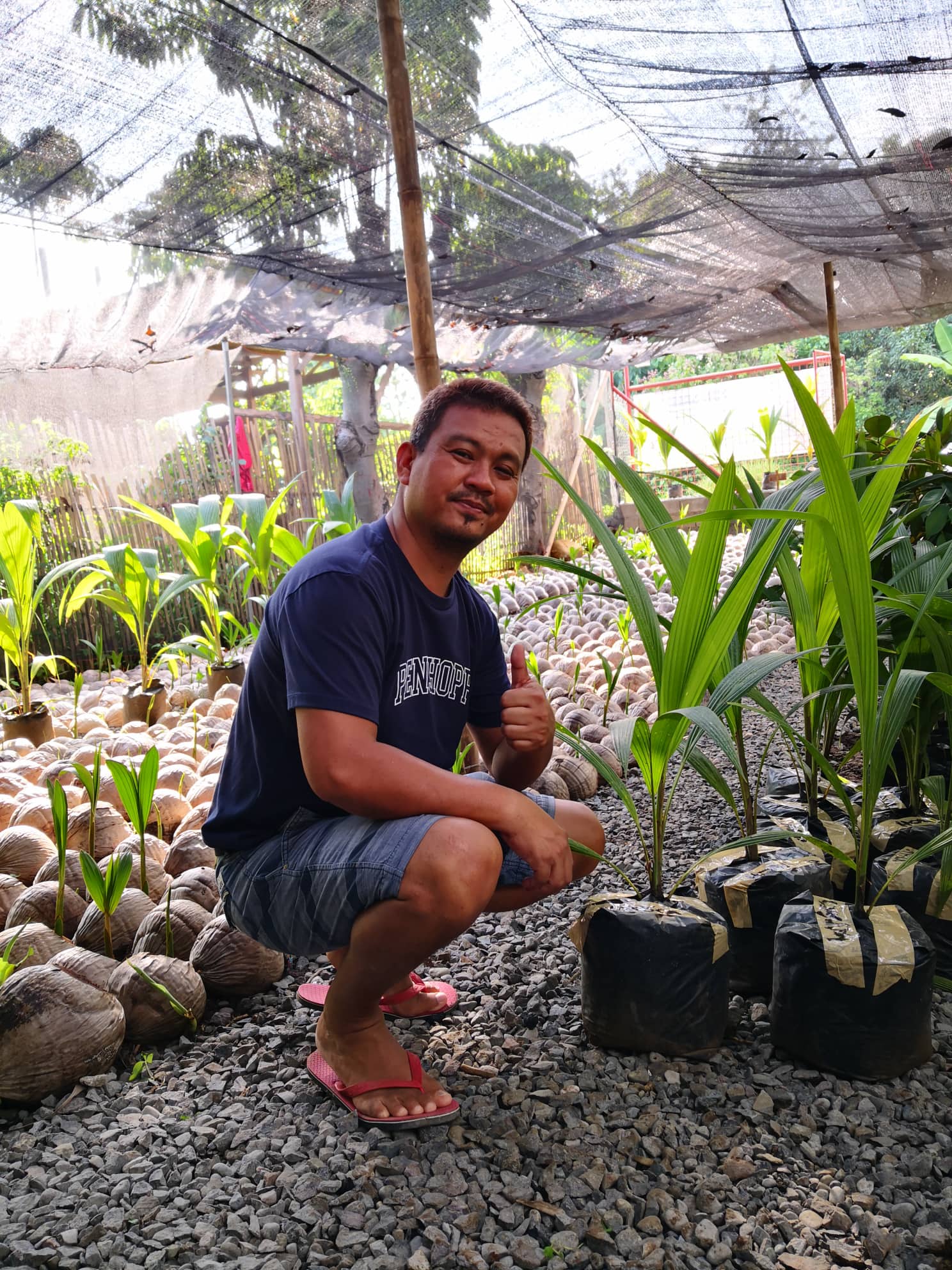
Basal fertilizer application
During planting, apply basal fertilizer to provide essential nutrients for your coconut seedlings. Dig a hole at the planting location, and then apply a half-can of regular sardine-sized complete fertilizer (14-14-14). Cover the fertilizer with soil, and then plant your coconut seedling above it. This practice will give your seedlings a strong start and promote healthy growth.
Insecticide application
Coconut seedlings are particularly susceptible to insect damage, with the Brontispa beetle being a common threat. To protect your seedlings, consider regular insecticide applications, especially during the early stages of growth. The Brontispa beetle can cause extensive damage by feeding on tender fronds and leaves, leading to unsightly holes and foliage skeletonization.
Adult beetles are typically small, measuring about 5-8 millimeters in length, with an elongated oval shape. They are glossy and usually range in color from metallic green to bluish-black, With bright yellow or orange markings on their bodies. Their most distinctive feature is the presence of two prominent spines or horns on the head, which resemble tiny antlers.
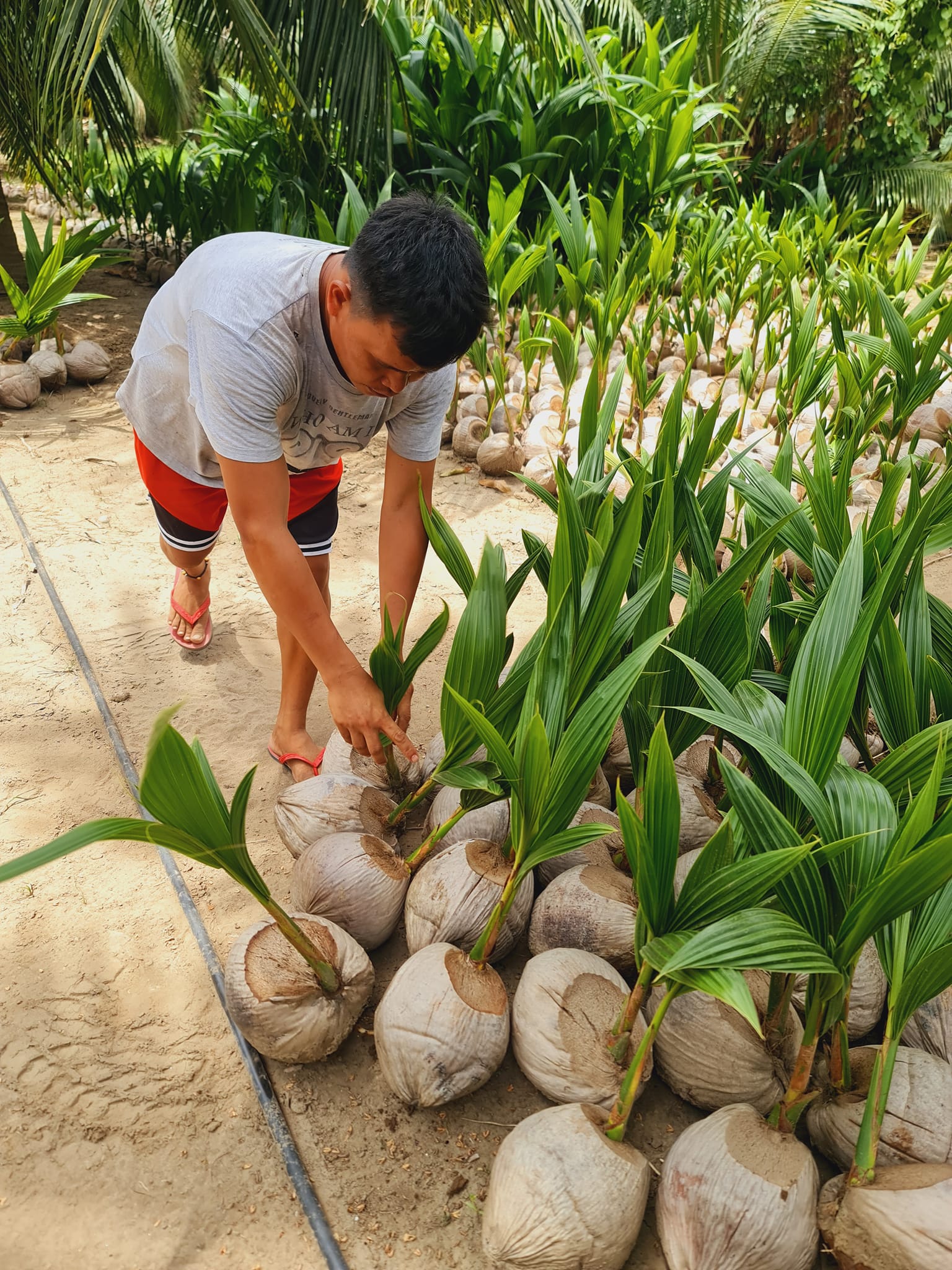
Mulching techniques
As much as possible, Lloyd recommends not placing mulch, such as dried weeds or coconut husks, directly against the coconut seedlings. Insects often hide beneath mulch, reducing the effectiveness of insecticide sprays. Instead, place mulch around the coconut plants at a distance without touching them. It’s essential to maintain a distance to avoid creating a breeding ground for insect pests.
Adequate water supply
To ensure the healthy development of coconut seedlings, maintain a regular and reliable source of water. Consistent moisture is crucial, as coconuts require adequate hydration to establish strong root systems and grow vigorously.
By following these guidelines, you can effectively care for your coconut seedlings and set the stage for a successful coconut farming venture. With proper land preparation, acclimatization, fertilization, pest management, mulching, water supply, and elevation considerations, your coconut trees are more likely to thrive and yield bountiful harvests for years to come.
Photo courtesy of Pantollano Coconut Farm