







Hope on four legs
Volunteer K-9 teams show how training, trust and community action can strengthen disaster resilience.
By Len Amadora
Published Feb 2, 2026 10:45 am


By LEN AMADORA
When it comes to disasters, preparedness is often taken for granted—until a calamity strikes. If there is one lesson that floods, landslides and earthquakes continue to teach, it is that resilience is not built overnight. Being prepared means anticipating what may come; being resilient, however, is measured by how well communities recover after a disaster.
When disaster strikes, resilience often emerges in unexpected forms. For the Metro Manila Dogs Association K-9 Corps (MMDA K-9 Corps), a reliable lifeline can be found closer to home—in household pets.

The MMDA K-9 Corps was previously featured in a Manila Bulletin article, “Resilience lives in every act of kindness,” which highlighted the deployment of Ghost, a wide-eyed German Shepherd, and the Corps during rescue operations following a magnitude 6.9 earthquake in Cebu Province. The story underscored how resilience is embedded not only in the systems we build, but also in the compassion we show, and the heroes we sometimes overlook.
Dogs are more than loyal and playful companions. Their keen sense of smell and agility make them well-suited for search and rescue (SAR) work. With proper training, their natural abilities can bring hope to communities in crisis and serve as vital partners in disaster response.
In Metro Manila, volunteers from the MMDA K-9 Corps dedicate their time and expertise to building capable canine teams that support disaster response and recovery operations. The organization is a non-government, non-profit group run entirely by volunteers from diverse backgrounds. United by a shared passion for training working dogs and a strong commitment to public service, the Corps focuses on developing canine teams trained specifically for disaster operations.
How it all began
The group was founded in 2016 by Ramon Santiago, a retired deputy executive director of the Program Management Office for Earthquake Resiliency of the Greater Metro Manila Area. The initiative was inspired by concerns over "The Big One"—a predicted magnitude 7.2 earthquake linked to the West Valley Fault—and the urgent need to strengthen community preparedness.

The group’s vision was simple: to train household pets for search and rescue so families and their dogs could contribute to disaster preparedness and response, starting at the barangay level.
Together with Cris Palcis, now president and head trainer, and other dog owners and volunteers, the group trains household pets for SAR roles, empowering families and communities to take part in disaster response efforts.
One defining moment came in 2019, when the Corps was deployed in Porac, Pampanga following the collapse of a supermarket after an earthquake. Amid the rubble, the SAR team located signs of life—an experience that affirmed the importance of discipline, preparation and persistence. It became a defining chapter in the organization’s mission and a reminder that training can save lives.
Qualities that matter
Dogs have always been admired for their loyalty and sharp senses. These traits are crucial for search and rescue missions where every second counts. These natural abilities are further developed by the MMDA K-9 Corps, training dogs to locate survivors, navigate unstable terrain and operate in high-stress environments.

Beyond natural traits, SAR dogs must be agile, confident, and stable. Their handlers, meanwhile, are expected to remain calm, patient and decisive under pressure.
"They are each other's lifeline." says Charina Gamurot, an MMDA K-9 volunteer, in an interview with Manila Bulletin.
The Corps emphasizes that effective SAR work depends not only on skill, but also on trust. This bond allows teams to move efficiently in disaster zones, often with less environmental disruption than heavy machinery.
Regular training in varied environments and simulated scenarios keep both dogs and handlers adaptable. Handlers are also trained in the Incident Command System, first aid, and SAR fundamentals. This ensures they can integrate seamlessly into coordinated disaster response operations.
The Filipino spirit of bayanihan
At its core, the MMDA K-9 Corps reflects the Filipino tradition of bayanihan. Bayanihan is rooted in the belief that communities face challenges together. Where neighbors once carried houses to safer ground; today volunteers offer their time, skills and even their pets to serve others.
In the field, communication between the dog and the handler becomes instinctive—a quiet, modern expression of bayanihan. Dogs alert handlers to finds, while handlers provide direction and reassurance.
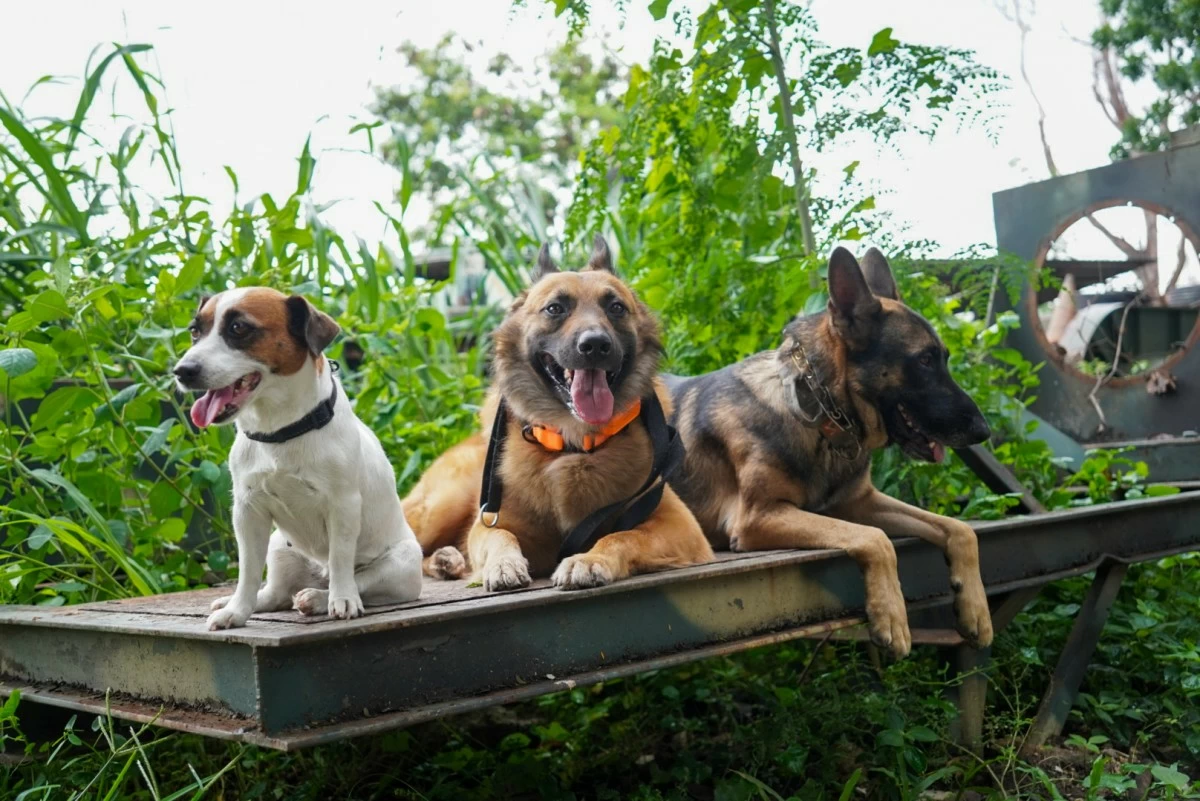
Beyond just responding to disasters, the Corps also promotes long-term preparedness through its Basic Canine Search and Rescue training, helping communities harness teamwork and the natural abilities of dogs. Their method is practical, environmentally conscious and rooted in care for both people and nature.
Looking ahead, the MMDA K-9 Corps hopes to be remembered as a small group of volunteers driven by love for dogs and belief in community strength. Its long-term goal is to equip every barangay with a trained SAR dog. The group now serves as adviser to the Philippine Navy's NIF-NCR K-9 SAR team, the Muntinlupa K-9 SAR unit and a volunteer group in San Jose City, Nueva Ecija.

In Mandaluyong City, Barangay Wack-Wack Greenhills-East became the first barangay to have a SAR dog. The Corps also participates in the city's annual Furry Special Day, where trained dogs serve as Emotional Support Animals (ESAs) for kids with special needs.
MMDA K-9 Corps demonstrates that resilience is proactive and can be nurtured through unexpected partnerships—including those with household pets. Just as dogs undergo rigorous training; families and communities must also practice preparedness. Resilience, after all, is stronger when everyone participates.