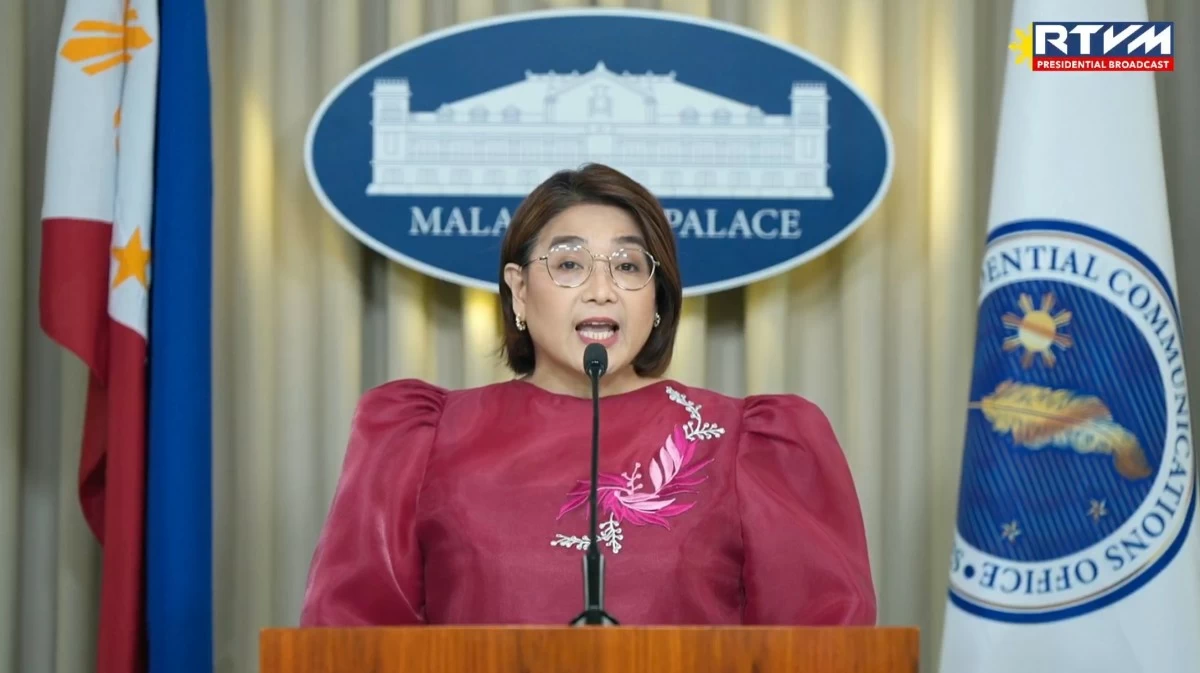
Malacañang clarified that the over P4 trillion borrowed under the Marcos administration was spent on essential public services and development programs, not wasted on frivolous spending. Communications Undersecretary Claire Castro said this as critics raised concerns about the ballooning...
While the share of the Philippine government's budget deficit and debt to the economy are going down and "stabilizing," respectively, the ASEAN+3 Macroeconomic Research Office (AMRO) is urging fiscal authorities across the region to remain prudent in spending on public goods and services as a...
The government’s revenue collections will be impacted by the downward revision of the gross domestic product (GDP) but should be offset by improvement in their tax administration, according to National Economic and Development Authority (NEDA) Secretary Arsenio M. Balisacan. During a Malacañang...
The news of the country's debt nearing P15 trillion is undoubtedly alarming. It raises the question of why the government continues to borrow extensively, despite its significant indebtedness. While many Filipinos tend to avoid borrowing, viewing debt as inherently negative and a sign of poor...
The Marcos administration amassed a total of P1.2 trillion in new debt during its first full-year in Malacañang. Data from the Bureau of the Treasury showed that the national government concluded 2023 with a total outstanding debt of P14.616 trillion, nine percent or P1.197 trillion higher...
Finance Secretary Ralph G. Recto has dismissed worries about the country's ballooning debt stock, affirming the government's capability to meet all maturing financial obligations. Recto said that the current total government debt, which amounted to P14.51 trillion as of November last year,...
Finance Secretary Ralph G. Recto has urged Congress to work with the Department of Finance (DOF) to quickly pass key reforms necessary to lower the government’ budget deficit and debt levels. Recto, who served as a legislator in both the upper and lower houses, said that the DOF is currently...
The target ratio for the country’s debt as a share of the gross domestic product (GDP) for the medium term is attainable, Department of Finance Secretary Benjamin E. Diokno said. In a panel discussion with the Philippines’ economic managers, Diokno said that the government’s target ratio will...
Department of Finance (DOF) Secretary Benjamin E. Diokno said that the government is firm on reducing the country’s budget deficit-to-gross domestic product (GDP) to three percent by 2028. This after credit rating agency Fitch Ratings noted the country’s general government deficit to narrow to...
Economists and financial experts have emphasized the importance of the debt-to-GDP ratio as a crucial economic indicator, surpassing the significance of the nominal amount of debt held by the government. Traditionally, the focus has been on the nominal amount of debt, which simply measures...
The Department of Finance (DOF) remained confident that the national government’s debt ratio would decline during the Marcos administration despite its recent uptick in the third-quarter. Finance Secretary Benjamin E. Diokno said the government’s ability to pay its debts continues to improve...
The country's debt ratio climbed to a 17-year high in the third-quarter this year as new government loans continued to pile up, data from the Bureau of the Treasury revealed. As of September 2022, the outstanding obligations of the national government as a share of gross domestic product (GDP) hit...