2021 Mobile threats report Cybercriminals are foregoing attacks on mobile devices to focus on the more dangerous and profitable theft of users’ banking and gaming credentials, as well as other personal data, according to the latest findings of cybersecurity solutions provider Kaspersky. Last...
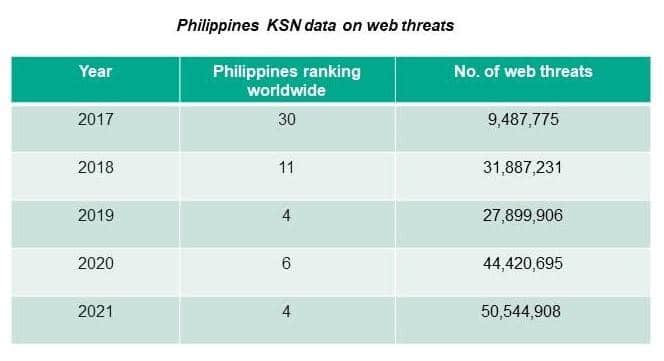
The Philippines is the fourth most attacked country in the world, with over 50 million web threat attempts last year, according to latest statistics from Kaspersky Security Network (KSN), the cybersecurity company’s cloud-based threat intelligence service. media From 2017 to 2021, the...
66229 Most Filipinos, 65 percent of participants in Kaspersky's latest digital payment systems survey, changed the passwords on their bank or digital wallet accounts and apps when they fall victim to online fraud. On the other hand, half of surveyed Filipino victims of online scammers and...
media One in two, or 45 percent of people surveyed in the Philippines and Southeast Asia (SEA), lost money to online love scams, according to a recent Kaspersky study. The oldest and loneliest group lost the most - over half a million pesos, from online romance fraud. Specifically, the two oldest...
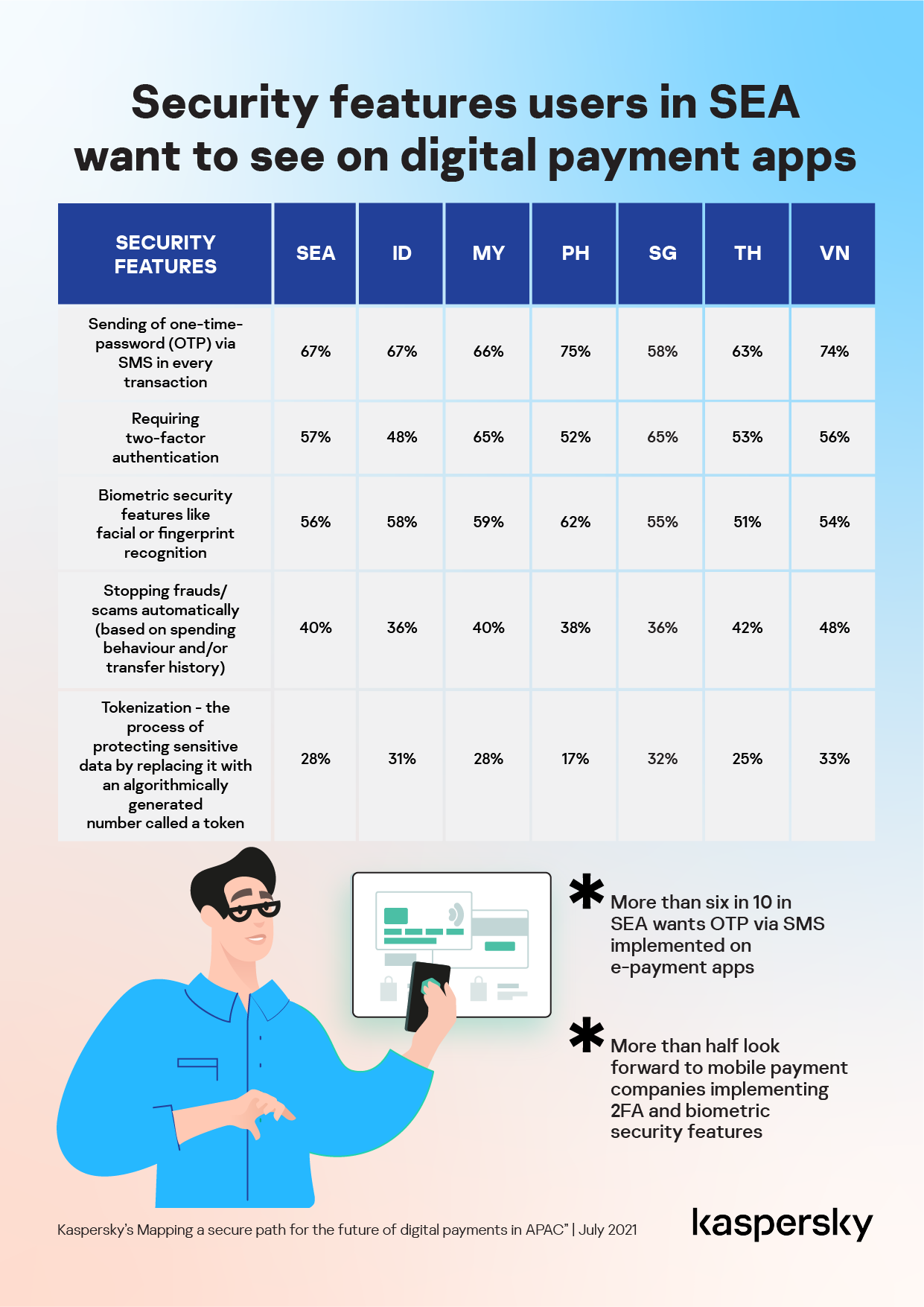
media More than three in five or 67 percent, users of digital banking and e-wallet apps in Southeast Asia (SEA) prefer one-time-passwords (OTPs) through text (SMS) for every transaction, according to a study. A Kasperksy study "Mapping a secure path for the future of digital payments in Asia...
media Increased cashless payments in Asia Pacific (APAC) during the pandemic made the region a hotspot for banking Trojans, one of the most dangerous malware used to steal money from users’ bank accounts. And the Philippines logged the highest number of unique users attacked in APAC by all...
Digital Payment Adoption in Asia Pacific_Landscape Cash remains as king in the Philippines and Asia Pacific (APAC), at least for now, with 70 percent of respondents in Kaspersky's latest study, still using physical notes for day-to-day transactions. However, 58 percent are already using mobile...
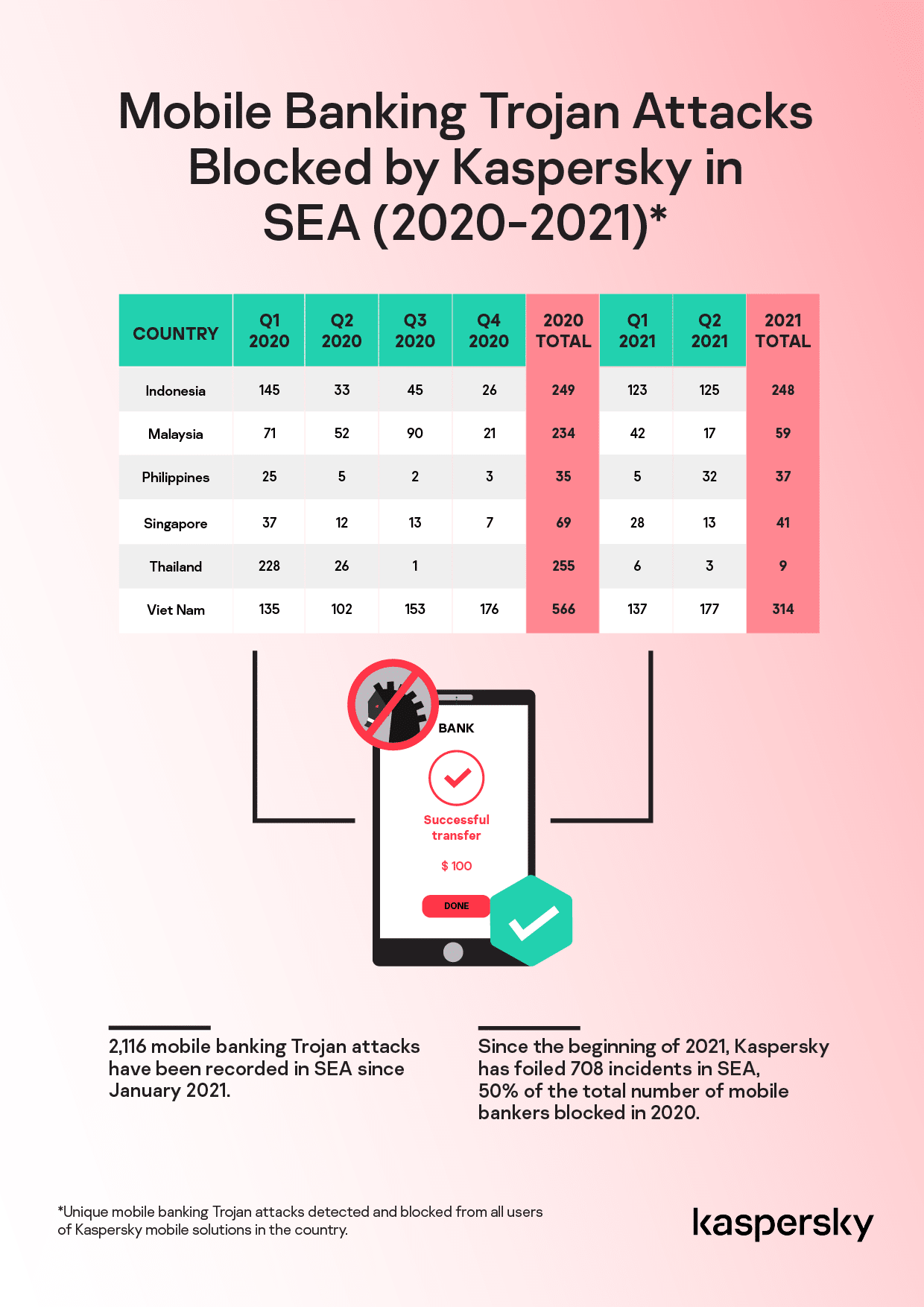
Cybercriminals now target mobile banking in the Philippines and Southeast Asia to steal money as the continuing pandemic forces people to pay online. Mobile banking Trojan attacks in the region surged 60 percent in the 2nd quarter of 2021 versus the same period last year, according to global...
Work-from-home computers in the Philippines are now primary targets of cybercriminals, with almost 5 Million attacks, up 98.41 percent in the first half of 2021 versus the same period in 2020, according to the latest Kaspersky report. In the first half of last year, Kaspersky recorded just half the...
As the remote work setup continues in the pandemic, mobile malware plagues businesses in the Philippines and the rest of Southeast Asia(SEA), according to the latest report of cybersecurity firm, Kaspersky. Mobile malware is malicious software infecting mobile devices - handsets, tablets and other...
A rare, wide-scale, cyberespionage malware now targets users in Southeast Asia, mostly in the Philippines. Already, the advanced persistent threat (APT) campaign victimized 1,400 users in the Philippines, some of which were government entities, according to experts of cybersecurity firm Kaspersky....
Generation Z and Gen X in the Philippines and the rest of Southeast Asia (SEA) are less afraid about future technologies such as biometrics, smart appliances, robotic devices and deepfakes. By contrast, Millennials and Boomers are more guarded, according to security firm Kaspersky’s latest...