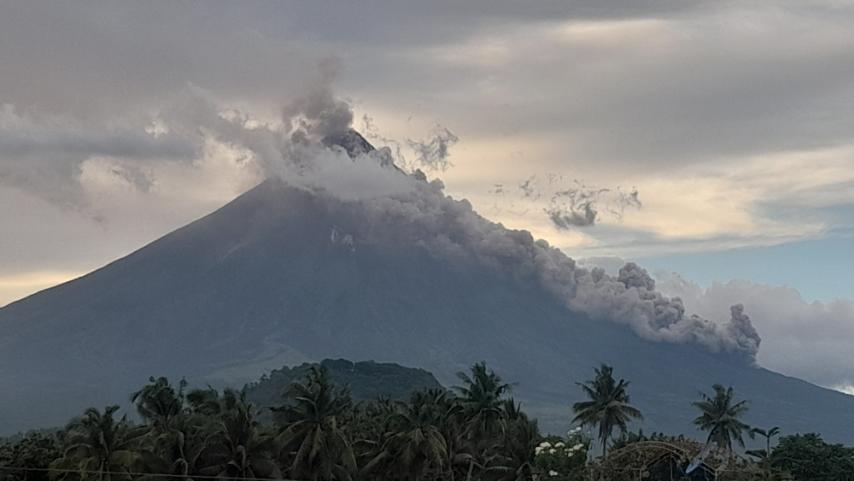
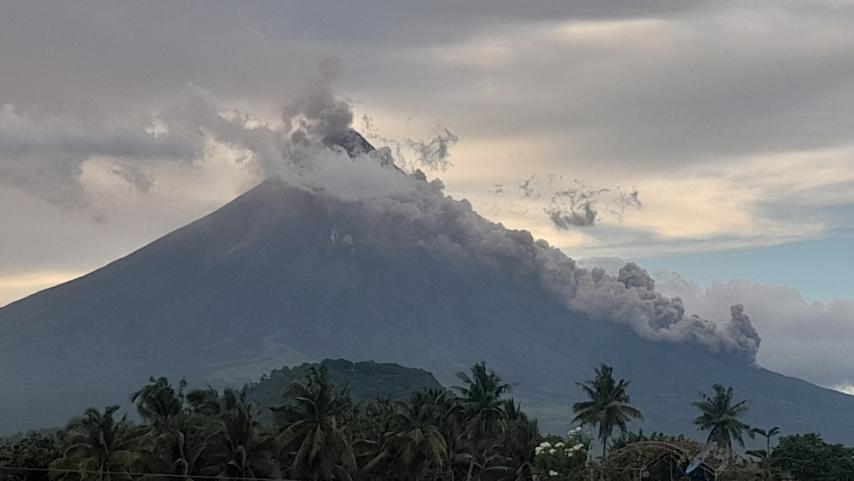
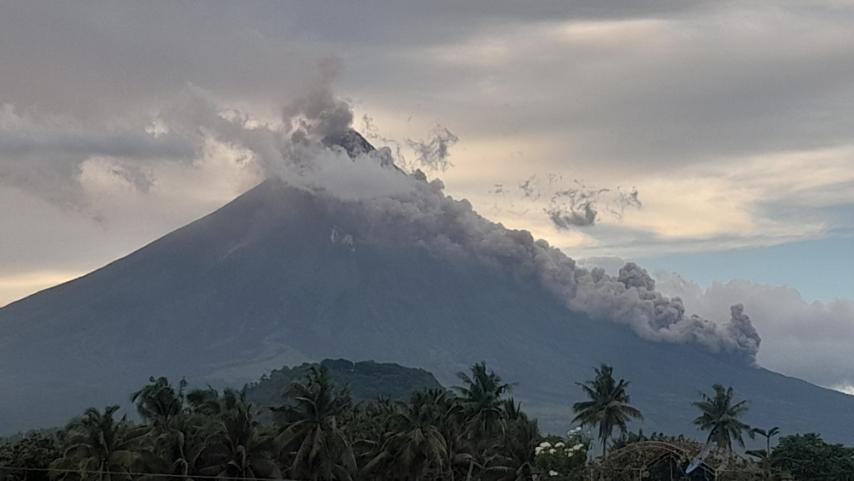
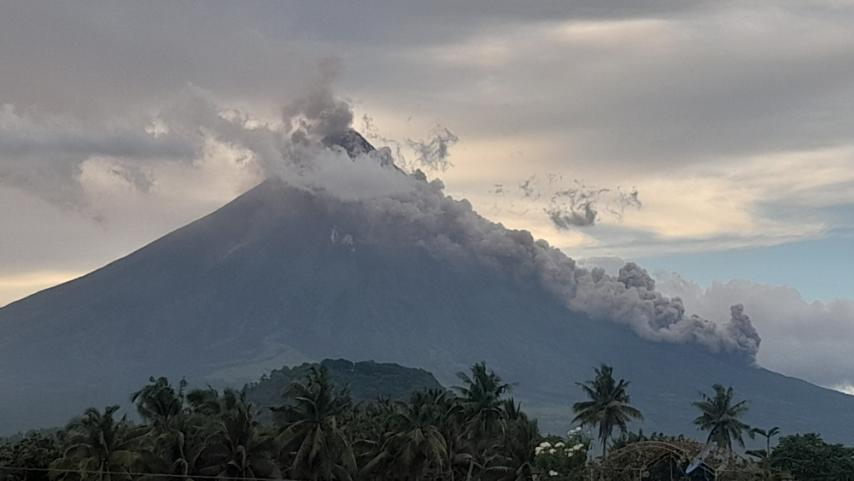
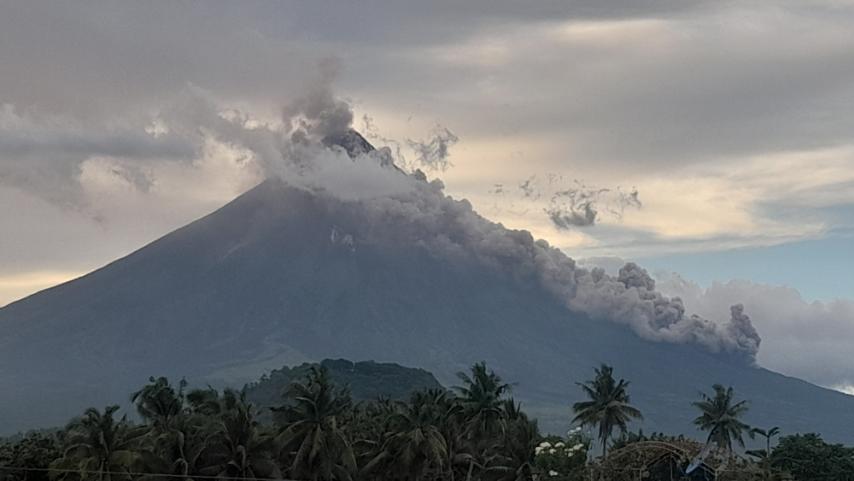
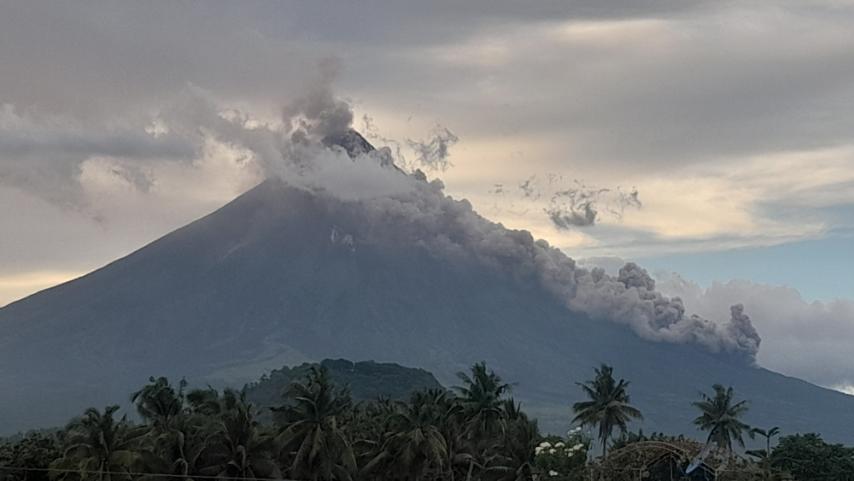
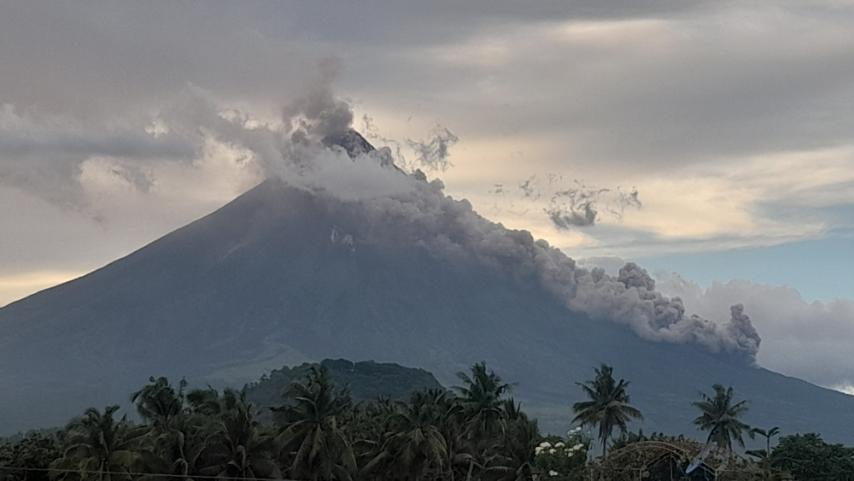
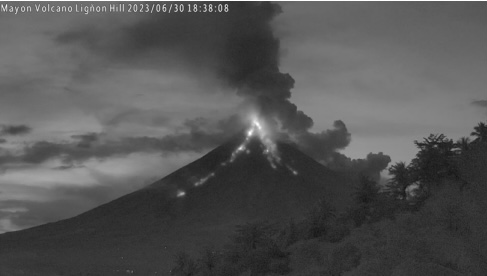
The Philippine Institute of Volcanology and Seismology (Phivolcs) said on Thursday, July 20 that low-frequency volcanic earthquakes (LFVQs) associated with the discrete and rapid releases of volcanic gas dominated Mayon Volcano’s eruptive activity in the past 24 hours. A total of 90 LFVQs were...
Mayon Volcano continued to exhibit signs of escalating unrest as indicated by ash emissions, volcanic earthquakes, and rumbling sounds over the past 24 hours, said the Philippine Institute of Volcanology and Seismology (Phivolcs) on Wednesday, July 19. Phivolcs detected 304 weak and shallow...
The Philippine Institute of Volcanology and Seismology (Phivolcs) detected an increase in the frequency of volcanic earthquakes in Mayon, prompting the agency to issue a new notice of “increased activity” in the restive volcano in Albay on Tuesday afternoon, July 18. Phivolcs said 573...
The lava from the ongoing eruption of Mayon Volcano in Albay has moved further down the restive volcano, based on the bulletin issued by the Philippine Institute of Volcanology and Seismology (Phivolcs) on Tuesday, July 18. The approximate length of the lava flow along the Bonga gully on Mayon...
The number of earthquakes caused by Mayon Volcano’s heightened unrest has significantly increased in the last 24 hours, based on the monitoring of the Philippine Institute of Volcanology and Seismology (Phivolcs) between Sunday, July 16, and Monday, July 17. Phivolcs in its bulletin released at 8...
Lava flow from the Mayon Volcano’s crater is still occurring at a “very slow” rate, based on the monitoring of the Philippine Institute of Volcanology and Seismology (Phivolcs) from Wednesday, July 12, to Thursday, July 13. Phivolcs said that the "very slow effusion of lava" causes the...
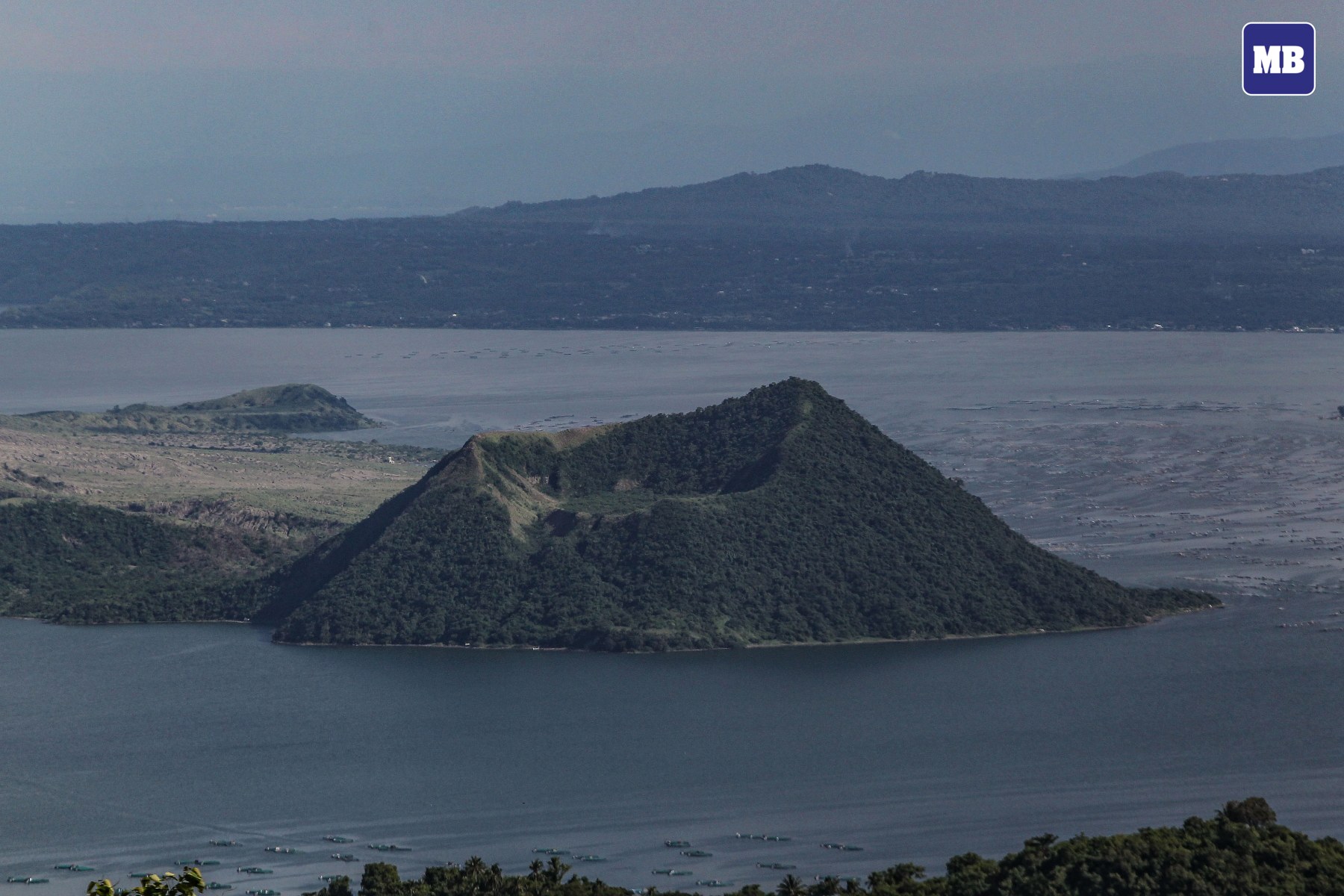
The Philippine Institute of Volcanology and Seismology (Phivolcs) said on Thursday, July 13 that it is considering raising the Taal Volcano’s alert level from 1 to 2 if the restive volcano’s activity worsens. Phivolcs made the announcement after detecting a series of shallow tremors and an...
The Philippine Institute of Volcanology and Seismology (Phivolcs) on Wednesday, July 12, continued to record rockfalls and volcanic earthquakes due to the ongoing effusive eruption of Mayon Volcano in Albay. Phivolcs said Mayon Volcano had 423 rockfall events, 24 volcanic earthquakes, as well as...
The ongoing eruption of Mayon Volcano has caused volcanic ash to fall on parts of Albay, the Philippine Institute of Volcanology and Seismology (Phivolcs) said on Tuesday, July 11. Thin ashfall is said to have been observed in the town of Camalig, as well as in Brgy. Mabinit in Legazpi City and...
The United States government on Monday, July 10, said it had provided P13 million worth of assistance to communities affected by the ongoing eruption of Mayon Volcano in Albay province. United States Agency for International Development (USAID) partners with the International Organization for...
The Philippine Institute of Volcanology and Seismology (Phivolcs) issued a new notice of "increased activity" in Mayon Volcano on Monday, July 10, due to the observation of more pyroclastic density current (PDC) occurrences over the past 24 hours. Phivolcs recorded 33 PDC events caused by dome...
Mayon Volcano’s ongoing activity still shows no signs of slowing down after a month of increased unrest. Between 5 a.m. on Saturday, July 8, and 5 a.m. on Sunday, July 9, the Philippine Institute of Volcanology and Seismology (Phivolcs) recorded three lava dome collapse-triggered pyroclastic...