ADVERTISEMENT

Huge payout expected for a rare coin bought by Ohio farm family and hidden for decades

Published Sep 9, 2024 05:05 am
10odd news.jpg
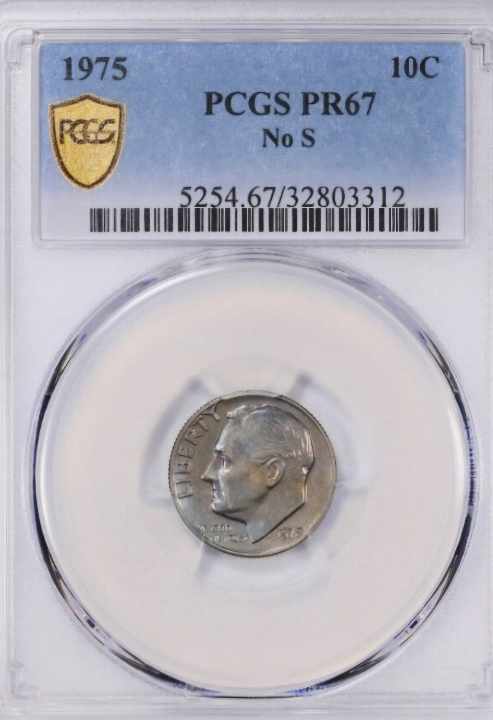
This undated image provided by GreatCollections shows a 1975 proof set dime mistakenly made without the San Francisco Mint’s letter S mintmark. (GreatCollections via AP)

TOLEDO, Ohio (AP) — Three sisters from Ohio who inherited a dime kept in a bank vault for more than 40 years knew it had some value. But they had no idea just how much until just a few years ago.

The extraordinarily rare coin, struck by the U.S. Mint in San Francisco in 1975, could bring more than $500,000, said Ian Russell, president of GreatCollections, which specializes in currency and is handling an online auction that will end in October.

What makes the dime depicting President Franklin D. Roosevelt so valuable is a missing “S” mint mark for San Francisco, one of just two without the mark known to exist. The other one sold at a 2019 auction for $456,000 and then again months later to a private collector.

While serious coin collectors have long known about the existence of these two rare dimes, their whereabouts had remained a mystery since the late 1970s.

 “They were hidden for decades.” Russell said. “Most major collectors and dealers have never seen one.”

The mint in San Francisco made more than 2.8 million special uncirculated “proof” sets in 1975 that featured six coins and were sold for $7. Collectors a few years later discovered that two dimes from the set were missing the mint mark.

The sisters from Ohio who inherited one of those two dimes after the recent death of brother want to remain anonymous given their sudden windfall, Russell said.

They shared with Russell that their brother and mother in 1978 bought the first error coin discovered for $18,200, which would amount to roughly $90,000 today. Their parents, who operated a dairy farm, saw the coin as a financial safety net.

One of the sisters said her brother often talked about the rare coin. But she never saw it first-hand until last year.

Russell, whose company is based in Irvine, California, said their brother reached out to him about seven years ago and eventually told him about the coin. He too kept the secret.

When Russell told one of the sisters just a few years ago about the coin’s potential value, he said she remarked “is that really possible?”

Now the coin, known as the “1975 ‘no S’ proof dime,” will be displayed at a coin show beginning Wednesday in Tampa, Florida, and before the auction closes in late October, Russell said.

While there is a chance more examples of the rare dime are out there, they would only be found among the 1975 “proof” sets and not in anyone’s pocket change, Russell said.

Still, he expects this latest discovery to set off a lot of searching.

ADVERTISEMENT
.most-popular .layout-ratio{ padding-bottom: 79.13%; } @media (min-width: 768px) and (max-width: 1024px) { .widget-title { font-size: 15px !important; } }

{{ articles_filter_1561_widget.title }}

.most-popular .layout-ratio{ padding-bottom: 79.13%; } @media (min-width: 768px) and (max-width: 1024px) { .widget-title { font-size: 15px !important; } }

{{ articles_filter_1562_widget.title }}

.most-popular .layout-ratio{ padding-bottom: 79.13%; } @media (min-width: 768px) and (max-width: 1024px) { .widget-title { font-size: 15px !important; } }

{{ articles_filter_1563_widget.title }}

{{ articles_filter_1564_widget.title }}

.mb-article-details { position: relative; } .mb-article-details .article-body-preview, .mb-article-details .article-body-summary{ font-size: 17px; line-height: 30px; font-family: "Libre Caslon Text", serif; color: #000; } .mb-article-details .article-body-preview iframe , .mb-article-details .article-body-summary iframe{ width: 100%; margin: auto; } .read-more-background { background: linear-gradient(180deg, color(display-p3 1.000 1.000 1.000 / 0) 13.75%, color(display-p3 1.000 1.000 1.000 / 0.8) 30.79%, color(display-p3 1.000 1.000 1.000) 72.5%); position: absolute; height: 200px; width: 100%; bottom: 0; display: flex; justify-content: center; align-items: center; padding: 0; } .read-more-background a{ color: #000; } .read-more-btn { padding: 17px 45px; font-family: Inter; font-weight: 700; font-size: 18px; line-height: 16px; text-align: center; vertical-align: middle; border: 1px solid black; background-color: white; } .hidden { display: none; }
function initializeAllSwipers() { // Get all hidden inputs with cms_article_id document.querySelectorAll('[id^="cms_article_id_"]').forEach(function (input) { const cmsArticleId = input.value; const articleSelector = '#article-' + cmsArticleId + ' .body_images'; const swiperElement = document.querySelector(articleSelector); if (swiperElement && !swiperElement.classList.contains('swiper-initialized')) { new Swiper(articleSelector, { loop: true, pagination: false, navigation: { nextEl: '#article-' + cmsArticleId + ' .swiper-button-next', prevEl: '#article-' + cmsArticleId + ' .swiper-button-prev', }, }); } }); } setTimeout(initializeAllSwipers, 3000); const intersectionObserver = new IntersectionObserver( (entries) => { entries.forEach((entry) => { if (entry.isIntersecting) { const newUrl = entry.target.getAttribute("data-url"); if (newUrl) { history.pushState(null, null, newUrl); let article = entry.target; // Extract metadata const author = article.querySelector('.author-section').textContent.replace('By', '').trim(); const section = article.querySelector('.section-info ').textContent.replace(' ', ' '); const title = article.querySelector('.article-title h1').textContent; // Parse URL for Chartbeat path format const parsedUrl = new URL(newUrl, window.location.origin); const cleanUrl = parsedUrl.host + parsedUrl.pathname; // Update Chartbeat configuration if (typeof window._sf_async_config !== 'undefined') { window._sf_async_config.path = cleanUrl; window._sf_async_config.sections = section; window._sf_async_config.authors = author; } // Track virtual page view with Chartbeat if (typeof pSUPERFLY !== 'undefined' && typeof pSUPERFLY.virtualPage === 'function') { try { pSUPERFLY.virtualPage({ path: cleanUrl, title: title, sections: section, authors: author }); } catch (error) { console.error('ping error', error); } } // Optional: Update document title if (title && title !== document.title) { document.title = title; } } } }); }, { threshold: 0.1 } ); function showArticleBody(button) { const article = button.closest("article"); const summary = article.querySelector(".article-body-summary"); const body = article.querySelector(".article-body-preview"); const readMoreSection = article.querySelector(".read-more-background"); // Hide summary and read-more section summary.style.display = "none"; readMoreSection.style.display = "none"; // Show the full article body body.classList.remove("hidden"); } document.addEventListener("DOMContentLoaded", () => { let loadCount = 0; // Track how many times articles are loaded const offset = [1, 2, 3, 4, 5, 6, 7, 8, 9, 10]; // Offset values const currentUrl = window.location.pathname.substring(1); let isLoading = false; // Prevent multiple calls if (!currentUrl) { console.log("Current URL is invalid."); return; } const sentinel = document.getElementById("load-more-sentinel"); if (!sentinel) { console.log("Sentinel element not found."); return; } function isSentinelVisible() { const rect = sentinel.getBoundingClientRect(); return ( rect.top < window.innerHeight && rect.bottom >= 0 ); } function onScroll() { if (isLoading) return; if (isSentinelVisible()) { if (loadCount >= offset.length) { console.log("Maximum load attempts reached."); window.removeEventListener("scroll", onScroll); return; } isLoading = true; const currentOffset = offset[loadCount]; window.loadMoreItems().then(() => { let article = document.querySelector('#widget_1690 > div:nth-last-of-type(2) article'); intersectionObserver.observe(article) loadCount++; }).catch(error => { console.error("Error loading more items:", error); }).finally(() => { isLoading = false; }); } } window.addEventListener("scroll", onScroll); });

Sign up by email to receive news.