

ADVERTISEMENT

United, Alaska Airlines report loose hardware on 737 MAX planes

Published Jan 9, 2024 08:02 am

NEW YORK, United States -- United and Alaska Airlines both reported on Monday that loose hardware had been discovered on some of their Boeing 737 MAX 9 planes during preliminary inspections after a dramatic mid-flight incident last week.

The disclosures come as US federal transportation inspectors probe what caused a so-called door plug component to blow out last Friday on an Alaska Airlines passenger plane, forcing it to make an emergency landing.

United said on Monday it had "found instances that appear to relate to installation issues in the door plug -- for example, bolts that needed additional tightening."

Hours later, Alaska Airlines said its staff had found that "loose hardware was visible on some aircraft."
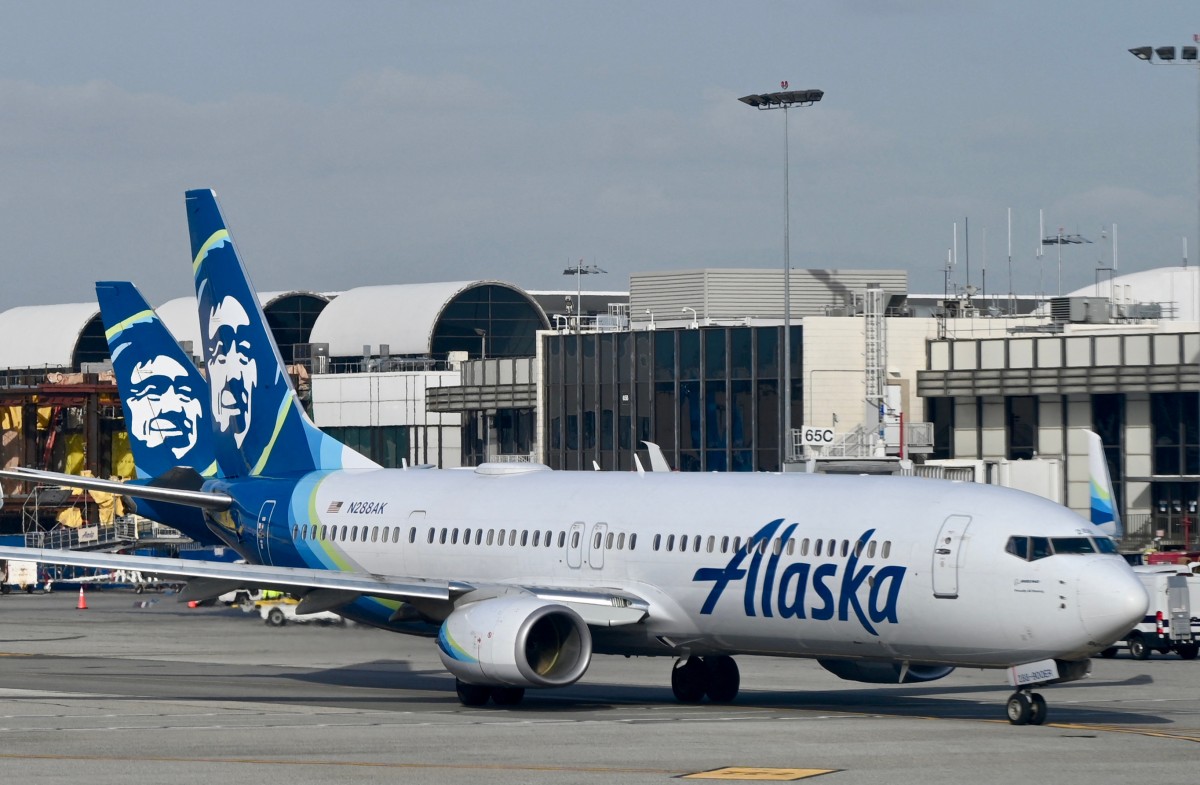
Alaska Airlines AFP
Photo from AFP

Boeing shares tumbled on Monday as investors began to assess the financial implications of the incident, while US aviation authorities provided airlines with protocols to check planes with similar configurations to the 737 MAX 9 aircraft involved in Friday's incident.

National Transportation Safety Board (NTSB) inspectors said late Monday that they did not find bolts for the component that came off on Friday's Alaska Airlines flight, but hadn't determined whether they existed or had flown off with the panel.

Through further equipment testing, "we will be able to determine whether the bolts were there," NTSB Chair Jennifer Homendy told reporters.

Homendy didn't comment directly on the latest disclosures from United and Alaska about loose components, saying the probe was focused on Friday's incident. But the board could issue an urgent safety recommendation if need be, she said.

Hundreds of flights have been canceled due to the grounding of a fraction of the MAX fleet.

"As operators conduct the required inspections, we are staying in close contact with them and will help address any and all findings," Boeing said late Monday.

"We are committed to ensuring every Boeing airplane meets design specifications and the highest safety and quality standards."

Aviation analysts said the issue appeared to be a quality control defect rather than a design issue akin to the problem with a flawed flight handling system involved in two fatal MAX crashes in 2018 and 2019.

But Boeing has struggled with supply chain and quality control problems since the MAX returned to service, limiting its output and hitting its bottom line.

In December, Boeing urged airlines to undertake additional inspections to check for loose hardware on plane rudder control systems after an international operator discovered a bolt with a missing nut while performing routine maintenance.

- Inspection protocols -

United has 79 MAX 9 planes, more than any other carrier.

The US airline said it has canceled 200 MAX 9 flights since the incident and expects "significant cancelations" on Tuesday.

Following the Alaska Airlines incident, the Federal Aviation Administration (FAA) ordered operators to ground 171 jets with the same door plug configuration.

A door plug is a cover panel used to fill an unneeded emergency exit in planes with smaller seat configurations.

On Monday, the FAA announced that it approved a roadmap for airlines to complete inspections that include both left and right door plugs, components and fasteners.

Alaska Airlines said it was still awaiting "final documentation" from Boeing and the FAA before beginning the formal inspection process.

"The safety of these aircraft is our priority and we will take the time and steps necessary to ensure their airworthiness," the carrier said.

AeroMexico, which has suspended 19 planes, said it is in the "final phase" of inspections, adding: "We expect all MAX-9s in our fleet to return to operation in the upcoming days."

- Culture challenge -

The incident is the latest setback for Boeing, particularly over the 737 MAX.

The worst were two crashes -- a Lion Air flight in October 2018 and an Ethiopian Airlines flight in March 2019 -- that caused the deaths of 346 people in total and triggered the grounding of all 737 MAX planes for nearly two years.

Boeing Chief Executive Dave Calhoun called a company-wide meeting for Tuesday focusing on safety.

Analysts said the Alaska Airlines problems may have stemmed from a manufacturing defect.

Since the crashes, Boeing has repeatedly slowed or suspended production on both the MAX and the larger 787 Dreamliner due to problems uncovered by staff.

The latest episode is "indicative of a major cultural challenge" facing Boeing, said Richard Aboulafia, managing director at AeroDynamic Advisory.

"They need to change. They can't just keep lurching from crisis to crisis."

Analysts said Boeing could face slower government approvals for new jets or on proposed repairs.


ADVERTISEMENT
.most-popular .layout-ratio{ padding-bottom: 79.13%; } @media (min-width: 768px) and (max-width: 1024px) { .widget-title { font-size: 15px !important; } }

{{ articles_filter_1561_widget.title }}

.most-popular .layout-ratio{ padding-bottom: 79.13%; } @media (min-width: 768px) and (max-width: 1024px) { .widget-title { font-size: 15px !important; } }

{{ articles_filter_1562_widget.title }}

.most-popular .layout-ratio{ padding-bottom: 79.13%; } @media (min-width: 768px) and (max-width: 1024px) { .widget-title { font-size: 15px !important; } }

{{ articles_filter_1563_widget.title }}

{{ articles_filter_1564_widget.title }}

.mb-article-details { position: relative; } .mb-article-details .article-body-preview, .mb-article-details .article-body-summary{ font-size: 17px; line-height: 30px; font-family: "Libre Caslon Text", serif; color: #000; } .mb-article-details .article-body-preview iframe , .mb-article-details .article-body-summary iframe{ width: 100%; margin: auto; } .read-more-background { background: linear-gradient(180deg, color(display-p3 1.000 1.000 1.000 / 0) 13.75%, color(display-p3 1.000 1.000 1.000 / 0.8) 30.79%, color(display-p3 1.000 1.000 1.000) 72.5%); position: absolute; height: 200px; width: 100%; bottom: 0; display: flex; justify-content: center; align-items: center; padding: 0; } .read-more-background a{ color: #000; } .read-more-btn { padding: 17px 45px; font-family: Inter; font-weight: 700; font-size: 18px; line-height: 16px; text-align: center; vertical-align: middle; border: 1px solid black; background-color: white; } .hidden { display: none; }
function initializeAllSwipers() { // Get all hidden inputs with cms_article_id document.querySelectorAll('[id^="cms_article_id_"]').forEach(function (input) { const cmsArticleId = input.value; const articleSelector = '#article-' + cmsArticleId + ' .body_images'; const swiperElement = document.querySelector(articleSelector); if (swiperElement && !swiperElement.classList.contains('swiper-initialized')) { new Swiper(articleSelector, { loop: true, pagination: false, navigation: { nextEl: '#article-' + cmsArticleId + ' .swiper-button-next', prevEl: '#article-' + cmsArticleId + ' .swiper-button-prev', }, }); } }); } setTimeout(initializeAllSwipers, 3000); const intersectionObserver = new IntersectionObserver( (entries) => { entries.forEach((entry) => { if (entry.isIntersecting) { const newUrl = entry.target.getAttribute("data-url"); if (newUrl) { history.pushState(null, null, newUrl); let article = entry.target; // Extract metadata const author = article.querySelector('.author-section').textContent.replace('By', '').trim(); const section = article.querySelector('.section-info ').textContent.replace(' ', ' '); const title = article.querySelector('.article-title h1').textContent; // Parse URL for Chartbeat path format const parsedUrl = new URL(newUrl, window.location.origin); const cleanUrl = parsedUrl.host + parsedUrl.pathname; // Update Chartbeat configuration if (typeof window._sf_async_config !== 'undefined') { window._sf_async_config.path = cleanUrl; window._sf_async_config.sections = section; window._sf_async_config.authors = author; } // Track virtual page view with Chartbeat if (typeof pSUPERFLY !== 'undefined' && typeof pSUPERFLY.virtualPage === 'function') { try { pSUPERFLY.virtualPage({ path: cleanUrl, title: title, sections: section, authors: author }); } catch (error) { console.error('ping error', error); } } // Optional: Update document title if (title && title !== document.title) { document.title = title; } } } }); }, { threshold: 0.1 } ); function showArticleBody(button) { const article = button.closest("article"); const summary = article.querySelector(".article-body-summary"); const body = article.querySelector(".article-body-preview"); const readMoreSection = article.querySelector(".read-more-background"); // Hide summary and read-more section summary.style.display = "none"; readMoreSection.style.display = "none"; // Show the full article body body.classList.remove("hidden"); } document.addEventListener("DOMContentLoaded", () => { let loadCount = 0; // Track how many times articles are loaded const offset = [1, 2, 3, 4, 5, 6, 7, 8, 9, 10]; // Offset values const currentUrl = window.location.pathname.substring(1); let isLoading = false; // Prevent multiple calls if (!currentUrl) { console.log("Current URL is invalid."); return; } const sentinel = document.getElementById("load-more-sentinel"); if (!sentinel) { console.log("Sentinel element not found."); return; } function isSentinelVisible() { const rect = sentinel.getBoundingClientRect(); return ( rect.top < window.innerHeight && rect.bottom >= 0 ); } function onScroll() { if (isLoading) return; if (isSentinelVisible()) { if (loadCount >= offset.length) { console.log("Maximum load attempts reached."); window.removeEventListener("scroll", onScroll); return; } isLoading = true; const currentOffset = offset[loadCount]; window.loadMoreItems().then(() => { let article = document.querySelector('#widget_1690 > div:nth-last-of-type(2) article'); intersectionObserver.observe(article) loadCount++; }).catch(error => { console.error("Error loading more items:", error); }).finally(() => { isLoading = false; }); } } window.addEventListener("scroll", onScroll); });

Sign up by email to receive news.