






Manila Bulletin
 Opinion
From recovery to resilience: Shaping the next chapter of Philippine microfinance
Opinion
From recovery to resilience: Shaping the next chapter of Philippine microfinance
Opinion
From recovery to resilience: Shaping the next chapter of Philippine microfinance
From recovery to resilience: Shaping the next chapter of Philippine microfinance
Published Aug 31, 2026 12:05 am
|
Updated Aug 31, 2026 11:01 am


FROM THE MARGINS
A few weeks ago, I had the privilege of joining fellow microfinance leaders, policymakers, and development practitioners at the 2026 Annual Conference of the Microfinance Council of the Philippines, Inc. (MCPI) at the Century Park Hotel in Manila.
Themed “From Recovery to Resilience: Shaping the Next Chapter of Philippine Microfinance,” the conference marked an important return to an in-person gathering and, more importantly, provided an opportunity for our sector to reflect on where we have been and where we must go next. MCPI aptly framed the discussions around building resilient communities, promoting sustainable growth, managing emerging risks, and improving the financial health of clients and their households.
For me, the message was clear: recovery is not enough. We must build resilience.
From financial access to financial health
One of the conference highlights was the keynote address of Bangko Sentral ng Pilipinas (BSP) Governor Eli M. Remolona Jr., who emphasized the importance of financial health as a foundation of resilience.
This is a critical evolution in the way we think about financial inclusion. Providing access to credit, savings, insurance, and other financial services is important, but access alone is not the ultimate goal. What matters is whether these services enable families to manage shocks, build savings, invest in productive activities, and improve their lives over time.
For microfinance institutions (MFIs), this means looking beyond the size of our loan portfolios or the number of clients we serve. We must ask a more fundamental question: Are our clients becoming financially stronger and more resilient because of the services we provide?
This is where our social mission and institutional sustainability must meet.
Preparing for a more uncertain world
The plenary session on “Recover, Adapt, and Thrive,” in which I was privileged to participate alongside Jonar Dorado of RAFI Microfinance, Rafael Lopa of ASA Philippines, and Mercedes Faustino of KCCDFI, gave us an opportunity to discuss the realities confronting the sector.
Facilitated by BSP Assistant Governor Pia Roman Tayag, the discussion reminded us that the risks facing our clients and institutions are becoming more complex. Economic shocks, climate change, cybersecurity, fraud, staff security and retention, and the rapid development of artificial intelligence are reshaping the environment in which microfinance operates.
We also discussed the importance of a lifecycle approach to social protection — recognizing that poor and vulnerable families need different forms of support at different stages of their lives and as they confront different risks.
This reinforces my long-standing belief that microfinance cannot stand alone. Credit must be complemented by savings, microinsurance, financial education, health and other social protection mechanisms. We must also help successful microentrepreneurs graduate toward the SME space, where they can create more jobs and contribute more significantly to local economic development.
Technology must serve people
The conference also looked squarely at the digital future of microfinance.
Discussions on credit information highlighted the importance of responsible data sharing in preventing over-indebtedness and promoting responsible lending. Meanwhile, sessions on artificial intelligence explored how emerging technologies can improve operational efficiency and enable MFIs to serve clients more effectively.
I welcome these developments, but I believe we must keep one principle at the center: technology must serve people, not replace our commitment to people.
AI can help MFIs analyze data, improve customer service, detect fraud, streamline operations, and develop more responsive products. But technology must be accompanied by strong governance, data protection, cybersecurity, ethical safeguards, and human oversight. The poorest and most vulnerable clients should never be left behind simply because they are less digitally connected.
Building the next chapter together
The afternoon plenary, “Building Financial Health and Resilience in Philippine Microfinance,” brought together BSP Deputy Governor Bernadette Romulo-Puyat, BSP Managing Director Charina De Vera-Yap, Securities and Exchange Commission Assistant Director Ryzpah Capicio and Ms. Rebecca Ancanan of Small Business Corporation. MCPI Chairperson Eduardo Jimenez facilitated the session, which underscored the fact that as client preferences and economic risks evolve, effective coordination between MFIs and government institutions is non-negotiable.
A resilient microfinance sector needs an enabling environment — one that encourages innovation while protecting clients, supports responsible finance, strengthens microinsurance and other risk-management mechanisms, and creates pathways for microenterprises to grow.
The conference also offered valuable global perspectives on what financial institutions may look like a decade from now. The challenge is not simply to survive the next crisis but to anticipate emerging risks and build institutions capable of adapting without losing sight of their social purpose.
I attended only the first day of the conference, but I left encouraged by the resilience and commitment of our microfinance industry. The next chapter calls us to build financially healthier clients, stronger institutions, and more resilient communities — embracing technology and innovation while keeping people and our social mission at the center.
* * *
“Strengthening financial health can help narrow that gap between savings and investment and reduce the risk of a crisis.” – Eli Remolona, Jr.
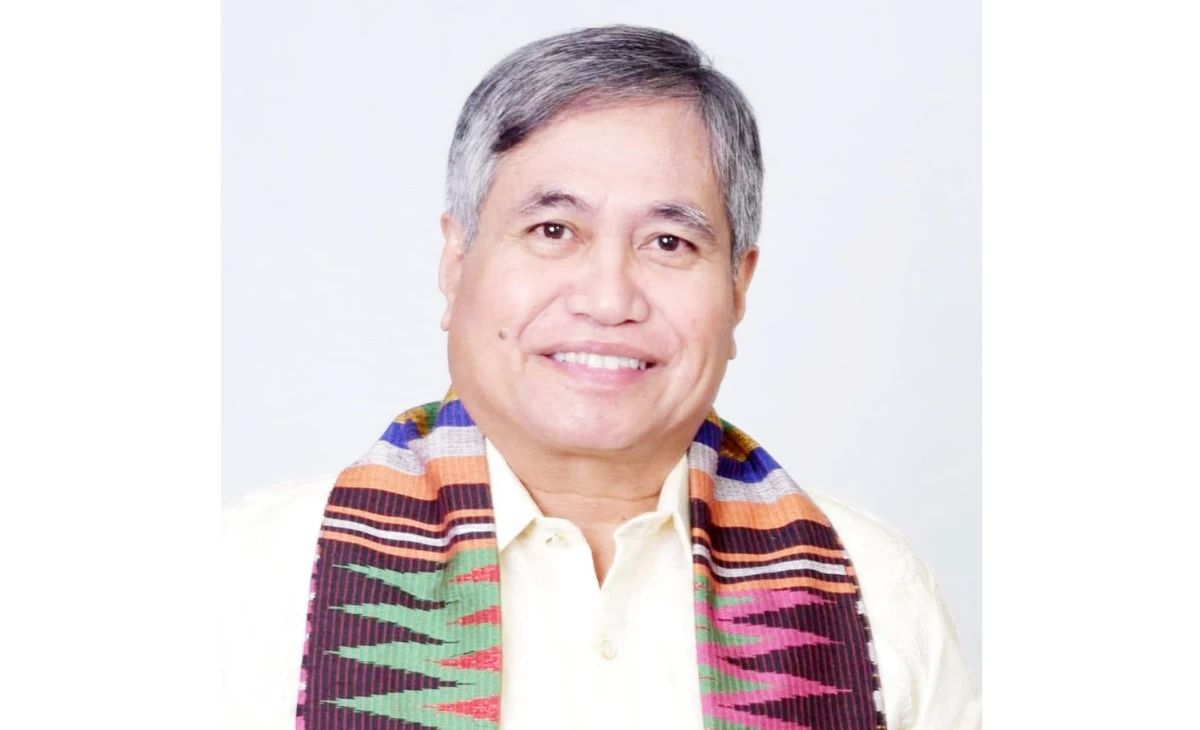
(Dr. Jaime Aristotle B. Alip is a poverty eradication advocate. He is the founder of the Center for Agriculture and Rural Development Mutually-Reinforcing Institutions (CARD MRI), a group of 23 organizations that provide social development services to 8 million economically-disadvantaged Filipinos and insure more than 27 million nationwide.)