ADVERTISEMENT

Filipino artist Sigwada Knicolai uses art to talk about mental health

Through playful characters, paintings, sculptures, and a children's book, she opens a gentler conversation about bipolar disorder and mental health

Published Aug 28, 2026 03:53 pm
In the art world, sadness and other difficult emotions can become sources of inspiration. But when an artist’s work directly confronts mental health conditions, the conversation can become more difficult. Heavy themes can make audiences and even art collectors hesitant to engage, something Filipino visual artist Sigwada Knicolai has experienced firsthand.
For her latest exhibition, “Nikolai’s Ever-Changing Sky,” Sigwada chose to approach the subject differently. Instead of presenting mental health through an entirely heavy lens, she uses playful characters, paintings, sculptures, and a children’s book to make conversations about bipolar disorder easier to understand.
The exhibition, which opened on Aug. 22 at Improv Art Gallery in Quezon City, shares its title with Sigwada’s newly released children’s book. The project was inspired partly by her search for children’s literature about mental health.

“Why not create something light so that it's easier to digest for everyone?” Sigwada tells Manila Bulletin Lifestyle.
The idea also drew inspiration from “Winnie the Pooh,” whose characters, she noted, have been analyzed in relation to different personality traits and mental health experiences. From there, Sigwada developed characters that could represent changing moods in a way that would feel accessible, particularly to children.
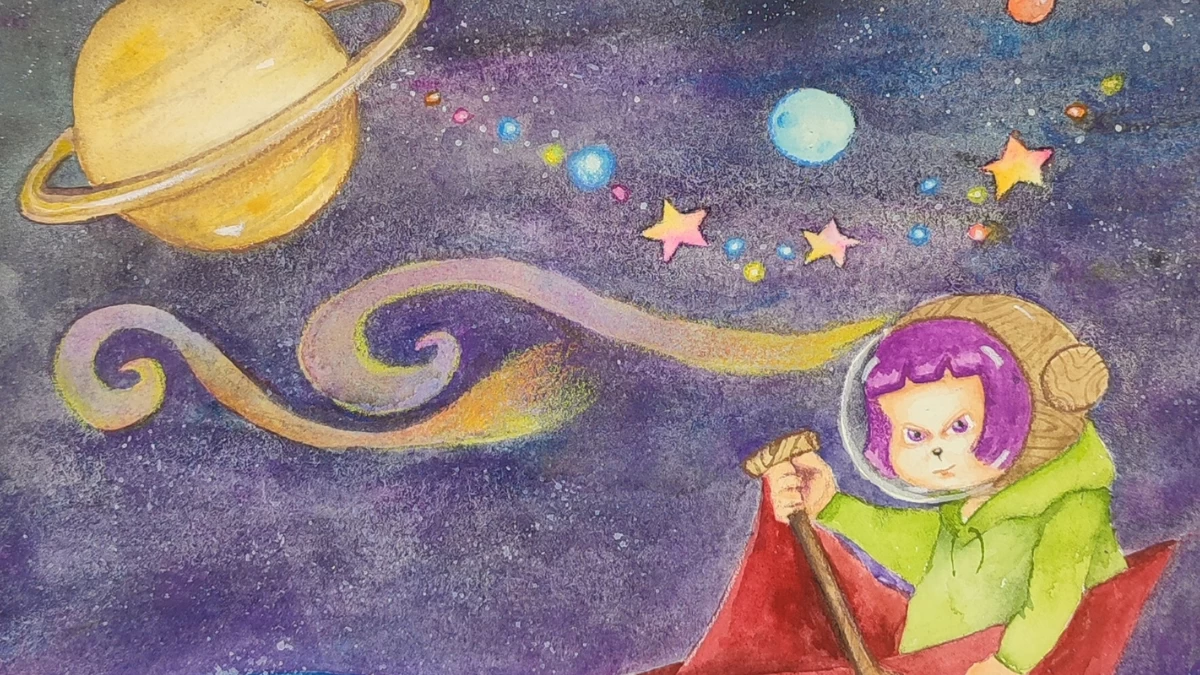
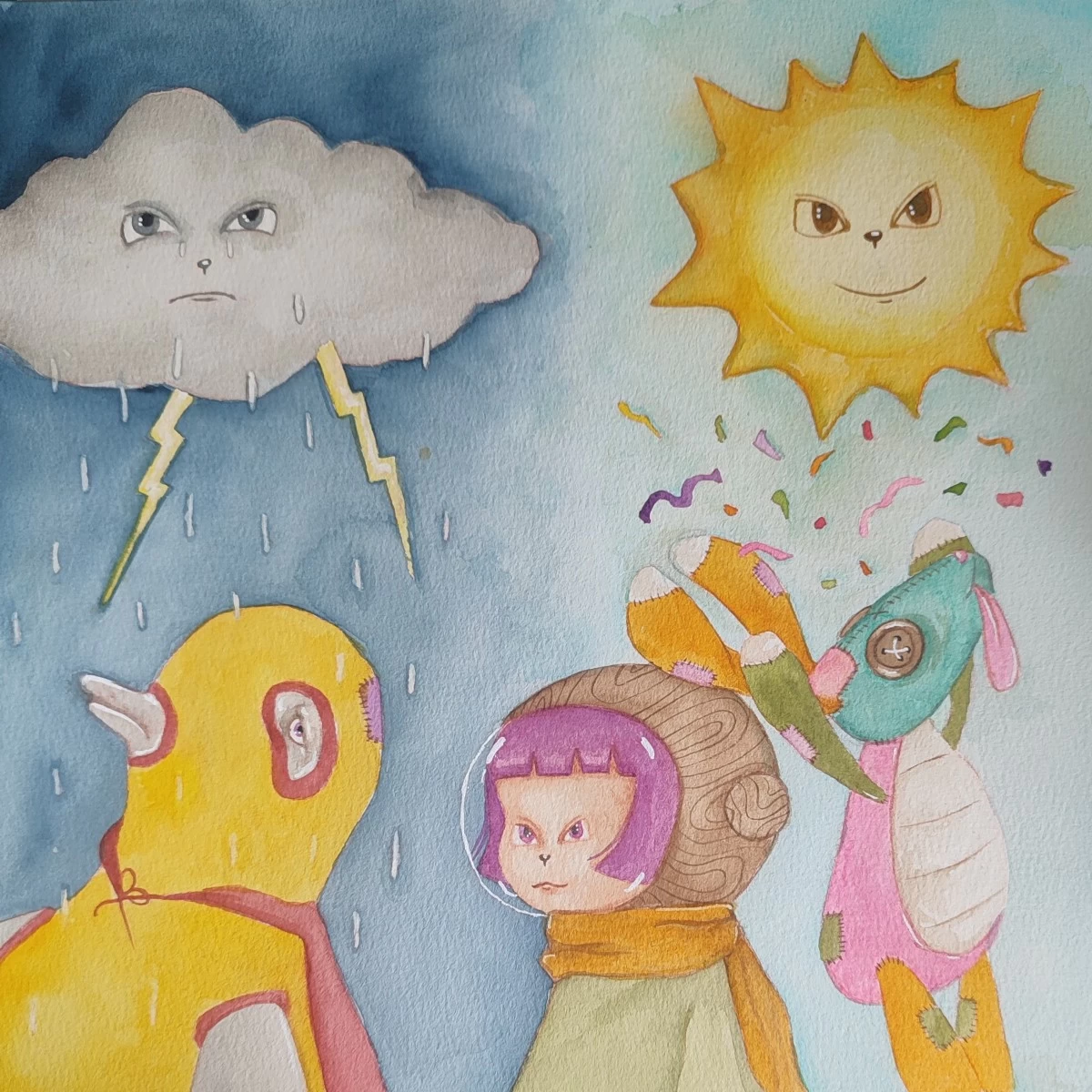
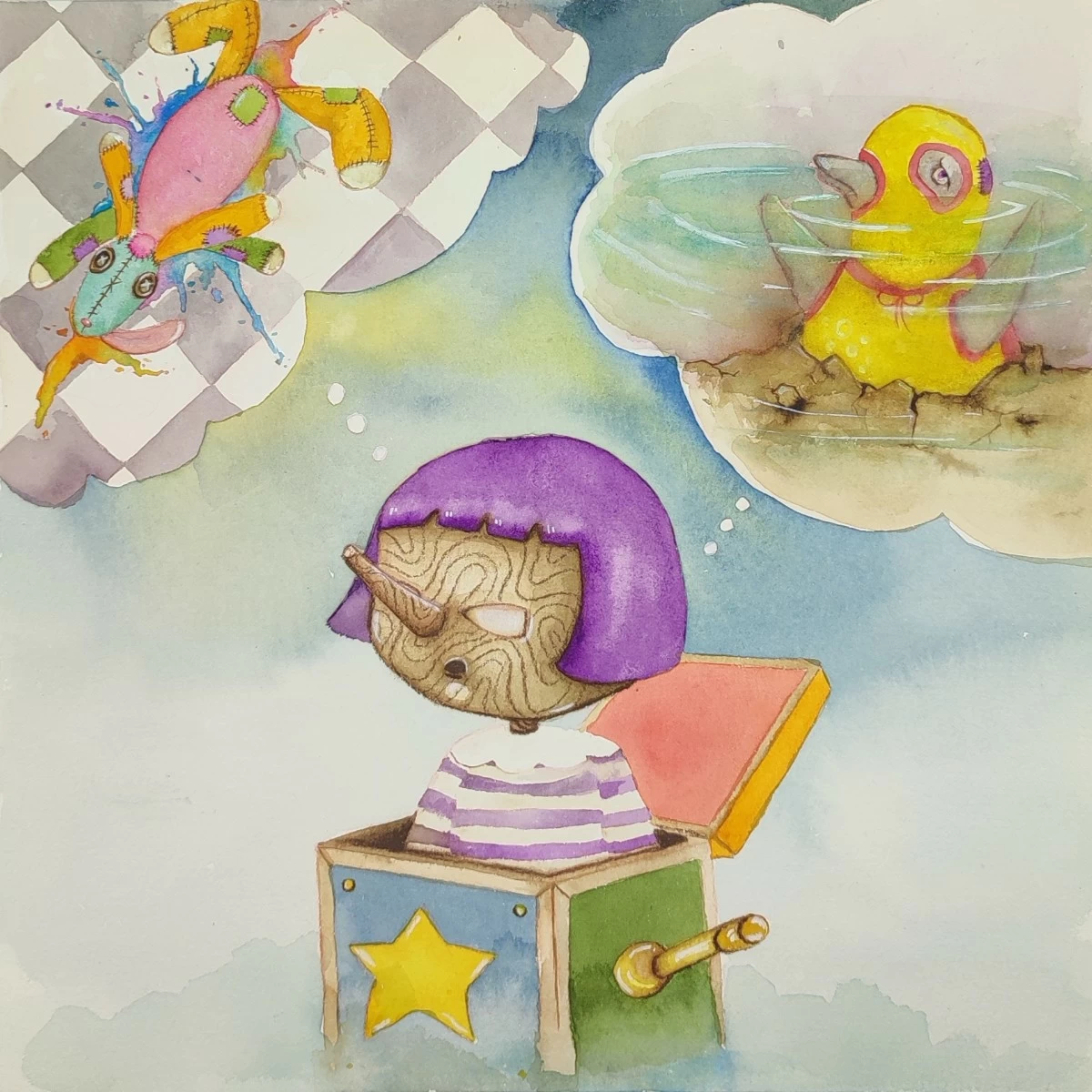
At the center of the exhibition and book is Nikolai, a wooden astronaut who travels through changing inner worlds. Her “moods” appear as Rosie, a rag doll associated with bright, seemingly unstoppable energy; Mr. Grey, a masked beluga weighed down by sadness; and Ambrosia, a jack-in-the-box consumed by anxious “what ifs.”
The exhibition features 15 paintings and three sculptures, while the book was created with art and story by Sigwada and text by Hazel Pascua. Its story introduces children and caregivers to changes in mood, energy, and behavior while showing how support can come through family care, professional guidance, treatment, healthy routines, and patience.
For Sigwada, making the book accessible is also personal. She used to teach children and says children’s books, comics, and picture books are close to her. “I like being playful,” she says. “And I believe we Filipinos can find lightness in something heavy.”
That lightness serves a larger purpose: encouraging empathy from a young age. She hopes the book can help children understand adults who experience changing moods, including those who may have parents living with bipolar disorder.
She also hopes the project can help challenge the stigma surrounding mental health in the Philippines, where she says people can still feel uncomfortable sharing their diagnoses and may even experience internal stigma.
“Somehow, I hope to eradicate the stigma around it,” she says, adding that she wants people with mental illness to understand that “it is manageable. We can do something about it.”
The advocacy extends beyond the gallery. Fifty copies of the book were donated to the Philippine Mental Health Association, which will be sold during Mental Health Week, with proceeds supporting its programs.
For Sigwada, art can be more than something aesthetically pleasing. “It’s a good tool to communicate important things," she says. “Like an advocacy.”
“Nikolai’s Ever-Changing Sky” runs at Improv Art Gallery until Oct. 3.

Related Tags

Sigwada Knicolai Mental Health
ADVERTISEMENT
.most-popular .layout-ratio{ padding-bottom: 79.13%; } @media (min-width: 768px) and (max-width: 1024px) { .widget-title { font-size: 15px !important; } }

{{ articles_filter_1561_widget.title }}

.most-popular .layout-ratio{ padding-bottom: 79.13%; } @media (min-width: 768px) and (max-width: 1024px) { .widget-title { font-size: 15px !important; } }

{{ static_articles_1562_widget.title }}

.most-popular .layout-ratio{ padding-bottom: 79.13%; } @media (min-width: 768px) and (max-width: 1024px) { .widget-title { font-size: 15px !important; } }

{{ articles_filter_1563_widget.title }}

{{ articles_filter_1564_widget.title }}

.mb-article-details { position: relative; } .mb-article-details .article-body-preview, .mb-article-details .article-body-summary{ font-size: 17px; line-height: 30px; font-family: "Libre Caslon Text", serif; color: #000; } .mb-article-details .article-body-preview iframe , .mb-article-details .article-body-summary iframe{ width: 100%; margin: auto; } .read-more-background { background: linear-gradient(180deg, color(display-p3 1.000 1.000 1.000 / 0) 13.75%, color(display-p3 1.000 1.000 1.000 / 0.8) 30.79%, color(display-p3 1.000 1.000 1.000) 72.5%); position: absolute; height: 200px; width: 100%; bottom: 0; display: flex; justify-content: center; align-items: center; padding: 0; } .read-more-background a{ color: #000; } .read-more-btn { padding: 17px 45px; font-family: Inter; font-weight: 700; font-size: 18px; line-height: 16px; text-align: center; vertical-align: middle; border: 1px solid black; background-color: white; } .hidden { display: none; }
function initializeAllSwipers() { // Get all hidden inputs with cms_article_id document.querySelectorAll('[id^="cms_article_id_"]').forEach(function (input) { const cmsArticleId = input.value; const articleSelector = '#article-' + cmsArticleId + ' .body_images'; const swiperElement = document.querySelector(articleSelector); if (swiperElement && !swiperElement.classList.contains('swiper-initialized')) { new Swiper(articleSelector, { loop: true, pagination: false, navigation: { nextEl: '#article-' + cmsArticleId + ' .swiper-button-next', prevEl: '#article-' + cmsArticleId + ' .swiper-button-prev', }, }); } }); } setTimeout(initializeAllSwipers, 3000); const intersectionObserver = new IntersectionObserver( (entries) => { entries.forEach((entry) => { if (entry.isIntersecting) { const newUrl = entry.target.getAttribute("data-url"); if (newUrl) { history.pushState(null, null, newUrl); let article = entry.target; // Extract metadata const author = article.querySelector('.author-section').textContent.replace('By', '').trim(); const section = article.querySelector('.section-info ').textContent.replace(' ', ' '); const title = article.querySelector('.article-title h1').textContent; // Parse URL for Chartbeat path format const parsedUrl = new URL(newUrl, window.location.origin); const cleanUrl = parsedUrl.host + parsedUrl.pathname; // Update Chartbeat configuration if (typeof window._sf_async_config !== 'undefined') { window._sf_async_config.path = cleanUrl; window._sf_async_config.sections = section; window._sf_async_config.authors = author; } // Track virtual page view with Chartbeat if (typeof pSUPERFLY !== 'undefined' && typeof pSUPERFLY.virtualPage === 'function') { try { pSUPERFLY.virtualPage({ path: cleanUrl, title: title, sections: section, authors: author }); } catch (error) { console.error('ping error', error); } } // Optional: Update document title if (title && title !== document.title) { document.title = title; } } } }); }, { threshold: 0.1 } ); function showArticleBody(button) { const article = button.closest("article"); const summary = article.querySelector(".article-body-summary"); const body = article.querySelector(".article-body-preview"); const readMoreSection = article.querySelector(".read-more-background"); // Hide summary and read-more section summary.style.display = "none"; readMoreSection.style.display = "none"; // Show the full article body body.classList.remove("hidden"); } document.addEventListener("DOMContentLoaded", () => { let loadCount = 0; // Track how many times articles are loaded const offset = [1, 2, 3, 4, 5, 6, 7, 8, 9, 10]; // Offset values const currentUrl = window.location.pathname.substring(1); let isLoading = false; // Prevent multiple calls if (!currentUrl) { console.log("Current URL is invalid."); return; } const sentinel = document.getElementById("load-more-sentinel"); if (!sentinel) { console.log("Sentinel element not found."); return; } function isSentinelVisible() { const rect = sentinel.getBoundingClientRect(); return ( rect.top < window.innerHeight && rect.bottom >= 0 ); } function onScroll() { if (isLoading) return; if (isSentinelVisible()) { if (loadCount >= offset.length) { console.log("Maximum load attempts reached."); window.removeEventListener("scroll", onScroll); return; } isLoading = true; const currentOffset = offset[loadCount]; window.loadMoreItems().then(() => { let article = document.querySelector('#widget_1690 > div:nth-last-of-type(2) article'); intersectionObserver.observe(article) loadCount++; }).catch(error => { console.error("Error loading more items:", error); }).finally(() => { isLoading = false; }); } } window.addEventListener("scroll", onScroll); });

Sign up by email to receive news.