ADVERTISEMENT

MAP demands 'zero tolerance' for corruption in 2027 budget

Published Aug 27, 2026 03:56 pm
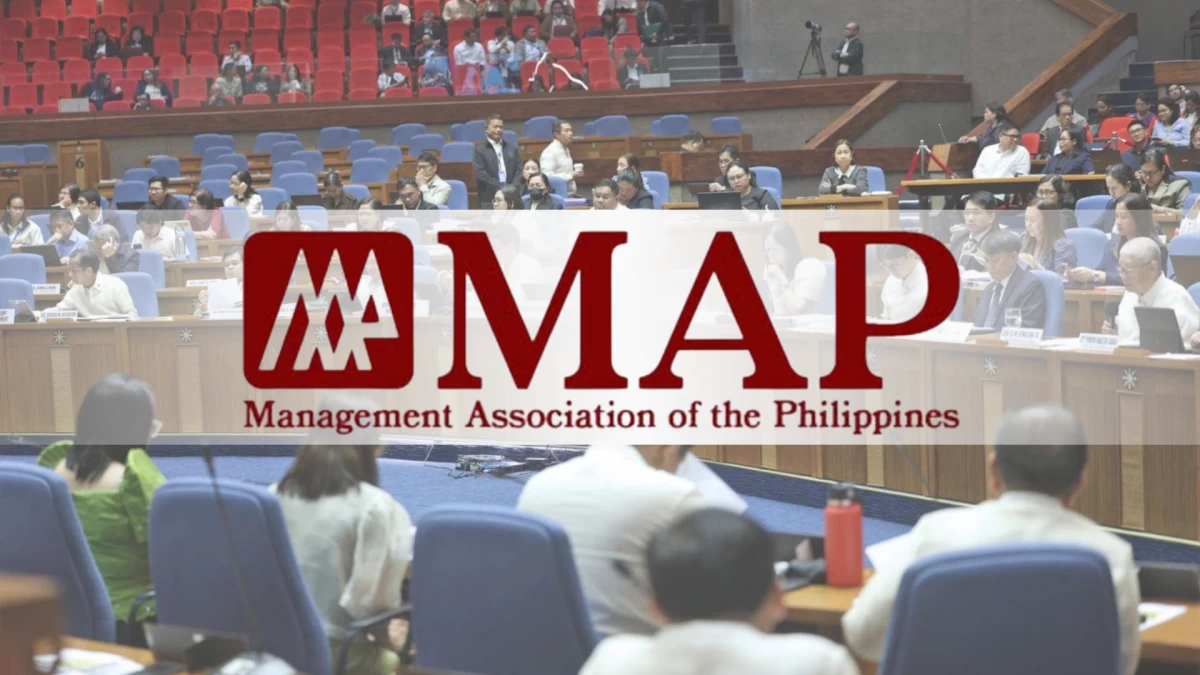
As Congress deliberates on the proposed 2027 national budget, influential business group Management Association of the Philippines (MAP) is demanding “zero tolerance” against insertions and other schemes that lead to corruption.
MAP, which comprises the country’s leading business executives, is urging all branches of government to “uphold the highest standards of transparency, integrity, and accountability” when it comes to the budget process.
“The MAP believes that there must be zero tolerance for hidden insertions, questionable appropriations, favored contractors, ghost or substandard projects, unexplained realignments, and the use of public funds for political accommodation or personal gain,” the group said.
“These practices have no place in a government that claims to uphold good governance and fiscal responsibility,” it emphasized.
The Department of Budget and Management (DBM) earlier submitted to Congress the proposed ₱7.2-trillion national budget this month, which seeks to invest in programs aimed at improving the country’s foundations for long-term growth.
President Ferdinand Marcos Jr. said in his budget message that this year’s earmarked funding reaffirms his administration’s commitment to sound fiscal management and good governance.
MAP emphasized that transparency in the use of public funds must begin with the budget process itself, which the group said must be open to public scrutiny and accountability.
“Material amendments and insertions introduced during congressional deliberations and the bicameral conference should be fully disclosed, together with their proponents, amounts and purposes,” it said.
The group said transparency must continue long after the passage of the proposed budget. Ideally, it noted that every Filipino must have the power to follow public money from appropriation and release to procurement, award, implementation, completion, and audit.
This means the public should be able to determine the total budget, who received the contract, what was delivered, and whether a project achieved what taxpayers were promised.
As such, MAP said it supports the proposed Citizen Access and Disclosure of Expenditures for National Accountability (CADENA) Act and other reforms to make government more transparent and traceable.
“We urge the government to institutionalize end-to-end digital transparency across the budget process and eventually make it possible for citizens to trace public expenditures from appropriation to actual implementation,” it said.
At a time when public trust in government has been damaged by allegations and revelations of corruption, MAP said this year’s budget process is the opportunity for the Marcos administration “to demonstrate that they are prepared to confront these concerns decisively.”
“The 2027 National Budget should mark a decisive break from opacity and business as usual,” the business group stressed.
Against this backdrop, MAP also said that the government’s efforts to pursue accountability must apply equally, regardless of political affiliation, position, or influence.
It said that no official entrusted with public funds should be beyond scrutiny, noting that no expenditure involving taxpayers’ money should be beyond reasonable public examination.
“Public office is a public trust, and those entrusted with the national budget carry an obligation to demonstrate that the interests of the Filipino people come before political or personal interests,” MAP said.

Related Tags

Management Association of the Philippines (MAP) 2027 budget
ADVERTISEMENT
.most-popular .layout-ratio{ padding-bottom: 79.13%; } @media (min-width: 768px) and (max-width: 1024px) { .widget-title { font-size: 15px !important; } }

{{ articles_filter_1561_widget.title }}

.most-popular .layout-ratio{ padding-bottom: 79.13%; } @media (min-width: 768px) and (max-width: 1024px) { .widget-title { font-size: 15px !important; } }

{{ static_articles_1562_widget.title }}

.most-popular .layout-ratio{ padding-bottom: 79.13%; } @media (min-width: 768px) and (max-width: 1024px) { .widget-title { font-size: 15px !important; } }

{{ articles_filter_1563_widget.title }}

{{ articles_filter_1564_widget.title }}

.mb-article-details { position: relative; } .mb-article-details .article-body-preview, .mb-article-details .article-body-summary{ font-size: 17px; line-height: 30px; font-family: "Libre Caslon Text", serif; color: #000; } .mb-article-details .article-body-preview iframe , .mb-article-details .article-body-summary iframe{ width: 100%; margin: auto; } .read-more-background { background: linear-gradient(180deg, color(display-p3 1.000 1.000 1.000 / 0) 13.75%, color(display-p3 1.000 1.000 1.000 / 0.8) 30.79%, color(display-p3 1.000 1.000 1.000) 72.5%); position: absolute; height: 200px; width: 100%; bottom: 0; display: flex; justify-content: center; align-items: center; padding: 0; } .read-more-background a{ color: #000; } .read-more-btn { padding: 17px 45px; font-family: Inter; font-weight: 700; font-size: 18px; line-height: 16px; text-align: center; vertical-align: middle; border: 1px solid black; background-color: white; } .hidden { display: none; }
function initializeAllSwipers() { // Get all hidden inputs with cms_article_id document.querySelectorAll('[id^="cms_article_id_"]').forEach(function (input) { const cmsArticleId = input.value; const articleSelector = '#article-' + cmsArticleId + ' .body_images'; const swiperElement = document.querySelector(articleSelector); if (swiperElement && !swiperElement.classList.contains('swiper-initialized')) { new Swiper(articleSelector, { loop: true, pagination: false, navigation: { nextEl: '#article-' + cmsArticleId + ' .swiper-button-next', prevEl: '#article-' + cmsArticleId + ' .swiper-button-prev', }, }); } }); } setTimeout(initializeAllSwipers, 3000); const intersectionObserver = new IntersectionObserver( (entries) => { entries.forEach((entry) => { if (entry.isIntersecting) { const newUrl = entry.target.getAttribute("data-url"); if (newUrl) { history.pushState(null, null, newUrl); let article = entry.target; // Extract metadata const author = article.querySelector('.author-section').textContent.replace('By', '').trim(); const section = article.querySelector('.section-info ').textContent.replace(' ', ' '); const title = article.querySelector('.article-title h1').textContent; // Parse URL for Chartbeat path format const parsedUrl = new URL(newUrl, window.location.origin); const cleanUrl = parsedUrl.host + parsedUrl.pathname; // Update Chartbeat configuration if (typeof window._sf_async_config !== 'undefined') { window._sf_async_config.path = cleanUrl; window._sf_async_config.sections = section; window._sf_async_config.authors = author; } // Track virtual page view with Chartbeat if (typeof pSUPERFLY !== 'undefined' && typeof pSUPERFLY.virtualPage === 'function') { try { pSUPERFLY.virtualPage({ path: cleanUrl, title: title, sections: section, authors: author }); } catch (error) { console.error('ping error', error); } } // Optional: Update document title if (title && title !== document.title) { document.title = title; } } } }); }, { threshold: 0.1 } ); function showArticleBody(button) { const article = button.closest("article"); const summary = article.querySelector(".article-body-summary"); const body = article.querySelector(".article-body-preview"); const readMoreSection = article.querySelector(".read-more-background"); // Hide summary and read-more section summary.style.display = "none"; readMoreSection.style.display = "none"; // Show the full article body body.classList.remove("hidden"); } document.addEventListener("DOMContentLoaded", () => { let loadCount = 0; // Track how many times articles are loaded const offset = [1, 2, 3, 4, 5, 6, 7, 8, 9, 10]; // Offset values const currentUrl = window.location.pathname.substring(1); let isLoading = false; // Prevent multiple calls if (!currentUrl) { console.log("Current URL is invalid."); return; } const sentinel = document.getElementById("load-more-sentinel"); if (!sentinel) { console.log("Sentinel element not found."); return; } function isSentinelVisible() { const rect = sentinel.getBoundingClientRect(); return ( rect.top < window.innerHeight && rect.bottom >= 0 ); } function onScroll() { if (isLoading) return; if (isSentinelVisible()) { if (loadCount >= offset.length) { console.log("Maximum load attempts reached."); window.removeEventListener("scroll", onScroll); return; } isLoading = true; const currentOffset = offset[loadCount]; window.loadMoreItems().then(() => { let article = document.querySelector('#widget_1690 > div:nth-last-of-type(2) article'); intersectionObserver.observe(article) loadCount++; }).catch(error => { console.error("Error loading more items:", error); }).finally(() => { isLoading = false; }); } } window.addEventListener("scroll", onScroll); });

Sign up by email to receive news.