






Manila Bulletin
 Philippines
National
UP Resilience Institute's NOAH Center secures ₱1 billion to expand science-based disaster, climate solutions
Philippines
National
UP Resilience Institute's NOAH Center secures ₱1 billion to expand science-based disaster, climate solutions
Philippines
National
UP Resilience Institute's NOAH Center secures ₱1 billion to expand science-based disaster, climate solutions
UP Resilience Institute's NOAH Center secures ₱1 billion to expand science-based disaster, climate solutions
Published Aug 27, 2026 02:59 pm


At A Glance
- UP President Angelo A. Jimenez said the ₱1 billion allocation gives the university an opportunity to further connect research with public service.
- The University of the Philippines Resilience Institute-National Operational Assessment of Hazards (UPRI-NOAH) Center will expand its hazard mapping, flood modeling and other science-based tools aimed at helping the government make better decisions before disasters strike.
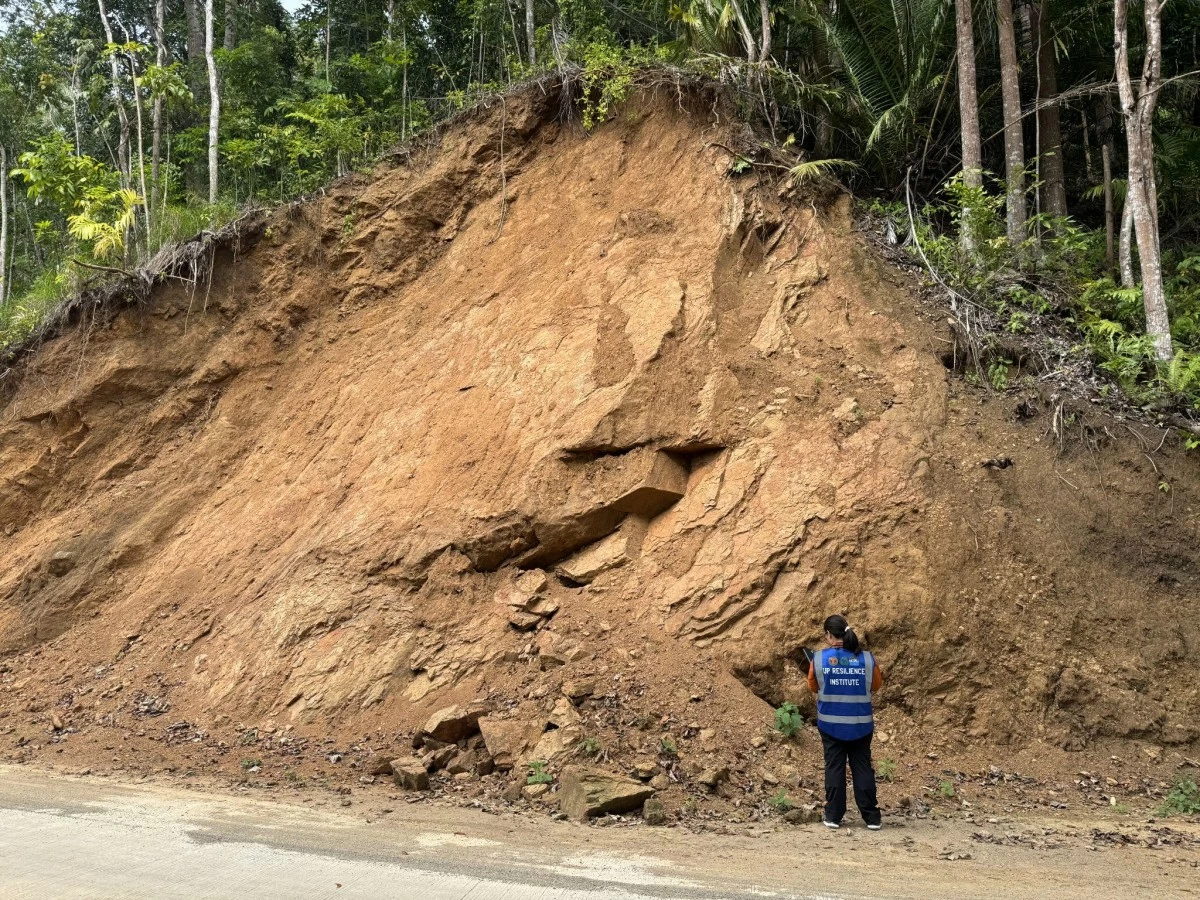
University of the Philippines Resilience Institute-NOAH Center photo
The University of the Philippines Resilience Institute-National Operational Assessment of Hazards (UPRI-NOAH) Center will expand its hazard mapping, flood modeling and other science-based tools after securing a ₱1-billion allocation aimed at helping the government make better decisions before disasters strike.
The funding comes as the country continues to face flooding and other hazards despite substantial government spending on disaster risk reduction and flood-control measures.
UPRI-NOAH Executive Director Mahar Lagmay said recent flooding has highlighted the need to better understand what is happening and why existing interventions have not been enough.
“We've seen in the past weeks na ang laki nga ng problem natin. And many actually don't know what is happening. Ano bang nangyayari? Bakit ganito? Bakit hindi natin ma-solve? Ang dami na nating nilalagay na pera pero ganun pa rin (We've seen in the past weeks how big the problem is. And many actually don't know what is happening. What is happening? Why is it like this? Why can't we solve it? We've already been putting in so much money, but it's still the same),” Lagmay said during a press conference on Thursday, Aug. 27.
He said flooding is only one of the hazards the Philippines needs to address, along with storm surges, subsidence, volcanic and earthquake hazards, and landslides.
“Hazards will always happen here in the Philippines. But if we are smart in handling nature, we'll be able to prevent disasters from happening. Yun po ang pinag-aaralan ng NOAH. Yun po ang ginagawa ng UP Resilience Institute (Hazards will always happen here in the Philippines. But if we are smart in handling nature, we'll be able to prevent disasters from happening. That is what NOAH studies. That is what the UP Resilience Institute does),” Lagmay said.
Research to action
Lagmay said UPRI-NOAH’s work is focused on operational research, meaning scientific outputs are integrated into government efforts so they can be used immediately.
“NOAH stands for [National] Operational Assessment of Hazards because what we're doing is called as operational research. Ibig sabihin noon, yung aming mga scientific outputs ay hindi lang nandoon sa articles, hindi lang nasa libro, kundi we are embedded within the efforts of government so that the scientific outputs we produce get used right away because we don't want disasters to get ahead of our research (NOAH It stands for National Operational Assessment of Hazards because what we're doing is called operational research. That means our scientific outputs are not just in articles or books, but are embedded in the efforts of government so that the scientific outputs we produce get used right away because we don't want disasters to get ahead of our research),” Lagmay said.
UP President Angelo A. Jimenez said the ₱1 billion allocation gives the university an opportunity to further connect research with public service.
“The ₱1 billion allocation recently released by the Department of Budget and Management for the UP Resilience Institute and the NOAH Center is, in many ways, an investment in something that UP has always believed in: the power of research and innovation to serve the nation,” Jimenez said.
He said the university does not conduct research merely to add to academic publications or databases, but to generate knowledge that can help address real-world problems and improve people's lives.
“The ₱1 billion allocation gives UPRI and the NOAH Center the opportunity to strengthen and expand systems that have already demonstrated their value: hazard mapping, flood intelligence, geospatial analysis, disaster education, technical assistance, and partnerships with government, local communities, and other universities,” Jimenez said.
What the money funds
The funding will support high-resolution mapping of major river basins, with hazard maps reaching up to one-by-one-meter pixel resolution.
The work will document waterways, floodplains, land use, watersheds, infrastructure and communities exposed to hazards.
UPRI-NOAH will also simulate major detention basins to assess their storage capacity, drainage connectivity and downstream effects, including their performance during extreme rainfall and under future climate conditions.
Under Oplan Kontra Baha, the institute will work with the Department of Public Works and Highways, Metropolitan Manila Development Authority, local governments and the private sector to assess appropriate structural and non-structural flood-management measures.
Other initiatives include LiDAR drone surveys with state colleges and universities, mapping of native trees, sediment erosion assessments, identification of buried or undocumented waterways, nature-based solutions and artificial intelligence applications for disaster management.
Safer decisions
Jimenez said the technology should ultimately improve decisions that affect communities and public investments.
“But I want to emphasize one thing about all of this technology. Technology is not the end. AI is not the end. A map is not the end. A model is not the end. The end is a safer Filipino community. The end is a family that receives a warning early enough to get to safety. The end is a local government that knows where its vulnerabilities are before it decides where to build or allow others to build,” he said.
“The end is a national government that can examine whether a flood-management intervention is actually appropriate before committing billions of pesos to it. And the end is public investment guided by evidence rather than guesswork,” he added.
The AI component will be used to develop decision-support tools for land-use and infrastructure planning, environmental management and risk analysis.
UPRI-NOAH said these tools may help identify vulnerable communities, assess exposure, support forecasting and early warning, and prioritize interventions.
AI-assisted benefit-cost assessments may also help decision-makers compare projects based on their effectiveness, sustainability, financial justification and potential to protect the greatest number of people.
Lagmay stressed that technology alone cannot make communities resilient.
“Kaya po may UP Resilience Institute kasi it's not enough that we only use science and engineering and technologies to address our problems or disasters. Kahit na anong science pa ang meron tayo, if the people do not embrace the science, it is meaningless. We need to use the arts and the humanities. We need to communicate better so that the people can understand better what the science tells us we should do (That is why there is a UP Resilience Institute because it's not enough that we only use science, engineering and technology to address our problems or disasters. No matter what science we have, if people do not embrace the science, it is meaningless. We need to use the arts and humanities. We need to communicate better so that people can understand what science tells us we should do),” Lagmay said.