






Manila Bulletin
 Technews
Philippine Science High School's enduring legacy of nation-building continues
Technews
Philippine Science High School's enduring legacy of nation-building continues
Technews
Philippine Science High School's enduring legacy of nation-building continues
Philippine Science High School's enduring legacy of nation-building continues
Barangay Pisay celebrates the institution that shaped scholars of the country's premier science high school and encourages the community to invest in the next generation of Filipino scientists and leaders.
Published Aug 27, 2026 10:29 am


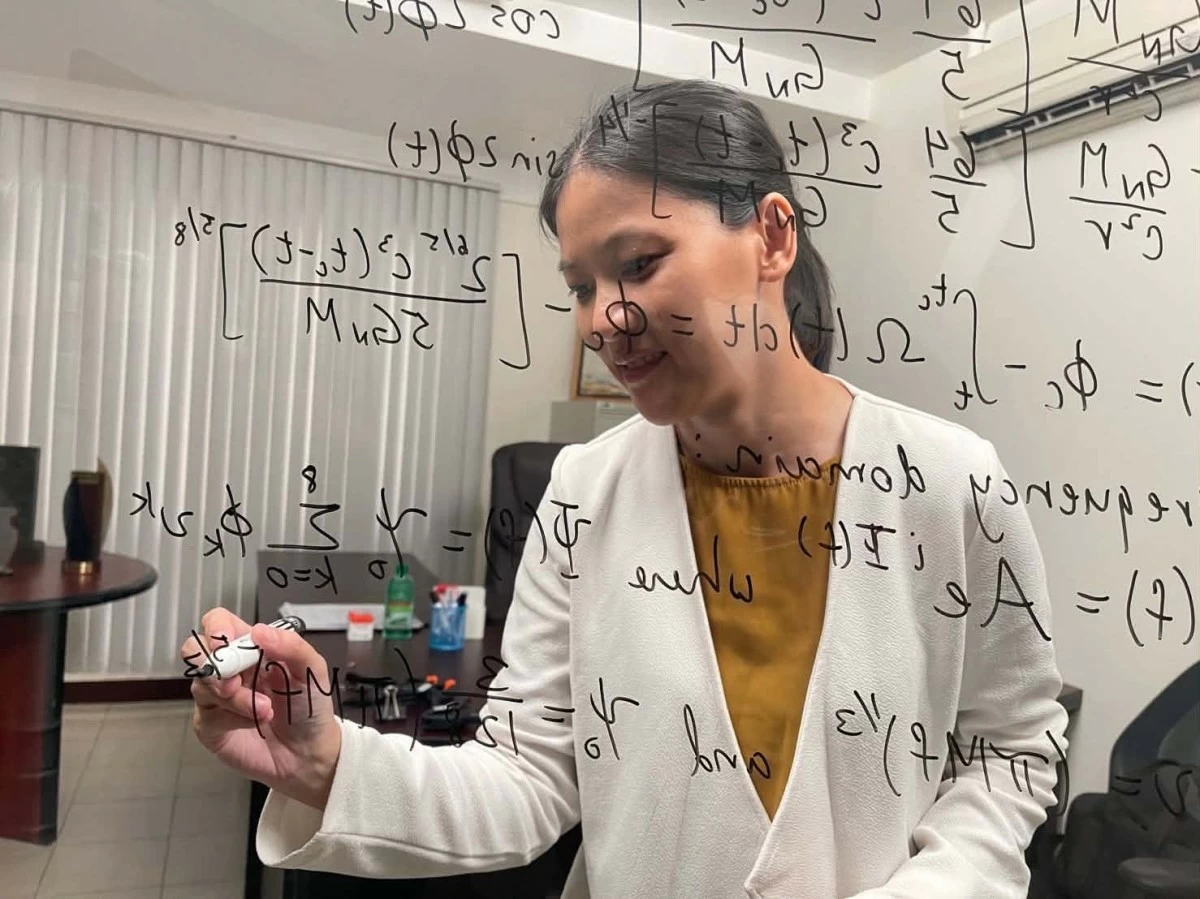
Astrophysicist Dr. Reina Reyes from Batch 2001.
Since 1964, Philippine Science High School (PSHS) has nurtured the country's brightest young minds in science, mathematics, and engineering. Beyond being a specialized public high school, it has grown into a community where curiosity is encouraged, excellence is expected, and service to the nation is instilled.
The Philippine Science High School community takes its alma mater’s 62nd year as an opportunity to recognize its continuing role in shaping the country's future.
A legacy that lives outside the classroom
Pisay's greatest achievement cannot be measured solely by awards won, research published, or careers built. Its true legacy lies in the thousands of graduates who have carried the school's values into every corner of society. Today, Pisay alumni contribute to scientific research, healthcare, engineering, education, business, technology, government, and the creative industries.
Among them is Dr. Reina Reyes (Batch 2001, this year's host batch), an astrophysicist whose internationally acclaimed research on Einstein's Theory of Relativity brought global recognition to Filipino science. Today, Dr. Reyes serves as the Director of the Space Science Missions Bureau at the Philippine Space Agency.
Reflecting on the values that shaped her journey, Dr. Reina Reyes shared: "Being a Pisay scholar is a privilege not only for the life-changing education and formation that we received during high school, but also for the gift of belonging to an impressive and influential community of fellow alumni, comrades in nation-building in the spirit of paying it forward.”
Josephine Santiago-Bond (Batch 1996) is also a Pisay scholar pursuing knowledge in space. She is currently the Chief of the Commercial Crew Office for Safety and Mission Assurance at NASA’s Kennedy Space Center. She leads a team that ensures the safety of crew and vehicles in human spaceflight missions. Beyond her work in spaceflight, Jo advocates for girls and women in STEM, working to open pathways for the next generation of scientists and engineers.
Given the rigorous training Pisay scholars receive in their formative years, it is not surprising that Dr. Reyes and Santiago-Bond now lead agencies exploring the mysteries of the universe. Just as impactful are the pursuits of Pisay scholars to innovate local industries.
Gil Genio (Batch 1976, the golden jubilarian batch) has helped shape the country's digital transformation through decades of leadership in the telecommunications industry, driving technologies that expanded connectivity and digital access for millions of Filipinos.
Meanwhile, Dr. Pia Bagamasbad (Batch 1997), a recent recipient of the TOWNS (The Outstanding Women in the Nation's Service) Award, played a pivotal role during the COVID-19 pandemic by leading RT-PCR training initiatives that rapidly expanded the country's molecular testing capacity, helping laboratories nationwide strengthen their diagnostic capabilities.
An education in Pisay does not limit the contributions of its scholars in the hard sciences. For example, Cherrys Abrigo (Batch 2001) combines her technical and entrepreneurial capabilities to run SIERREZA. The social enterprise started with a simple but ambitious goal: to bring communities together in helping marginalized farmers build sustainable livelihoods through Community-Supported Agriculture. What began as a zero-waste farm-to-shelf/table store and café in Los Baños, Laguna grew into a web of social enterprises connecting farmers and producers with premium markets in Metro Manila, Laguna, and nearby areas. Her work speaks to issues that are fundamental to nation-building: community action, sustainability, and food security. In many ways, this is the promise of a Pisay education—to build skills and knowledge that will help people understand the country's problems and help solve them.
These stories are remarkable, but they are not exceptions. Across generations, Pisay scholars continue to build companies, pioneer research, improve healthcare, educate future leaders, strengthen public institutions, and solve complex problems.
Building the next chapter
Celebrating Pisay's past years is meaningful, especially when it inspires investment in the future. As part of Pisay’s founding anniversary celebration this year, Batch 2001 is spearheading a Classroom Modernization Project, replacing aging classroom blackboards with modern glass boards that will benefit current and future generations of Pisay students.
Simple yet enduring, the project seeks to create a lasting impact that students will experience every day in the classrooms where tomorrow's discoveries begin.
An invitation to come home
Barangay Pisay 2026, this year’s anniversary homecoming theme, invites Pisay alumni to come home—to reconnect with classmates, honor mentors, celebrate shared beginnings, and help build the next chapter of the institution's story.
Whether by attending the homecoming on September 5, 2026, donating to the legacy project, or volunteering, you can help strengthen a community that has been transforming lives for generations.
The future of the Philippines will be shaped by the institutions that invest in its people—and by the people who, in turn, invest in future generations.
For more information about the legacy project and homecoming event, visit the Pisay B2K1 Facebook page.