






Manila Bulletin
 Lifestyle
Arts and Culture
Filipino artist Isaiah Cacnio brings 'Traces' to Singapore Night Festival
Lifestyle
Arts and Culture
Filipino artist Isaiah Cacnio brings 'Traces' to Singapore Night Festival
Lifestyle
Arts and Culture
Filipino artist Isaiah Cacnio brings 'Traces' to Singapore Night Festival
Filipino artist Isaiah Cacnio brings 'Traces' to Singapore Night Festival
He turns fragments of history into an immersive meditation on Southeast Asia's shared past
By Poch Eulalia
Published Aug 27, 2026 08:40 am


Each year, Singapore finds its nightlife transformed with the celebration of the Singapore Night Festival. Guests are treated to immersive artworks, projections, and experiences. This year marks the 17th edition of the celebration and follows the theme “Myths and Legends.” Numerous artists across Southeast Asia are also set to showcase their talents, including the Philippines’ very own Isaiah Cacnio.
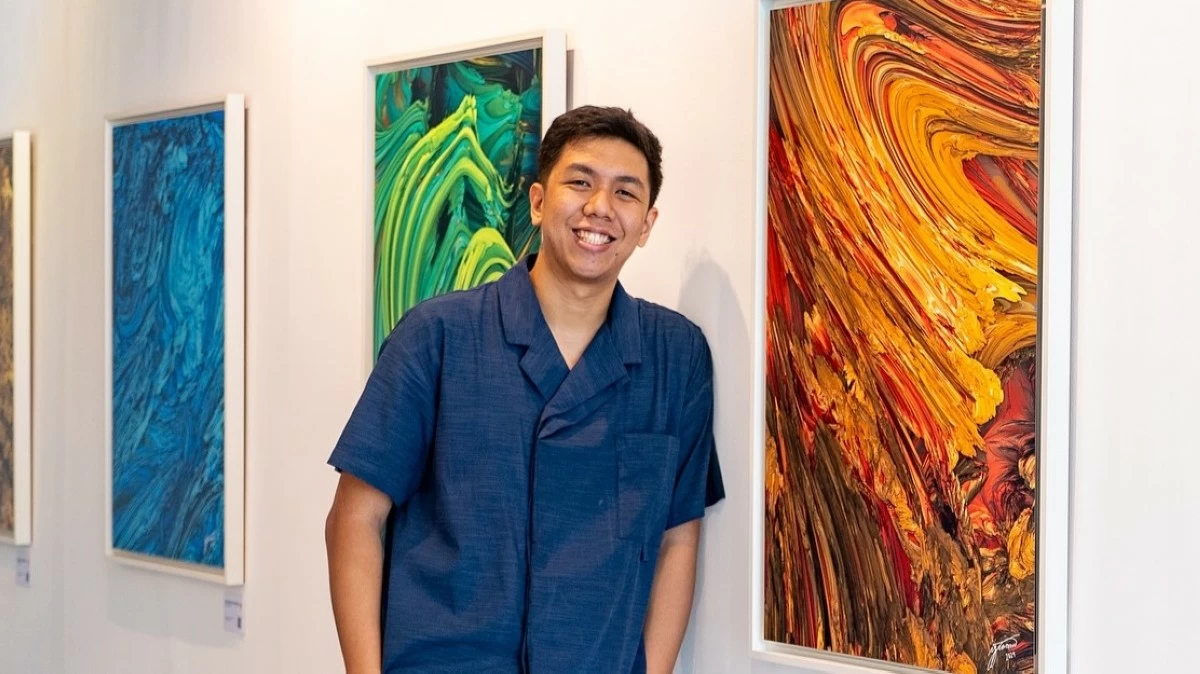
Isaiah is best known for his digital projection artworks. Most recently, you might have seen his visual works shown across Makati as part of the 10 Days of Art last February. We spoke with Isaiah to learn more about his exhibit, entitled “Traces,” at the Singapore Night Festival.
What led you to participate in the Singapore Night Festival?
What really drew me to the Singapore Night Festival was its theme, “Myths and Legends.” I have always been interested in how stories survive through generations and how they change as people continue to tell them.
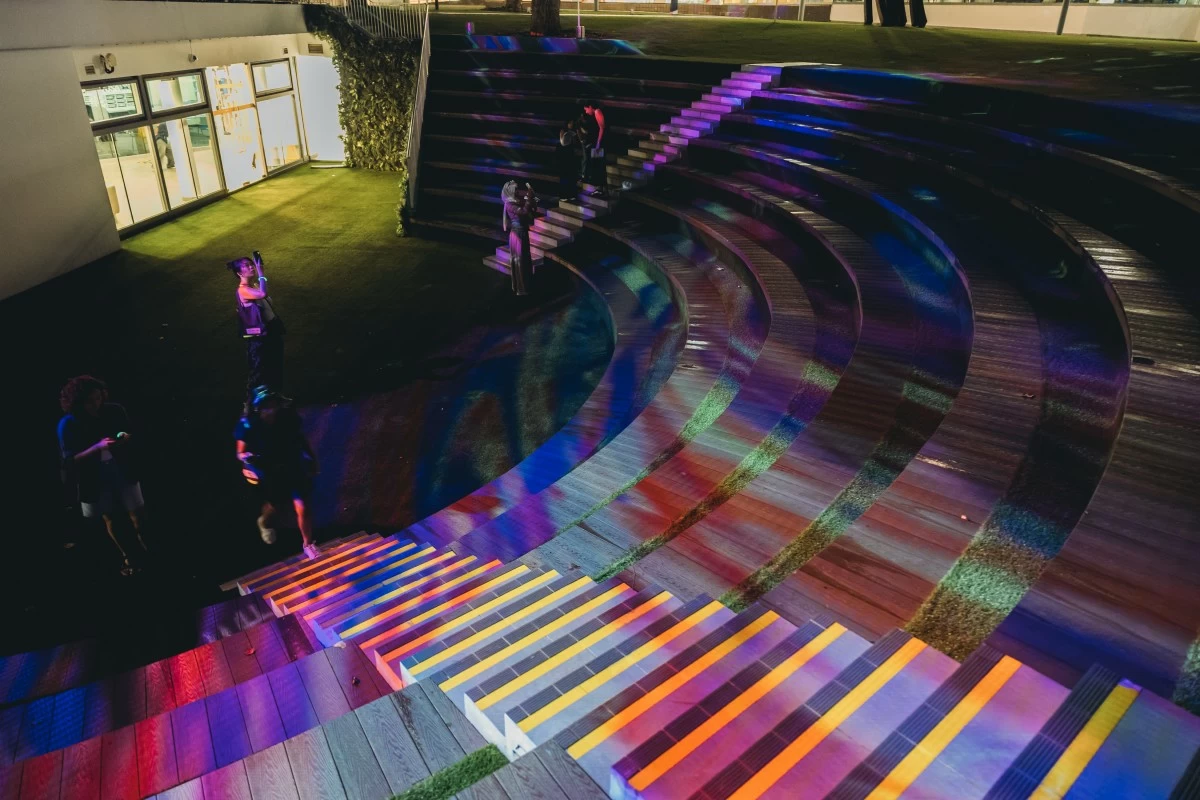
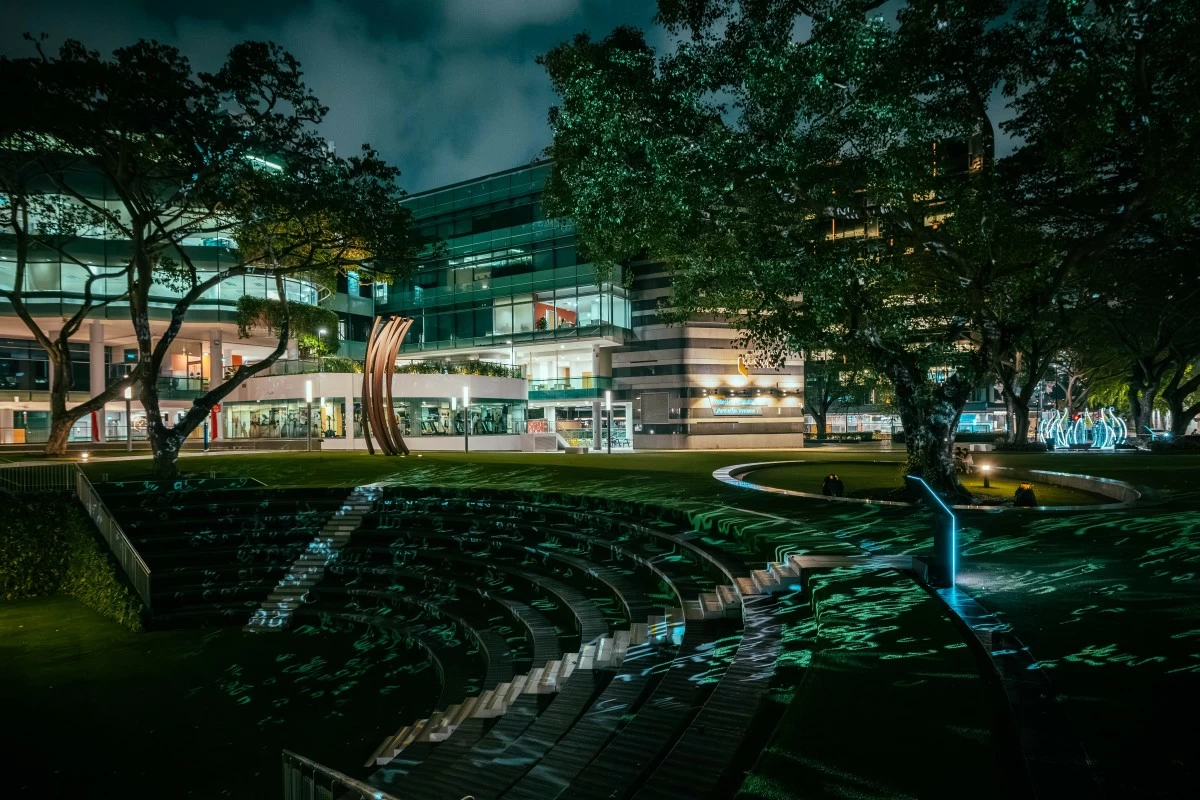
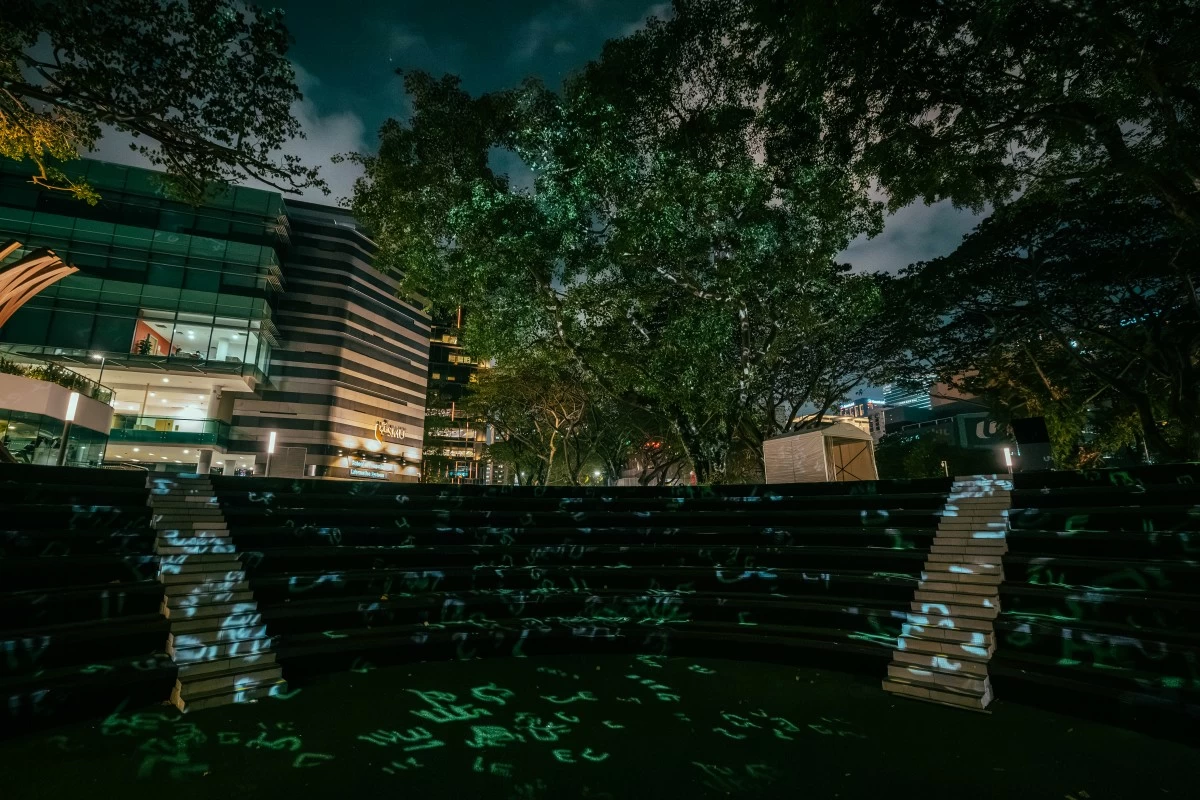
For “Traces,” I was drawn to the Singapore Stone because of its mystery. It carries an inscription that has survived for centuries, but we still cannot fully understand what it says. Scholars generally identify the writing as Kawi, although the exact language and meaning remain debated.
What made the story even more interesting to me as a Filipino artist was realizing that we have something very similar in the Philippines: the Laguna Copperplate Inscription. It dates back to around 900 CE and has been identified as having a form similar to Early Kawi. The National Museum of the Philippines also describes it as evidence of the connections and maritime relationships between the Philippines and other parts of Southeast Asia.
So for me, there is a beautiful possibility that these two objects can be looked at together. They are not necessarily directly connected, but they point to a time when the Philippines and Singapore were part of a much more interconnected Southeast Asia. The same writing tradition appearing across different places makes me think about how people, ideas, languages, and stories traveled across the region long before the borders we know today.
That became an important part of “Traces.” It is not just about the Singapore Stone. It is also about the traces that connect us to one another.
This is also one of the biggest light festivals in the region, and to be invited to be part of it is a great honor for me.
What started your artistic journey?
I think my journey into art started from that passion to create things in a more creative way than anything else. I originally studied Mechanical Engineering, so I was always interested in how things work, patterns, movement, and systems, but I was also already interested in creating motion graphics and animations ever since I was a teenager.
I then worked at the Mind Museum, where my way of thinking about science and art was further developed. Eventually, I started using all of these ideas to create visuals and motion, and that became my way of making art.
From there, I started exploring fractals, light, movement, and eventually projection mapping and large-scale installations. What started as an interest in making digital images slowly became a way of understanding the world around me.
What inspires your work? How do you bring it to life?
A lot of my inspiration comes from nature and the patterns that already exist around us. I am fascinated by how something very complex can come from a simple set of rules, whether it is the branching of a tree, the movement of water, or the way galaxies form. “Fractals,” infinitely repeating patterns, became an important part of my practice because they show how these patterns can repeat and evolve at different scales.
I usually start with an idea, whether it is personal or part of the history of a site-specific work, then I experiment with different forms, movements, and materials until something begins to feel alive. I try to take trips to the place, take photos and videos, and also use them as part of the content of my work.
From there, I bring it into the physical world through screens, projection, light, metal, acrylic, or other materials. I like that transition from something digital into something physical that exists in space and in nature.
How do you feel about representing the Philippines on the international stage?
It is something I am very grateful for, but I also feel a sense of responsibility. When I bring my work outside the Philippines, I am not just bringing my own practice with me. I am also bringing a small part of where I come from.
The Philippines has such a rich relationship with nature, stories, mythology, and the sea, and these things naturally find their way into my work. At the same time, I think one unique thing about being Filipino is the mix of influences that shaped us. We are part of Southeast Asia, but after centuries of colonization, Western influences have also become deeply ingrained in our culture. That creates a different perspective and, I think, a different flavor in how we tell stories and create.
I think that mix is something Filipino artists can bring to international platforms, whether it is a light festival, a media art exhibition, or other creative spaces around the world. We have our own stories and identity, but we also carry influences from different parts of the world. I want to continue exploring that perspective and showing that Filipino artists have something distinct to contribute to a much larger global conversation.
What do you hope Filipinos and international visitors feel from your artworks?
I hope people feel a sense of wonder first. I want the work to make them curious enough to ask questions and look a little closer.
With “Traces,” I hope people think about how much history exists around us that we may not fully see or understand. A small fragment, an inscription, or a story passed down through generations can still tell us something about who we were.
For Filipinos, I hope there is also a sense of recognition. When we talk about Southeast Asian history, we sometimes see each country as having its own separate story. But objects like the Laguna Copperplate and the Singapore Stone suggest something much more connected. They remind us that people were already traveling, trading, and sharing ideas across the region centuries ago.
That is what I want “Traces” to leave with people: that even when parts of our history are lost, traces of those connections remain. And sometimes, all it takes is one fragment to remind us that we were never really separate.
“Traces” is part of Singapore Night Festival, which runs across three weekends until Sept. 5, 2026.