ADVERTISEMENT

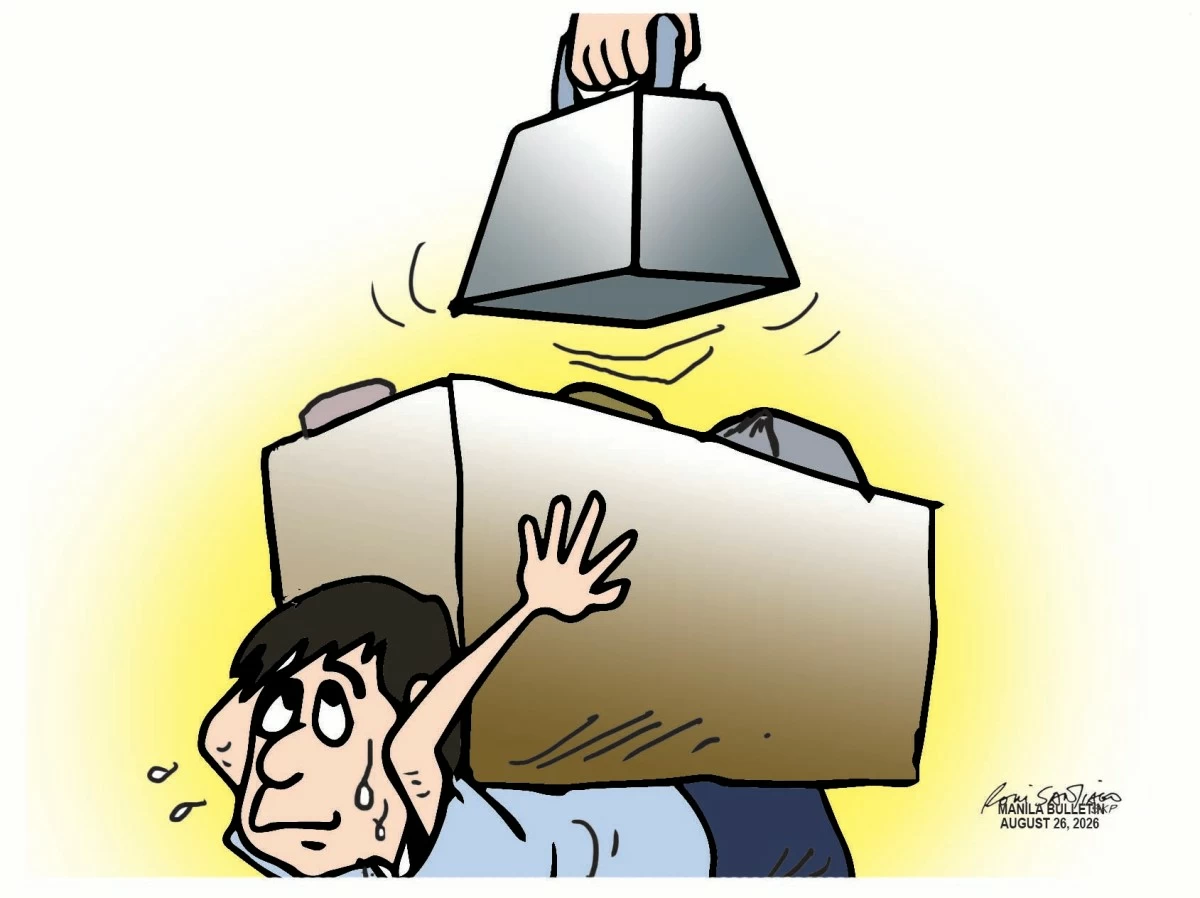
Consumers should pay only for electricity they consume

Published Aug 26, 2026 12:05 am  |  Updated Aug 25, 2026 05:27 pm
The Department of Energy deserves credit for taking a long-overdue step toward making electricity bills fairer: removing non-technical system losses from what ordinary consumers are required to pay.
For too long, households and businesses that faithfully pay their bills have effectively been made to shoulder the consequences of electricity theft, illegal connections, meter tampering, and other preventable losses. That is fundamentally unfair. A consumer who pays for every kilowatt-hour used should not be billed for electricity consumed by someone else.
Energy Undersecretary Rowena Guevara said the DOE is preparing a four-stage, ₱7.5-billion program to eliminate non-technical losses, beginning with a 25-percent reduction and eventually reaching full elimination. The plan includes anti-pilferage enforcement, consumer education, improved billing and collection, better meter management, database cleansing, institutional reforms and regulatory adjustments.
This is a welcome policy direction. The DOE should be commended for recognizing that consumer protection cannot merely mean controlling the price of electricity. It must also mean ensuring that consumers are charged only for costs that are legitimately theirs.
But the reform should not stop there.
The government should also move decisively to remove technical system losses from consumers' electricity bills.
Technical losses are different from electricity theft. They arise from the physical realities of transmitting and distributing electricity through wires, transformers, and other equipment. Yet while some technical loss may be unavoidable, that does not mean consumers should automatically be responsible for paying for it. The Energy Regulatory Commission has itself said that recovery of both technical and non-technical system losses from consumers can ultimately be reduced to zero or prohibited, although a transition may be necessary to protect financially weaker utilities. The crucial question is not whether technical losses exist, because they do. The question is who should bear their cost.
Every industry experiences losses. Manufacturers account for defective products. Retailers expect inventory shrinkage. Banks prepare for loan defaults. Airlines factor in operational disruptions. These are recognized as costs of doing business. They are not routinely transferred to customers simply because companies can pass them along.
Electricity distribution should be held to the same principle.
If utilities know that consumers and government will ultimately absorb system losses, the commercial pressure to modernize aging infrastructure, install more efficient transformers, improve network design, deploy smart meters and strengthen operational efficiency is weakened. But when companies bear the financial consequences of inefficiency, the incentive to innovate becomes stronger.
This is not an argument for suddenly destabilizing electric cooperatives or distribution utilities. It is an argument for a carefully designed transition, with clear loss-reduction targets, transparent benchmarks, enforceable deadlines and appropriate regulatory oversight. Utilities that demonstrate genuine investment and measurable improvements should be treated differently from those that simply accept excessive losses as a recoverable cost.
The Philippines needs an electricity system where efficiency is rewarded, wastage is punished and accountability follows responsibility.
The DOE has opened that door by taking non-technical losses off consumers' shoulders. It should now push it wider.
Filipinos should pay for the electricity they consume—not for electricity that disappears along the way.

Related Tags

DOE ELECTRICITY DEPARTMENT OF ENERGY
ADVERTISEMENT
.most-popular .layout-ratio{ padding-bottom: 79.13%; } @media (min-width: 768px) and (max-width: 1024px) { .widget-title { font-size: 15px !important; } }

{{ articles_filter_1561_widget.title }}

.most-popular .layout-ratio{ padding-bottom: 79.13%; } @media (min-width: 768px) and (max-width: 1024px) { .widget-title { font-size: 15px !important; } }

{{ static_articles_1562_widget.title }}

.most-popular .layout-ratio{ padding-bottom: 79.13%; } @media (min-width: 768px) and (max-width: 1024px) { .widget-title { font-size: 15px !important; } }

{{ articles_filter_1563_widget.title }}

{{ articles_filter_1564_widget.title }}

.mb-article-details { position: relative; } .mb-article-details .article-body-preview, .mb-article-details .article-body-summary{ font-size: 17px; line-height: 30px; font-family: "Libre Caslon Text", serif; color: #000; } .mb-article-details .article-body-preview iframe , .mb-article-details .article-body-summary iframe{ width: 100%; margin: auto; } .read-more-background { background: linear-gradient(180deg, color(display-p3 1.000 1.000 1.000 / 0) 13.75%, color(display-p3 1.000 1.000 1.000 / 0.8) 30.79%, color(display-p3 1.000 1.000 1.000) 72.5%); position: absolute; height: 200px; width: 100%; bottom: 0; display: flex; justify-content: center; align-items: center; padding: 0; } .read-more-background a{ color: #000; } .read-more-btn { padding: 17px 45px; font-family: Inter; font-weight: 700; font-size: 18px; line-height: 16px; text-align: center; vertical-align: middle; border: 1px solid black; background-color: white; } .hidden { display: none; }
function initializeAllSwipers() { // Get all hidden inputs with cms_article_id document.querySelectorAll('[id^="cms_article_id_"]').forEach(function (input) { const cmsArticleId = input.value; const articleSelector = '#article-' + cmsArticleId + ' .body_images'; const swiperElement = document.querySelector(articleSelector); if (swiperElement && !swiperElement.classList.contains('swiper-initialized')) { new Swiper(articleSelector, { loop: true, pagination: false, navigation: { nextEl: '#article-' + cmsArticleId + ' .swiper-button-next', prevEl: '#article-' + cmsArticleId + ' .swiper-button-prev', }, }); } }); } setTimeout(initializeAllSwipers, 3000); const intersectionObserver = new IntersectionObserver( (entries) => { entries.forEach((entry) => { if (entry.isIntersecting) { const newUrl = entry.target.getAttribute("data-url"); if (newUrl) { history.pushState(null, null, newUrl); let article = entry.target; // Extract metadata const author = article.querySelector('.author-section').textContent.replace('By', '').trim(); const section = article.querySelector('.section-info ').textContent.replace(' ', ' '); const title = article.querySelector('.article-title h1').textContent; // Parse URL for Chartbeat path format const parsedUrl = new URL(newUrl, window.location.origin); const cleanUrl = parsedUrl.host + parsedUrl.pathname; // Update Chartbeat configuration if (typeof window._sf_async_config !== 'undefined') { window._sf_async_config.path = cleanUrl; window._sf_async_config.sections = section; window._sf_async_config.authors = author; } // Track virtual page view with Chartbeat if (typeof pSUPERFLY !== 'undefined' && typeof pSUPERFLY.virtualPage === 'function') { try { pSUPERFLY.virtualPage({ path: cleanUrl, title: title, sections: section, authors: author }); } catch (error) { console.error('ping error', error); } } // Optional: Update document title if (title && title !== document.title) { document.title = title; } } } }); }, { threshold: 0.1 } ); function showArticleBody(button) { const article = button.closest("article"); const summary = article.querySelector(".article-body-summary"); const body = article.querySelector(".article-body-preview"); const readMoreSection = article.querySelector(".read-more-background"); // Hide summary and read-more section summary.style.display = "none"; readMoreSection.style.display = "none"; // Show the full article body body.classList.remove("hidden"); } document.addEventListener("DOMContentLoaded", () => { let loadCount = 0; // Track how many times articles are loaded const offset = [1, 2, 3, 4, 5, 6, 7, 8, 9, 10]; // Offset values const currentUrl = window.location.pathname.substring(1); let isLoading = false; // Prevent multiple calls if (!currentUrl) { console.log("Current URL is invalid."); return; } const sentinel = document.getElementById("load-more-sentinel"); if (!sentinel) { console.log("Sentinel element not found."); return; } function isSentinelVisible() { const rect = sentinel.getBoundingClientRect(); return ( rect.top < window.innerHeight && rect.bottom >= 0 ); } function onScroll() { if (isLoading) return; if (isSentinelVisible()) { if (loadCount >= offset.length) { console.log("Maximum load attempts reached."); window.removeEventListener("scroll", onScroll); return; } isLoading = true; const currentOffset = offset[loadCount]; window.loadMoreItems().then(() => { let article = document.querySelector('#widget_1690 > div:nth-last-of-type(2) article'); intersectionObserver.observe(article) loadCount++; }).catch(error => { console.error("Error loading more items:", error); }).finally(() => { isLoading = false; }); } } window.addEventListener("scroll", onScroll); });

Sign up by email to receive news.