






 Business
Trade & Industry
DOE clears remaining LPG reserves as private supply networks strengthen
Business
Trade & Industry
DOE clears remaining LPG reserves as private supply networks strengthen
DOE clears remaining LPG reserves as private supply networks strengthen


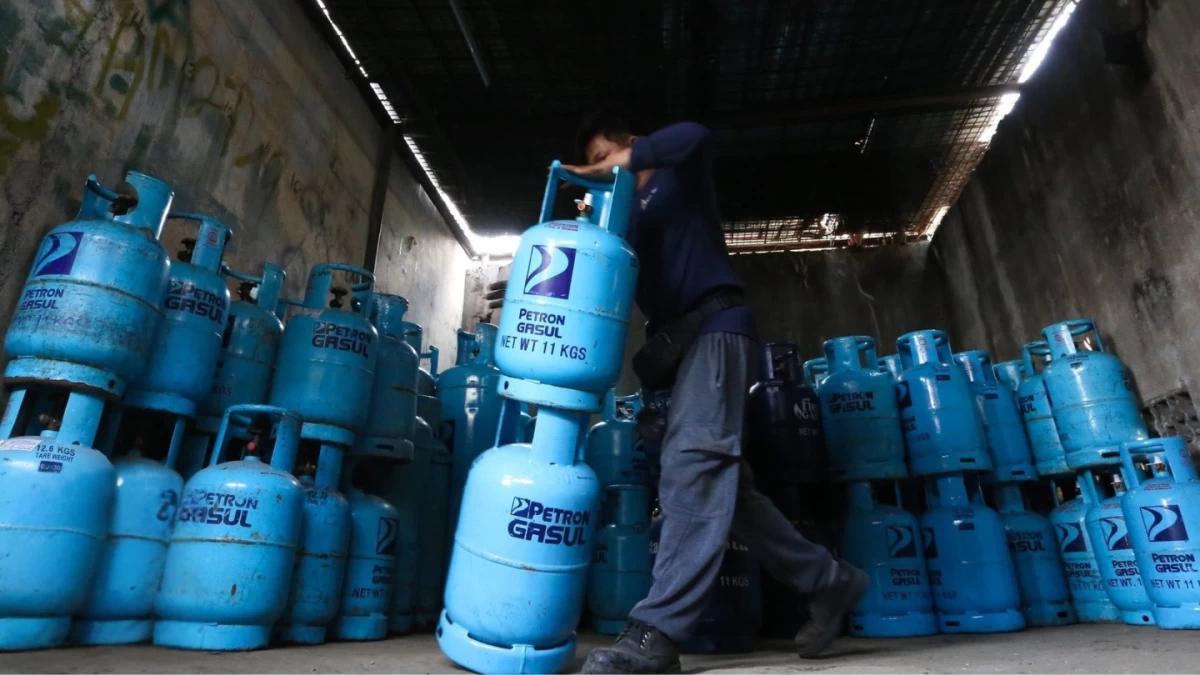
With private distributors maintaining diversified supply sources, the Department of Energy (DOE) is clearing out its remaining liquefied petroleum gas (LPG) reserves to avoid mounting storage costs.
Energy Secretary Sharon Garin said in an interview last week that the DOE is looking to sell the remaining cooking gas stocks of state-run Philippine National Oil Co. (PNOC) to reduce inventory expenses.
“We have to do the math, because we don’t want to spend too much,” Garin said. “While we have it, we have to pay for storage. I mean, the rent of the space to store it.”
Although the DOE has yet to set a fixed price per unit, Garin explained that rates will vary depending on international market prices.
She also stated that restocking will not be necessary once current supplies are exhausted, as local distributors have built resilient supply networks across multiple international markets.
“For LPG, so far, no need [to procure more]. We already have enough… Our [private] companies have learned to be resilient and to spread their risk. So, they have other countries where they source their supplies,” the DOE chief said.
As of Aug. 21, the current LPG supply was equivalent to 34.49 days. This was the lowest inventory level among major fuel products, with gasoline standing at 44.39 days, diesel at 47.66 days, and kerosene at 121.85 days.
Asked if cooking gas is covered by the upcoming strategic petroleum reserve program, Garin stated that the DOE will study the possibility, as LPG is treated differently from other fuels.
“[LPG] has a different storage; when you store diesel, gas, it’s just like you put it in a big tank and then store it there. Here, there [are] two components that you have to mix. Then there’s the pressure that you have to control and the temperature. So it’s a more complicated process, that’s why we haven’t included that yet.”
The DOE, together with its partners, state-run sovereign wealth fund (SWF) manager Maharlika Investment Corp., PNOC, and Japan, aims to develop a state-owned oil storage facility with localized depots to diversify the country’s energy mix and lessen reliance on foreign supply chains.