







BOI eyes Mindanao as key-hub for AI-driven industrialization
By Ivy Tejano
Published Aug 24, 2026 06:55 pm


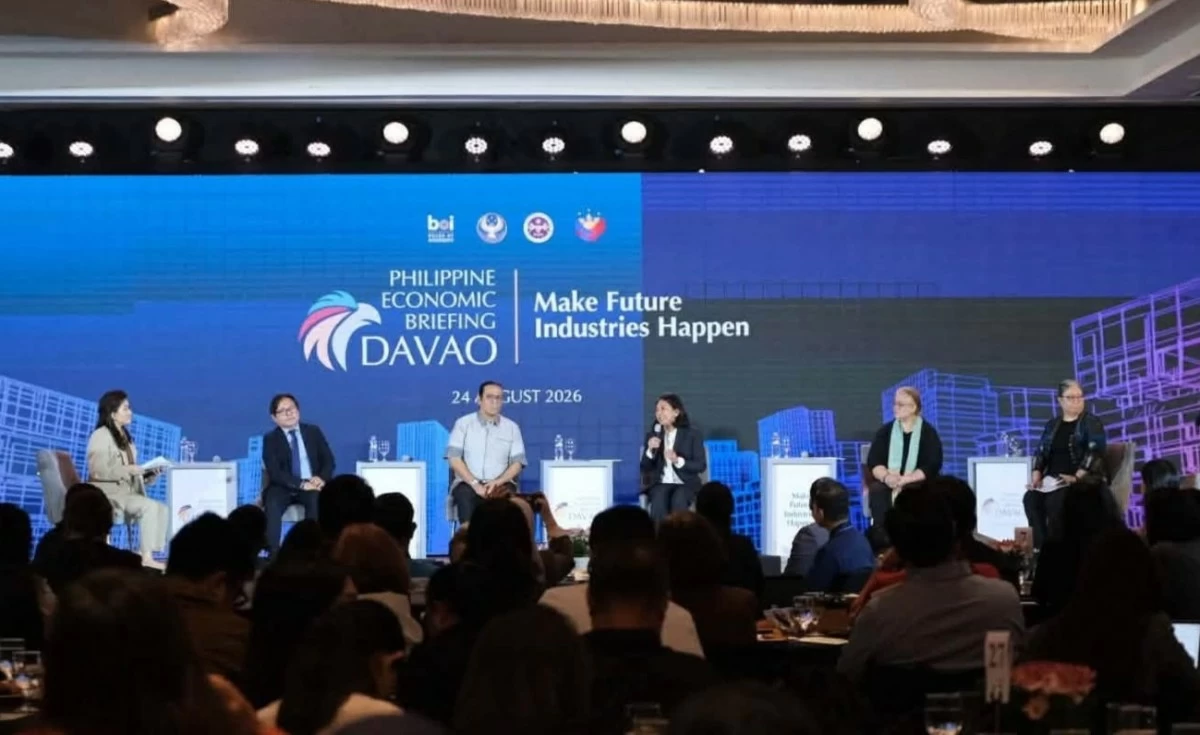
Board of Investments Governor Marjorie Ramos-Samaniego, Bangsamoro BOI Chairman Mohamad Omar Pasigan, Mindanao Development Authority Assistant Secretary Romeo Montenegro, BOI Executive Director Ma. Corazon Halili-Dichosa, and BOI Director Sandra Marie Recolizado discuss investment priorities, policies, infrastructure, financing mechanisms and strategies to position Mindanao as a platform for future industries during the 2026 Strategic Investment Priority Plan Roadshow in Davao City on Monday, August 24, 2026. (Photo via Ivy Tejano / MB)
AVAO CITY – The Board of Investments (BOI) is positioning Mindanao as a strategic hub for the country’s AI-driven industrialization, citing the region’s potential in manufacturing, agribusiness, renewable energy, logistics, critical minerals, digital services, and halal industries.
BOI Executive Director Ma. Corazon Halili-Dichosa presented the vision during the final leg of the 2026 Strategic Investment Priority Plan (SIPP) Roadshow held at DusitD2 Hotel in Davao City on Monday, August 24, as part of the Philippine Economic Briefing in Davao.
Under the 2026 SIPP, the agency identified Mindanao’s capabilities in food security, integrated circuit design, and mineral processing as potential areas that could support critical segments of advanced manufacturing and other technology-driven industries.
The BOI said investments and partnerships are already laying the groundwork for the region’s transformation, including digital connectivity projects registered with the agency by Converge ICT Solutions Inc., InfiniVAN, and Philippine Fiber Optic Cable Network Ltd. Inc.
Dichosa said digital infrastructure alone would not be enough to support the industries expected to drive the next phase of economic growth.
“The industries that will drive the next phase of growth require more than investment and infrastructure. They also require a workforce equipped with the right skills,” Dichosa said.
She said stronger linkages between academic institutions and industry are needed to ensure that educational programs remain responsive to changing industry requirements and to prepare Filipino workers for emerging industries.
The BOI’s Academe-Industry Matching initiative has partnered with institutions including Mindanao State University-Iligan Institute of Technology and Mapúa Malayan Colleges Mindanao to help align academic training with industry needs.
BOI Governor Marjorie Ramos Samaniego, meanwhile, highlighted Mindanao’s mineral resources as an opportunity to move beyond raw material extraction and develop more downstream industries.
She said recent discussions surrounding Pax Silica have reinforced the need to accelerate activities such as mineral processing and manufacturing.
Mindanao’s deposits of nickel, copper, and gold, she said, give the region a strong position to participate in processing and other value-adding activities that can generate greater economic activity locally.
During the roadshow, representatives from the Bangko Sentral ng Pilipinas, the Department of Finance, the Department of Budget and Management, and the Department of Economy, Planning, and Development discussed policies, infrastructure, financing mechanisms, and investment priorities needed to position Mindanao as a platform for future industries.
Representatives from the BOI, the Mindanao Development Authority, and the Bangsamoro Board of Investments also discussed ways to translate national investment priorities into opportunities at the regional level.
Samaniego, Dichosa, and BOI Investment Policy and Planning Service Director Sandra Marie S. Recolizado said the 2026 SIPP aims to promote economic diversification and resilience while remaining accessible to investors of all sizes, including micro, small, and medium enterprises.
They also emphasized the importance of value addition, investment-ready locations, and efficient project implementation in turning approved investments into operational businesses and quality jobs.
Samaniego said Mindanao’s development should not be limited to its role as a supplier of raw materials.
“Mindanao’s next chapter should not be defined only by what it produces or supplies. It should also be defined by how much more we can build here,” Samaniego said.
“The real opportunity is to move further along the value chain, turning resources into products, and products into industries that create more economic activity here at home,” she added.
Department of Finance (DOF) Secretary Frederick Go called for sustained cooperation among government agencies, the private sector, and development partners to turn investment priorities into actual projects.
“The opportunities before Mindanao are immense and require our concerted efforts,” Go said.
He said a whole-of-government approach and stronger collaboration between the private sector and development partners are necessary to create conditions that enable investment growth and ensure that the benefits of development reach more communities across the region.
As steward of the SIPP, the BOI said it will continue to promote investments that generate jobs, support enterprise growth, and strengthen local industries.
The Mindanao leg concluded the 2026 SIPP Roadshow series, marking the completion of the BOI’s nationwide rollout of the country’s updated investment roadmap.