






Manila Bulletin
 Business
The Economy
DOE plans ₱7.5-billion overhaul to eliminate system losses from power bills
Business
The Economy
DOE plans ₱7.5-billion overhaul to eliminate system losses from power bills
Business
The Economy
DOE plans ₱7.5-billion overhaul to eliminate system losses from power bills
DOE plans ₱7.5-billion overhaul to eliminate system losses from power bills
Published Aug 24, 2026 03:28 pm


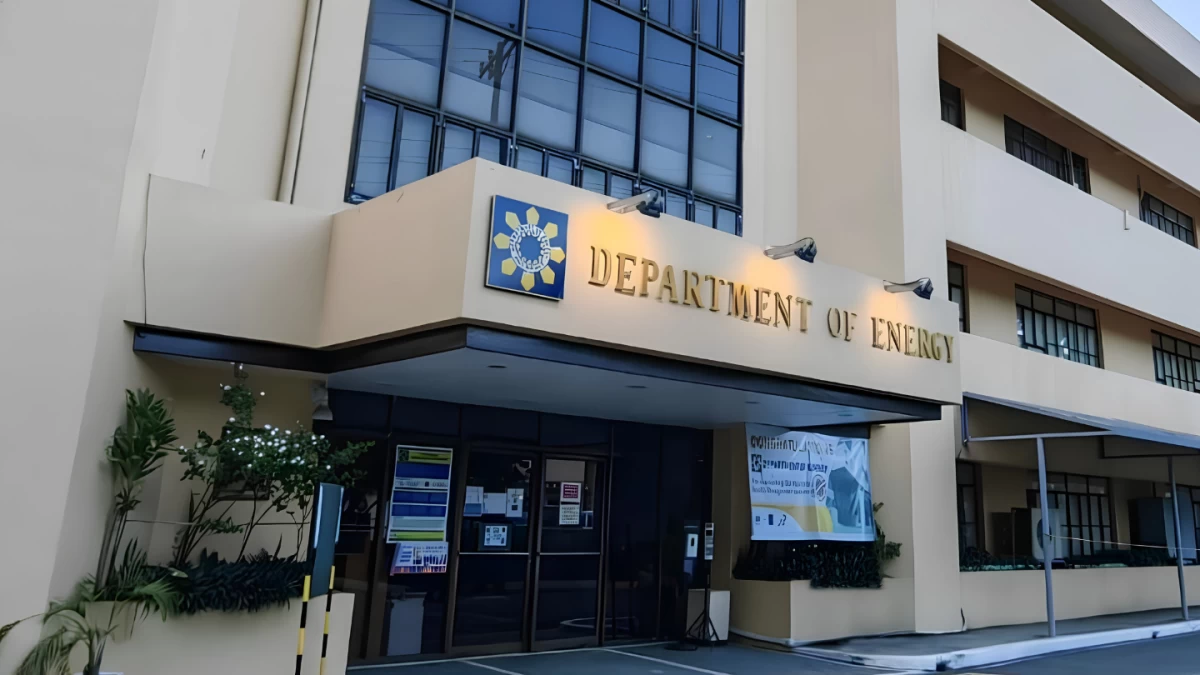
The Department of Energy (DOE) is moving to eliminate non-technical system loss charges from monthly electricity bills in a bid to shield consumers from inflated costs, according to officials.
In a briefing on Monday, Aug. 24, Energy Undersecretary Rowena Guevara said the government plans to phase out charges tied to non-technical losses, which stem from power theft and meter tampering, through a four-stage program estimated to cost ₱7.5 billion.
Guevara said the initiative aims to gradually reduce non-technical losses over the course of one year.
The initial stage requires ₱4 billion in funding to achieve a 25 percent reduction, followed by ₱1 billion for a 50 percent cut, another ₱1 billion to reach 75 percent, and ₱1.5 billion for complete elimination.
To support the reduction target, Guevara said the department will deploy anti-pilferage enforcement measures, launch consumer education campaigns, improve billing and collection efficiency, and upgrade meter management.
She added that trhe plan also incorporates consumer database cleansing, institutional reforms, and regulatory adjustments.
Once fully implemented, the removal of non-technical loss charges is expected to reduce monthly electricity bills by three percent to four percent for customers served by electric cooperatives. Consumers under private distribution utilities could see their bills decline by 1 percent to 1.5 percent, Guevara said.
The agency is working with the Department of Budget and Management (DBM) and Executive Secretary Ralph Recto to secure funding, Energy Secretary Sharon Garin said.
Potential financing options include direct government appropriations or external loans.
In a separate track, the department is preparing a framework to address technical system losses between January and June 2027 in coordination with the National Electrification Administration, the Energy Regulatory Commission, and electric cooperatives. The National Electrification Administration will lead the implementation across cooperatives, providing support to lagging entities.
Planned technical interventions include optimizing sub-transmission line routing, adjusting substation locations, improving primary and secondary feeder routes, and retrofitting capacitor capacity. These measures are scheduled for submission to the Energy Regulatory Commission for approval by July 2027.
Unlike non-technical losses, technical losses cannot be entirely eliminated due to physical constraints inherent in power transmission, Guevara noted, adding that the objective for those losses remains minimization rather than full removal.