







Growth that reaches the last mile
Published Aug 24, 2026 12:05 am
|
Updated Aug 23, 2026 03:45 pm


FROM THE MARGINS
Economic statistics can sometimes feel distant from everyday life. But behind every percentage point of growth – or slowdown – are Filipino families trying to earn a living, entrepreneurs deciding whether they can keep their businesses open, farmers hoping for a better harvest, and young people searching for decent work.
The latest figures from the Philippine Statistics Authority (PSA), therefore, deserve our attention. According to the PSA, the Philippine economy grew by only 2.3 percent in the second quarter of 2026, slower than the 2.8 percent recorded in the first quarter and the 5.5 percent growth a year earlier. Agriculture, forestry, and fishing grew by 2.7 percent, while services continued to provide support to the economy. The Makati Business Club's latest Economy at a Glance underscores the challenges posed by this slowdown: Weaker household consumption, declining investment, and contraction in industry. Still, MBC concludes that despite the near-term challenges, there remain positive opportunities to strengthen economic growth through the continued implementation of key reforms highlighted in the President’s fifth State of the Nation Address.
Engines of livelihood
For me, economic statistics are reminders of the urgency of making growth more inclusive. If we want the economy to regain momentum, we must pay particular attention to the people and enterprises that create livelihoods every day.
Our micro, small, and medium enterprises (MSMEs) are among them. A sari-sari store, a small food business, a farm enterprise, or a neighborhood service provider may appear modest individually, but together they form a vital part of the economic fabric of our communities.
Yet small entrepreneurs often operate with very little room for error. A sudden increase in prices, a natural disaster, an illness in the family, or a temporary decline in sales can quickly threaten a livelihood.
This is where microfinance and financial inclusion can make a difference. Access to appropriate credit can provide working capital or enable a small entrepreneur to invest in a productive asset. Savings can provide a buffer against emergencies. Microinsurance can protect families from shocks. Digital financial services can reduce transaction costs and open access to new markets.
Beyond simply providing accounts or loans, financial inclusion helps people build financial security, productive enterprises, and greater resilience.
We need stronger support for MSMEs through affordable and responsible financing, digitalization, skills development, market linkages, and a regulatory environment that allows small businesses to grow.
Investing in agriculture — and in Filipino workers
Agriculture also deserves renewed attention. The sector's 2.7-percent growth in the second quarter is encouraging, but we should see this as an opportunity to do more.
Our farmers need access not only to credit, but also to technology, irrigation, storage, logistics, insurance, and reliable markets. We must strengthen agricultural value chains so that opportunities extend beyond the farm — to processors, traders, transport providers, retailers, and other rural enterprises.
At the same time, job creation must remain at the center of our development agenda. Growth that does not create sufficient opportunities for people to earn a decent and productive income will not be felt where it matters most.
We must invest in skills and education, support industries that can generate quality employment, and ensure that Filipinos in rural and underserved communities are not left behind as the economy becomes increasingly digital.
Inclusive growth as measure of progress
After many years of working with poor families, I have learned that resilience is not simply an individual quality. People are resilient because they have opportunities, supportive institutions, and the means to recover when adversity strikes.
This is why poverty eradication and financial inclusion must remain integral to our economic strategy.
But the government cannot do this alone. The private sector, financial institutions, civil society, development organizations, and communities all have roles to play. We need to build an economy in which investment creates jobs, agriculture creates sustainable livelihoods, MSMEs can grow, and financial services reach those who have traditionally been excluded.
The latest economic figures should challenge us to act with greater urgency. A slower economy makes it even more important to ensure that our limited resources create the greatest possible impact on people's lives.
For me, economic progress has never been measured only by gross domestic product (GDP). I see it in the farmer who earns enough to support a family, the entrepreneur who expands a small business and hires another worker, the young Filipino who finds meaningful employment, and the low-income family that can face a crisis without losing everything it has worked for.
Ultimately, the goal is not simply to make the economy grow. It is to make growth matter — to make it create opportunity, strengthen resilience, and reach the last mile. That is how we can build an economy where progress is not enjoyed by a few, but becomes a pathway to a better life for every Filipino.
* * *
“When you increase productivity, economies become better — local economies become better, society becomes better.” – Jensen Huang
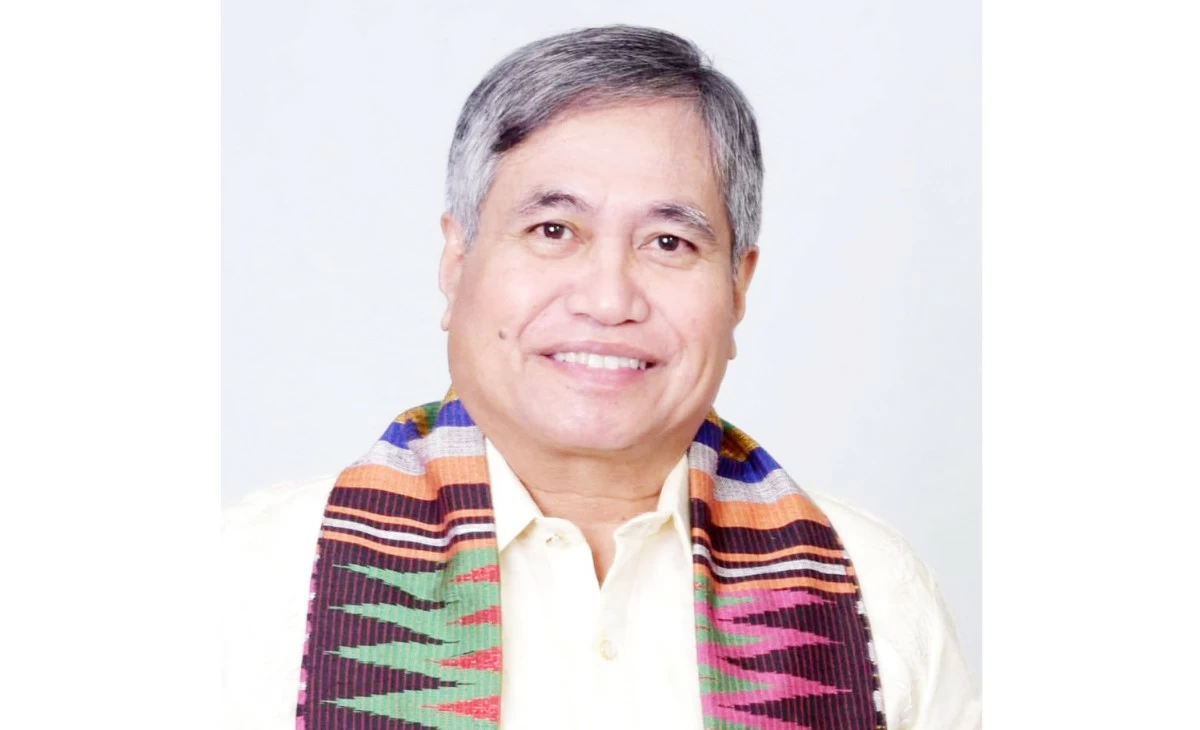
(Dr. Jaime Aristotle B. Alip is a poverty eradication advocate. He is the founder of the Center for Agriculture and Rural Development Mutually-Reinforcing Institutions (CARD MRI), a group of 23 organizations that provide social development services to 8 million economically-disadvantaged Filipinos and insure more than 27 million nationwide.)