ADVERTISEMENT

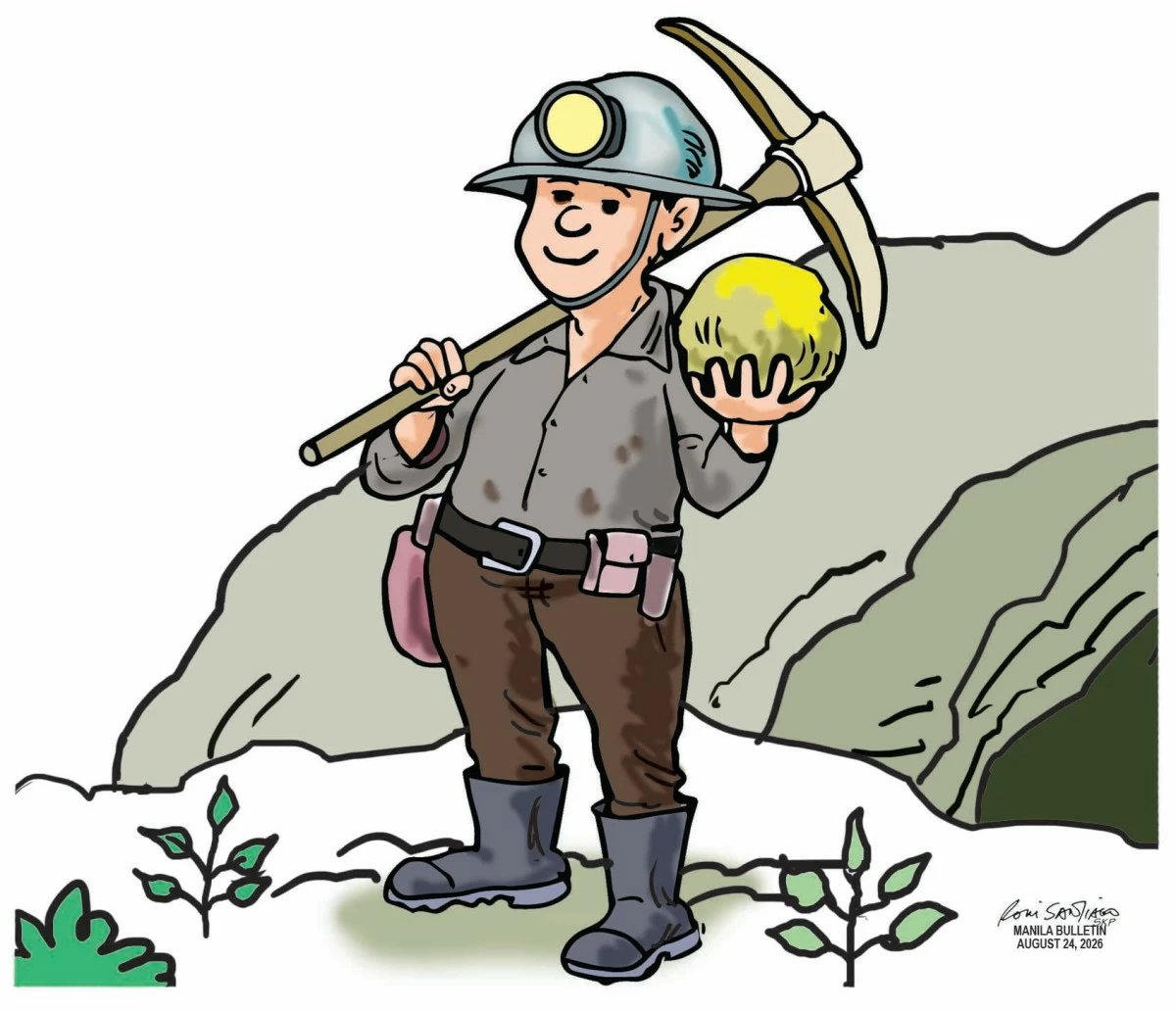
Developing critical minerals sector to boost PH economic growth

Published Aug 24, 2026 12:05 am  |  Updated Aug 23, 2026 03:39 pm
The issuance of Executive Order No. 122, establishing a national policy framework for the development of the Philippines’ critical minerals sector, comes at an important moment. The country possesses vast deposits of nickel, copper, gold and other minerals essential to electric vehicles, renewable energy, electronics and other industries of the future. Yet mining contributes less than one percent to Philippine gross domestic product (GDP) — a strikingly modest return from a natural endowment that government has estimated in the trillions of dollars.
Why has mining remained such a lackluster contributor?
Part of the answer lies in a history of policy uncertainty, prolonged permitting, environmental controversies, community opposition and inadequate infrastructure. The sector has also remained heavily oriented toward extraction and export of raw or minimally processed minerals. The Philippines may be a major nickel supplier, but much of the higher-value processing and manufacturing occurs elsewhere.
There is also a legitimate environmental dimension. Mining can cause irreversible damage when poorly regulated. The country has seen the consequences of abandoned or unsafe operations, forest degradation, water pollution and conflicts involving communities and indigenous peoples. The answer, however, should not be either unrestrained extraction or blanket prohibition. It should be responsible mining governed by clear, predictable and rigorously enforced rules.
EO 122 offers an opportunity to make that shift. Its emphasis on domestic processing and downstream industries is particularly significant. Instead of merely shipping ore abroad, the Philippines should aspire to refine minerals, manufacture components and eventually participate in battery, electronics and clean-energy supply chains. The resulting multiplier effects could create skilled employment, attract technology and investment, expand the tax base and accelerate industrialization.
Other countries offer useful lessons.
Indonesia demonstrates how a mineral-rich country can use downstream processing to capture greater value from nickel, although its experience also warns against environmental and social costs. Its digital tracking system for minerals illustrates how technology can strengthen compliance and government revenue collection.
Australia and Canada merit closer study for their stronger mining institutions, investment frameworks and environmental governance. Chile, meanwhile, offers an evolving model in which the state, industry and indigenous communities negotiate arrangements around strategic minerals while giving greater weight to water, environmental protection and community participation.
Against this backdrop, the announced consolidation involving the Sy and Consunji families through Dominion Holdings is significant. Dominion is taking a stake in Atlas Consolidated Mining and Development, signaling the possibility of a larger, better-capitalized Philippine mining platform.
This should be viewed not simply as a corporate transaction but as a test of whether substantial Filipino capital can help build a globally competitive mining industry. Its success must ultimately be measured not by the size of mineral holdings but by value created for the Philippine economy and communities.
The challenge is to make mining an instrument of sustainable development. This means strict environmental-impact assessments, transparent permits, responsible mine closure and rehabilitation, protection of watersheds and biodiversity, genuine free, prior and informed consent for indigenous communities, and continuous monitoring using digital and satellite technologies. International ESG standards should become operational requirements, not corporate slogans.
EO 122 should therefore be implemented with both ambition and vigilance. The Philippines need not choose between economic development and environmental stewardship. We must prove that mineral wealth can finance a greener, more industrialized and more inclusive economy.Thus will there be sufficient assurance that the nation’s natural wealth will be inherited by future generations of Filipinos.

Related Tags

mining EO 122 minerals
ADVERTISEMENT
.most-popular .layout-ratio{ padding-bottom: 79.13%; } @media (min-width: 768px) and (max-width: 1024px) { .widget-title { font-size: 15px !important; } }

{{ articles_filter_1561_widget.title }}

.most-popular .layout-ratio{ padding-bottom: 79.13%; } @media (min-width: 768px) and (max-width: 1024px) { .widget-title { font-size: 15px !important; } }

{{ static_articles_1562_widget.title }}

.most-popular .layout-ratio{ padding-bottom: 79.13%; } @media (min-width: 768px) and (max-width: 1024px) { .widget-title { font-size: 15px !important; } }

{{ articles_filter_1563_widget.title }}

{{ articles_filter_1564_widget.title }}

.mb-article-details { position: relative; } .mb-article-details .article-body-preview, .mb-article-details .article-body-summary{ font-size: 17px; line-height: 30px; font-family: "Libre Caslon Text", serif; color: #000; } .mb-article-details .article-body-preview iframe , .mb-article-details .article-body-summary iframe{ width: 100%; margin: auto; } .read-more-background { background: linear-gradient(180deg, color(display-p3 1.000 1.000 1.000 / 0) 13.75%, color(display-p3 1.000 1.000 1.000 / 0.8) 30.79%, color(display-p3 1.000 1.000 1.000) 72.5%); position: absolute; height: 200px; width: 100%; bottom: 0; display: flex; justify-content: center; align-items: center; padding: 0; } .read-more-background a{ color: #000; } .read-more-btn { padding: 17px 45px; font-family: Inter; font-weight: 700; font-size: 18px; line-height: 16px; text-align: center; vertical-align: middle; border: 1px solid black; background-color: white; } .hidden { display: none; }
function initializeAllSwipers() { // Get all hidden inputs with cms_article_id document.querySelectorAll('[id^="cms_article_id_"]').forEach(function (input) { const cmsArticleId = input.value; const articleSelector = '#article-' + cmsArticleId + ' .body_images'; const swiperElement = document.querySelector(articleSelector); if (swiperElement && !swiperElement.classList.contains('swiper-initialized')) { new Swiper(articleSelector, { loop: true, pagination: false, navigation: { nextEl: '#article-' + cmsArticleId + ' .swiper-button-next', prevEl: '#article-' + cmsArticleId + ' .swiper-button-prev', }, }); } }); } setTimeout(initializeAllSwipers, 3000); const intersectionObserver = new IntersectionObserver( (entries) => { entries.forEach((entry) => { if (entry.isIntersecting) { const newUrl = entry.target.getAttribute("data-url"); if (newUrl) { history.pushState(null, null, newUrl); let article = entry.target; // Extract metadata const author = article.querySelector('.author-section').textContent.replace('By', '').trim(); const section = article.querySelector('.section-info ').textContent.replace(' ', ' '); const title = article.querySelector('.article-title h1').textContent; // Parse URL for Chartbeat path format const parsedUrl = new URL(newUrl, window.location.origin); const cleanUrl = parsedUrl.host + parsedUrl.pathname; // Update Chartbeat configuration if (typeof window._sf_async_config !== 'undefined') { window._sf_async_config.path = cleanUrl; window._sf_async_config.sections = section; window._sf_async_config.authors = author; } // Track virtual page view with Chartbeat if (typeof pSUPERFLY !== 'undefined' && typeof pSUPERFLY.virtualPage === 'function') { try { pSUPERFLY.virtualPage({ path: cleanUrl, title: title, sections: section, authors: author }); } catch (error) { console.error('ping error', error); } } // Optional: Update document title if (title && title !== document.title) { document.title = title; } } } }); }, { threshold: 0.1 } ); function showArticleBody(button) { const article = button.closest("article"); const summary = article.querySelector(".article-body-summary"); const body = article.querySelector(".article-body-preview"); const readMoreSection = article.querySelector(".read-more-background"); // Hide summary and read-more section summary.style.display = "none"; readMoreSection.style.display = "none"; // Show the full article body body.classList.remove("hidden"); } document.addEventListener("DOMContentLoaded", () => { let loadCount = 0; // Track how many times articles are loaded const offset = [1, 2, 3, 4, 5, 6, 7, 8, 9, 10]; // Offset values const currentUrl = window.location.pathname.substring(1); let isLoading = false; // Prevent multiple calls if (!currentUrl) { console.log("Current URL is invalid."); return; } const sentinel = document.getElementById("load-more-sentinel"); if (!sentinel) { console.log("Sentinel element not found."); return; } function isSentinelVisible() { const rect = sentinel.getBoundingClientRect(); return ( rect.top < window.innerHeight && rect.bottom >= 0 ); } function onScroll() { if (isLoading) return; if (isSentinelVisible()) { if (loadCount >= offset.length) { console.log("Maximum load attempts reached."); window.removeEventListener("scroll", onScroll); return; } isLoading = true; const currentOffset = offset[loadCount]; window.loadMoreItems().then(() => { let article = document.querySelector('#widget_1690 > div:nth-last-of-type(2) article'); intersectionObserver.observe(article) loadCount++; }).catch(error => { console.error("Error loading more items:", error); }).finally(() => { isLoading = false; }); } } window.addEventListener("scroll", onScroll); });

Sign up by email to receive news.