







Campus violence: Secure schools, shape better lives
Published Aug 20, 2026 12:02 am
|
Updated Aug 19, 2026 04:22 pm


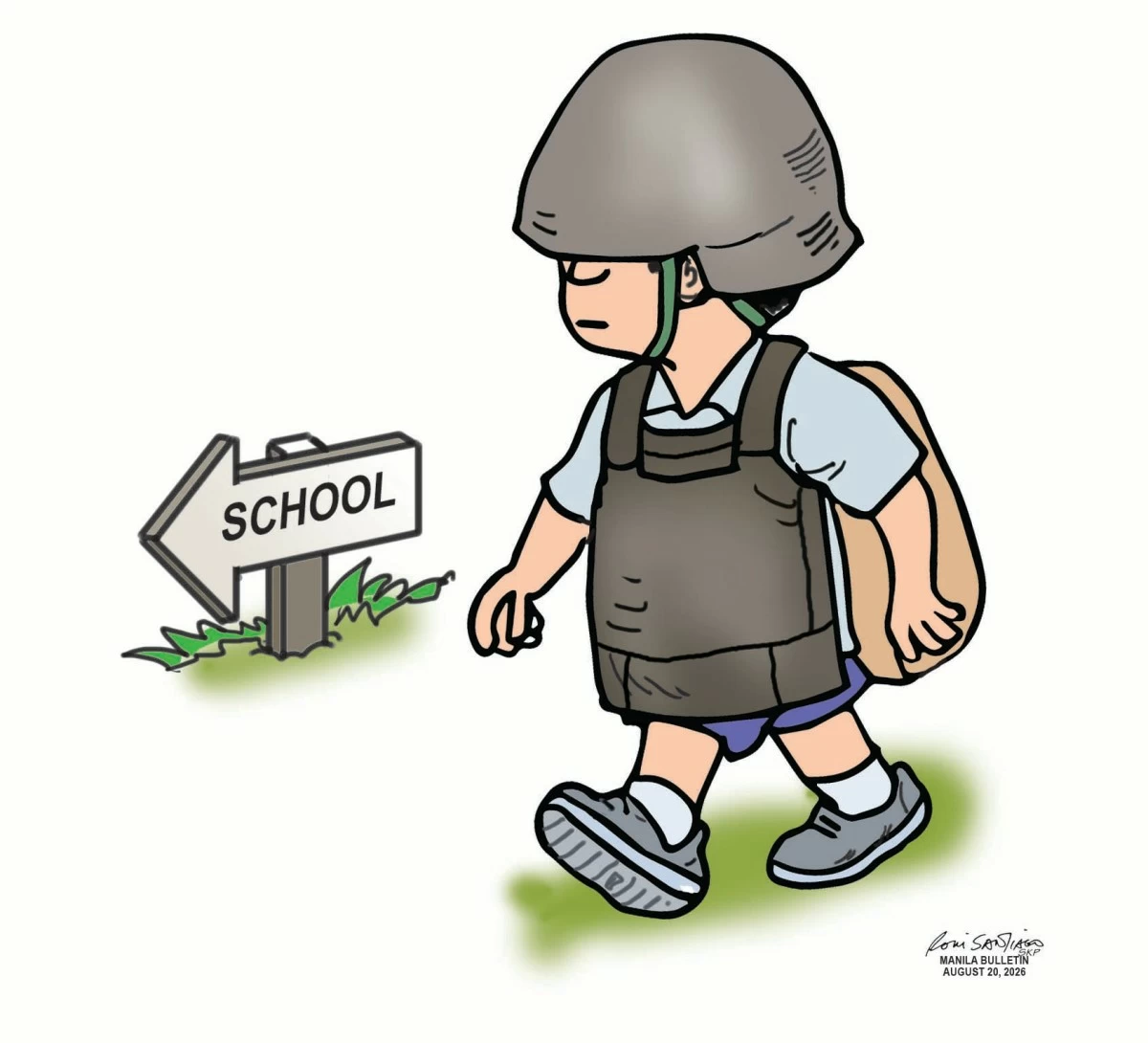
The deadly shooting at Ateneo de Zamboanga University on Aug. 18 should not be treated as just another case of campus-security failure. It should serve as a warning that the government must confront school violence on two fronts: keeping weapons and threats out of campuses, and teaching young people how to manage anger, identity, conflict, online influences, and the pressures of life.
A Grade 9 student allegedly shot a Grade 10 schoolmate before taking his own life. Authorities said the attack was livestreamed using a body-mounted camera, while two other people were injured. It was the second fatal school shooting in the country in less than two months, following the deadly Tacloban incident in June.
The livestreaming is particularly disturbing. It suggests not merely violence, but the possibility that violence itself has become a performance—something to record, share and imitate. Reports that investigators are examining the student's online and gaming history should prompt serious inquiry, but not simplistic conclusions. Violent video games or internet content cannot automatically be declared the cause of a real-world attack. What the government must examine is the broader digital environment in which vulnerable young people consume content, form identities, and interact with others.
That is why tighter campus security, while indispensable, is only half the answer.
Schools need controlled access, functioning emergency protocols, credible reporting mechanisms and closer coordination with the Philippine National Police and local authorities. The government should also review how firearms are stored in households, particularly when minors can potentially access them. The PNP has already begun reviewing school-security policies following the Tacloban shooting.
But a secure gate cannot prevent a troubled mind from becoming a danger to itself or others.
The other half is behavioral and psychological education. Students must learn that emotions are real but violence is never an acceptable response to them. They must be taught how to handle rejection, humiliation, frustration, loneliness, conflict and failure. They need guidance on what they watch, what online communities they join, whom they trust, what behavior they normalize, and when to seek help.
This is not an argument for censorship masquerading as education. It is an argument for media literacy, emotional regulation, empathy, responsible digital citizenship, conflict management and character formation.
There is already a foundation. The Basic Education Mental Health and Well-Being Promotion Act requires a comprehensive school-based mental-health program and strengthens suicide-prevention efforts. DepEd has also moved toward integrating socio-emotional learning, emotional regulation and conflict management into Values Education and Good Manners and Right Conduct (GMRC).
The problem is implementation. A policy on paper cannot substitute for accessible counselors, trained teachers, responsive parents and communities willing to notice warning signs before tragedy strikes.
The government therefore needs a whole-of-community strategy. Families must create spaces where children can speak without immediately being judged. Schools must identify behavioral changes early and intervene appropriately. Mental-health professionals must be available before crises become emergencies. Law-enforcement agencies must secure firearms and respond to credible threats. Community and faith leaders must reinforce respect, responsibility and the value of human life.
The goal should not be to raise a generation that is merely afraid of breaking rules. It should be to raise one that understands why certain boundaries exist.
A school should be more than a place protected from violence. It should be a place where young people learn not to become violent.
That is the harder task—and the more important one.