






 Business
Trade & Industry
Weak peso, reforms steer Philippine property capital toward industrial, logistics assets—Cushman & Wakefield
Business
Trade & Industry
Weak peso, reforms steer Philippine property capital toward industrial, logistics assets—Cushman & Wakefield
Weak peso, reforms steer Philippine property capital toward industrial, logistics assets—Cushman & Wakefield


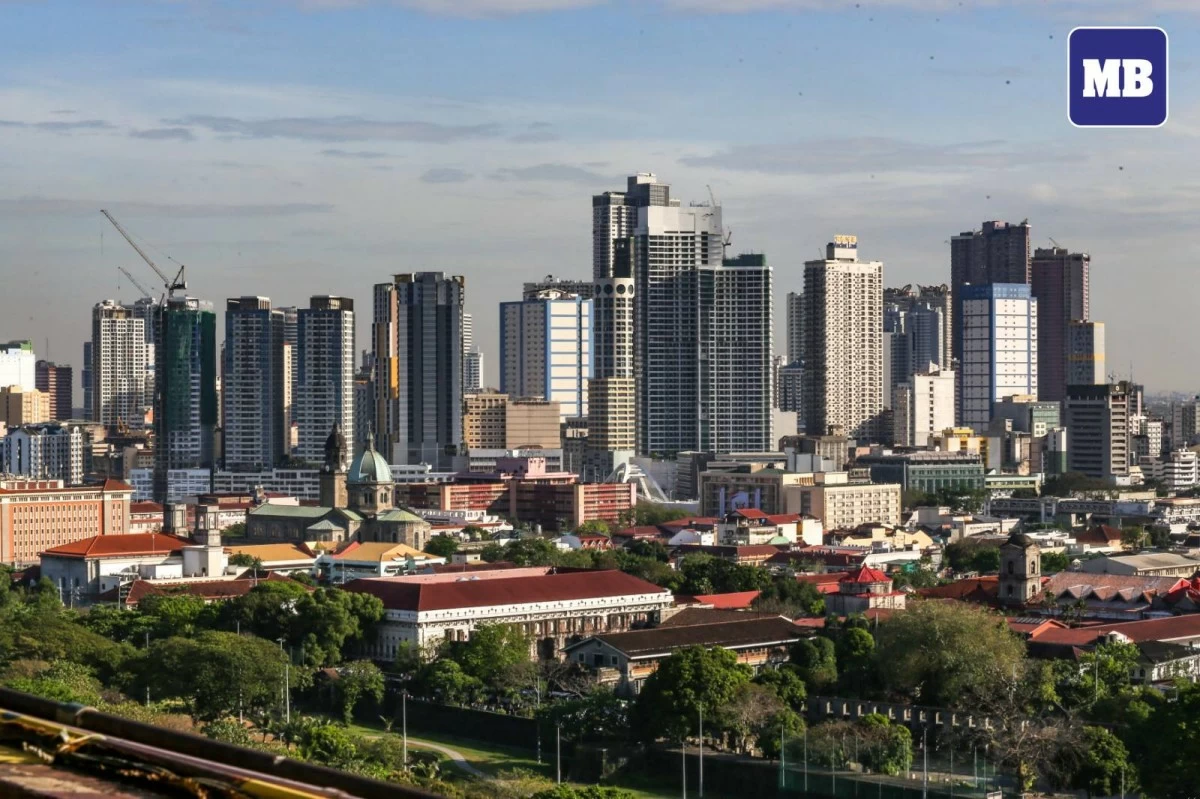
The Philippine property market is showing pockets of resilience despite economic growth slowing to a post-pandemic low, as a weaker peso and long-term regulatory reforms draw foreign capital toward industrial and logistics assets while occupiers become more disciplined in their expansion plans, according to property consultancy Cushman & Wakefield.
In its latest Philippine MarketBeat reports published last Monday, Aug. 17, Cushman & Wakefield maintained a “cautiously optimistic” outlook on the domestic property market even as gross domestic product (GDP) growth slowed to 2.3 percent in the second quarter of 2026.
Cushman & Wakefield Philippines research, consulting, and advisory services head Claro Cordero Jr. said the outlook is supported by currency-driven capital shifts, structural reforms, and continued demand for income-generating assets, while occupiers are taking a more measured approach to expansion.
With the exchange rate hovering at ₱61.3 to the United States (US) dollar in the second quarter, the weaker peso has made Philippine assets more attractive to dollar-based investors, particularly those seeking operating businesses and platforms rather than standing buildings.
Cushman & Wakefield said the country’s new 99-year lease framework for foreign investors and the World Bank’s reclassification of the Philippines as an upper-middle-income country (UMIC) are also providing structural support for longer-term investment interest. The consultancy identified both factors as supporting foreign capital interest in the industrial and logistics sector.
These shifts are particularly evident in industrial and logistics properties, where Cushman & Wakefield sees opportunities in income-generating and operating-linked exposure, including pre-leased warehouses in Philippine Economic Zone Authority (PEZA)-accredited estates.
Cushman & Wakefield said the investment case for industrial and logistics assets has strengthened as warehouses out-leased offices during the quarter. With the Bangko Sentral ng Pilipinas’ (BSP) policy rate at 4.75 percent and significant vacant office stock, the consultancy said financing office acquisitions at old pricing “no longer holds.”
The country’s industrial real estate market had about 9,400 hectares (ha) of inventory in the second quarter, with the nationwide vacancy rate at 2.48 percent. Around 860 ha are planned or under construction through 2028.
Foreign investment has also provided support. Cushman & Wakefield said foreign investments approved by the country’s investment promotion agencies (IPAs) reached ₱140.7 billion in the first half, up 94.42 percent year-on-year, with manufacturing accounting for 45 percent of approved pledges, followed by logistics at 15 percent, and ecozone developments at nine percent.
However, the weaker peso is also raising the cost of imported construction inputs, keeping development costs elevated and reinforcing a pricing floor for high-quality completed spaces.
In the office sector, prime and grade A vacancy edged up to 17.6 percent in the second quarter from 17.1 percent in the previous quarter as economic uncertainty tempered leasing activity, particularly in central business districts (CBDs). Average headline rents nevertheless increased to ₱964 per square meter (sqm) per month.
Occupiers have increasingly favored secondary business districts offering larger contiguous floor plates and more competitive rents, while some tenants are pre-leasing upcoming prime developments to secure preferred locations and configurations before suitable inventory tightens.
Cushman & Wakefield said occupiers are also taking a more measured approach to expansion by carefully timing relocations, optimizing fit-outs, and renegotiating leases as economic uncertainty and higher costs encourage greater discipline in real estate decisions.
Meanwhile, overseas Filipino worker (OFW) remittances continue to support affordable and mid-market housing demand. Cash remittances reached $13.7 billion in the first five months, up 2.5 percent year-on-year, according to figures cited by Cushman & Wakefield.
The property consultancy also sees opportunities arising from regional supply-chain diversification and nearshoring, particularly as manufacturers reassess production footprints across Asia.
“Although the quarter opened on uncertain footing, economic activity gathered pace toward its close, laying the groundwork for a more resilient leasing recovery in the second half of the year,” Cushman & Wakefield said in its office report. - Danielle T. Bayani