






 Business
The Economy
Balisacan pushes political, economic reforms to rebuild confidence, sustain Philippine growth
Business
The Economy
Balisacan pushes political, economic reforms to rebuild confidence, sustain Philippine growth
Balisacan pushes political, economic reforms to rebuild confidence, sustain Philippine growth


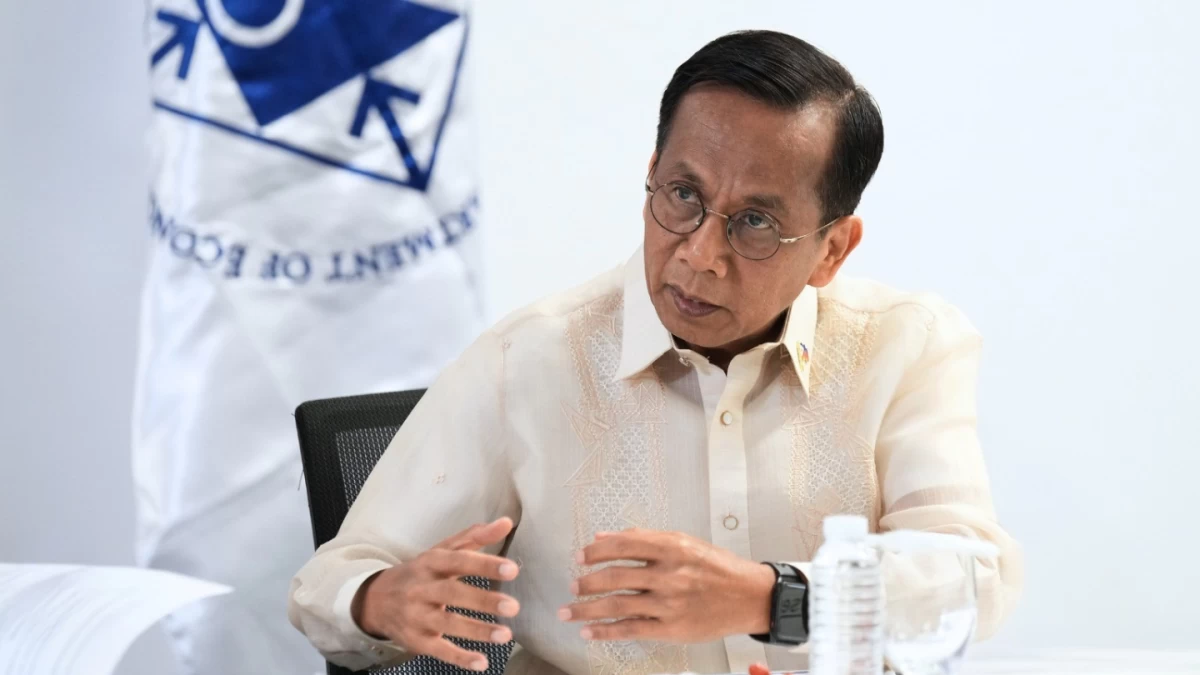
The Philippines must push through political and economic reforms in the final two years of the Marcos Jr. administration to rebuild confidence and strengthen the economy’s growth potential, according to the country’s chief economist.
During the Development Budget Coordination Committee (DBCC) briefing on the proposed ₱7.2-trillion 2027 national budget on Monday, Aug. 17, Department of Economy, Planning, and Development (DEPDev) Secretary Arsenio M. Balisacan underscored the need for continued partnership with Congress to advance the administration’s remaining legislative priorities.
Balisacan linked political and institutional reforms to the country’s economic prospects, emphasizing the need to strengthen consumer, business, and investor confidence amid concerns over corruption and governance.
Governance and anti-corruption reforms are among the administration’s legislative priorities, including measures seeking to regulate or restrict political dynasties.
Other proposed reforms are aimed at strengthening or modifying the political party system, guaranteeing public access to government information, and improving accountability, control, and efficiency in the use of public funds.
On the economic front, Balisacan said pending economic, sectoral, and social reforms are intended to expand the economy’s productive capacity, raise productivity, and promote inclusive growth.
These include tax reforms and legislative amendments affecting the coconut and fisheries sectors, as well as energy reforms covering proposed amendments to the Electric Power Industry Reform Act (EPIRA) and legislation on waste-to-energy (WtE) development.
The energy measures are intended to secure more reliable and affordable electricity by expanding renewable energy (RE) generation, strengthening the power grid, and fostering greater competition in the electricity market.
Balisacan also highlighted reforms in social protection, education, and health aimed at improving nutrition, accelerating plasma production, expanding access to education, and strengthening assistance for vulnerable sectors.
“As we enter the final years of the administration, the objective is to turn reforms into results. We will consolidate our gains, address critical implementation bottlenecks, and advance strategic measures to deliver people-centered growth in a more inclusive and resilient future,” Balisacan said in his presentation.
Under the government’s official macroeconomic targets cited by Balisacan, gross domestic product (GDP) growth is expected to recover to five to six percent annually from 2027 to 2030, while the unemployment rate is projected at four to five percent from 2026 to 2028.
The government also projects inflation at four to five percent in 2027 before easing to the two- to four-percent target range in 2028.
For this year, the government has lowered its GDP growth target to 3.5 to 4.5 percent. Balisacan earlier said the economy would need to grow by 4.4 percent in the second half to reach the lower end of the full-year target after quarterly growth slowed to a post-pandemic low of 2.3 percent in the second quarter.
The administration’s governance push comes amid the fallout from alleged irregularities in flood control projects, an issue President Ferdinand R. Marcos Jr. raised during his State of the Nation Address (SONA) in 2025, including reports of “ghost” projects and billions of pesos in questionable government spending. - Danielle T. Bayani