






Manila Bulletin
 Business
The Economy
Sticky inflation may prompt BSP policy rate hike to 5.25% by year-end—MUFG
Business
The Economy
Sticky inflation may prompt BSP policy rate hike to 5.25% by year-end—MUFG
Business
The Economy
Sticky inflation may prompt BSP policy rate hike to 5.25% by year-end—MUFG
Sticky inflation may prompt BSP policy rate hike to 5.25% by year-end—MUFG
By Derco Rosal
Published Aug 17, 2026 12:00 am
|
Updated Aug 15, 2026 03:31 pm


At A Glance
- Japanese financial giant MUFG Bank Ltd. has deemed that the Bangko Sentral ng Pilipinas (BSP) retains room for an additional 50 basis points (bps) for its remaining policy meetings, potentially closing the year with a benchmark rate of 5.25 percent.
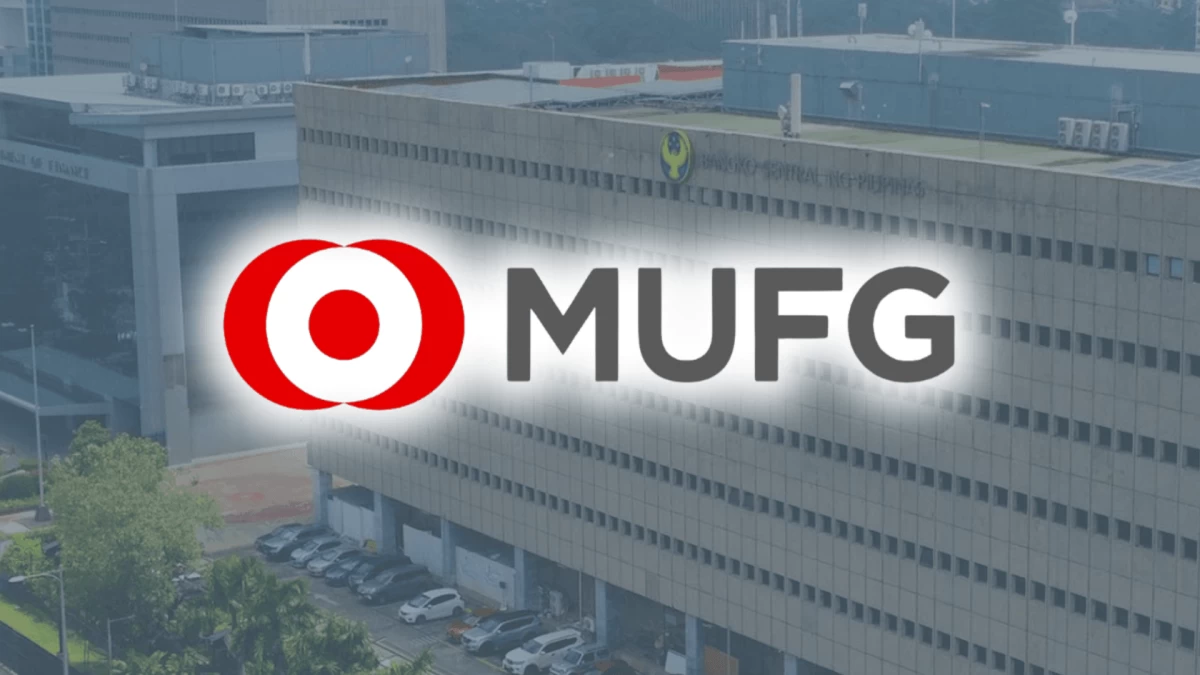
The Bangko Sentral ng Pilipinas (BSP) retains room for an additional 50 basis points (bps) of rate hikes at its remaining policy meetings, potentially closing the year with a benchmark rate of 5.25 percent, according to Japanese financial giant MUFG Bank Ltd.
MUFG Global Markets Research wrote in a commentary published last Friday, Aug. 14, that despite sustained disinflation in July, headline inflation continued to clock in above the four-percent target ceiling for four consecutive months since April, averaging five percent in the first seven months of 2026.
“Inflation eased to 6.2 percent in July after the 7.2-percent peak in April. Still, inflation is well above target and the BSP is likely to tighten policy further,” MUFG said, adding that it sees “scope” for additional interest rate hikes due in part to the “resurgence” of energy inflation.
The BSP has three monetary policy meetings remaining before year-end, scheduled on Aug. 27, Oct. 22, and Dec. 17.
MUFG’s hawkish outlook for the BSP comes as the country faces a challenging external environment marked by trade imbalances. The Philippines’ monthly trade deficit showed signs of narrowing in June to $4.9 billion from a gap of $6.1 billion in May.
However, the broader trend remains concerning as MUFG maintains a cautious outlook on the Philippine peso against the United States (US) dollar and other “currencies with weak trade balance” across the region.
Data as of mid-August showed that the peso depreciated to ₱61.443 per greenback, a level that has been bearing the brunt of market volatility. These currency swings and the high interest rate environment are beginning to exact a toll on local output.
Global banking giant Standard Chartered Bank (SCB) said during a virtual press briefing last Friday that it sees full-year 2026 gross domestic product (GDP) growth clocking in at 3.5 percent, matching the lower end of the government’s already lowered target.
Echoing the Department of Economy, Planning, and Development (DEPDev), SCB noted that public construction has been a major drag on domestic growth, primarily because “government capital expenditure (capex) disbursements have basically been very slow” despite strong operational spending.
SCB added that the economic friction is further exacerbated by tighter lending conditions for both individual and corporate borrowers. Key borrowing costs have so far been raised twice this year to 4.75 percent.
According to SCB, this shift in credit conditions was largely driven by “mark-to-market losses that currently banks are holding due to the mark-to-market losses from peso-denominated government bonds (RPGBs),” which have weighed on lenders’ financial performance.
While the falling peso may fuel inflation, SCB said it also gives households a boost as remittances from abroad are worth about 10 percent more in pesos, giving families extra spending power despite slow growth in dollar terms.
Cash remittances from Filipinos abroad fell to $2.71 billion in May, their lowest level since the $2.66 billion recorded in May last year, signaling a loss of momentum amid risks to overseas Filipino worker (OFW) deployment from the lingering Middle East conflict.