







P-Beauty: The 4th force in Asian beauty
From tropical-friendly formulations to the global Filipino diaspora, several factors could help Philippine beauty brands make a lasting mark on the international market
By Denice Sy
Published Aug 15, 2026 10:53 am
|
Updated Aug 15, 2026 02:51 pm


(Photo: Ever Bilena)
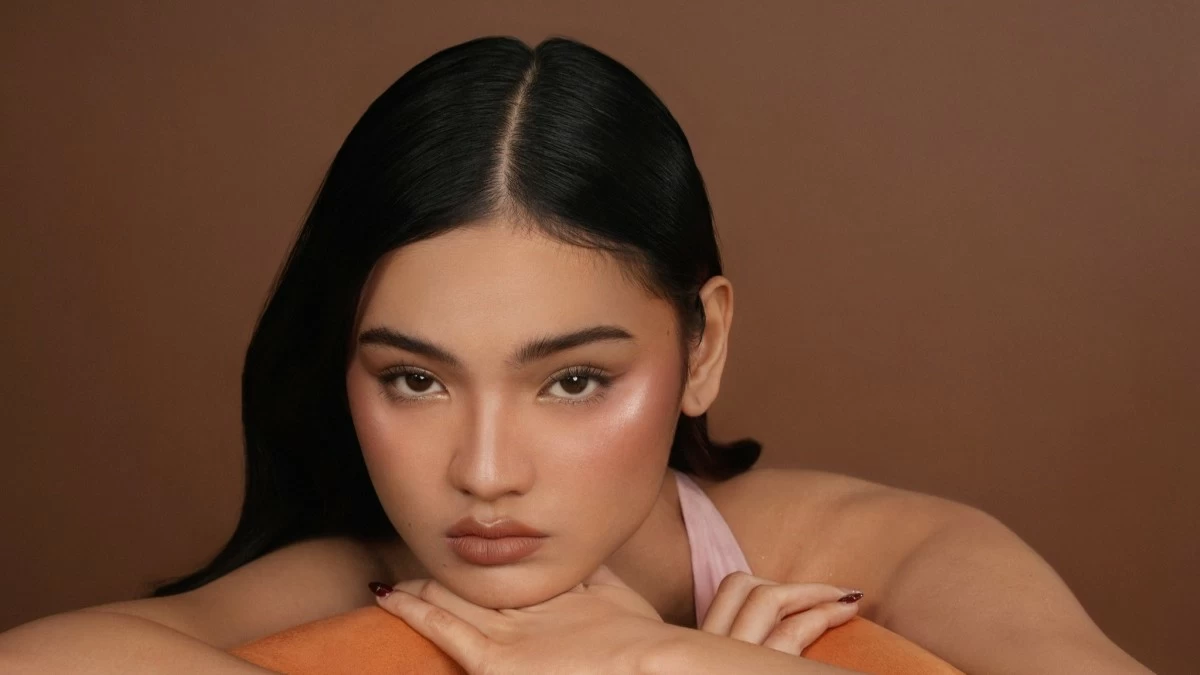
Recently, I saw local beauty brands like Ever Bilena, Issy, Vice, and Sunnies Face make the headlines, basically covering what’s happening in the Philippines’ cosmetics industry and featuring the ones building it.
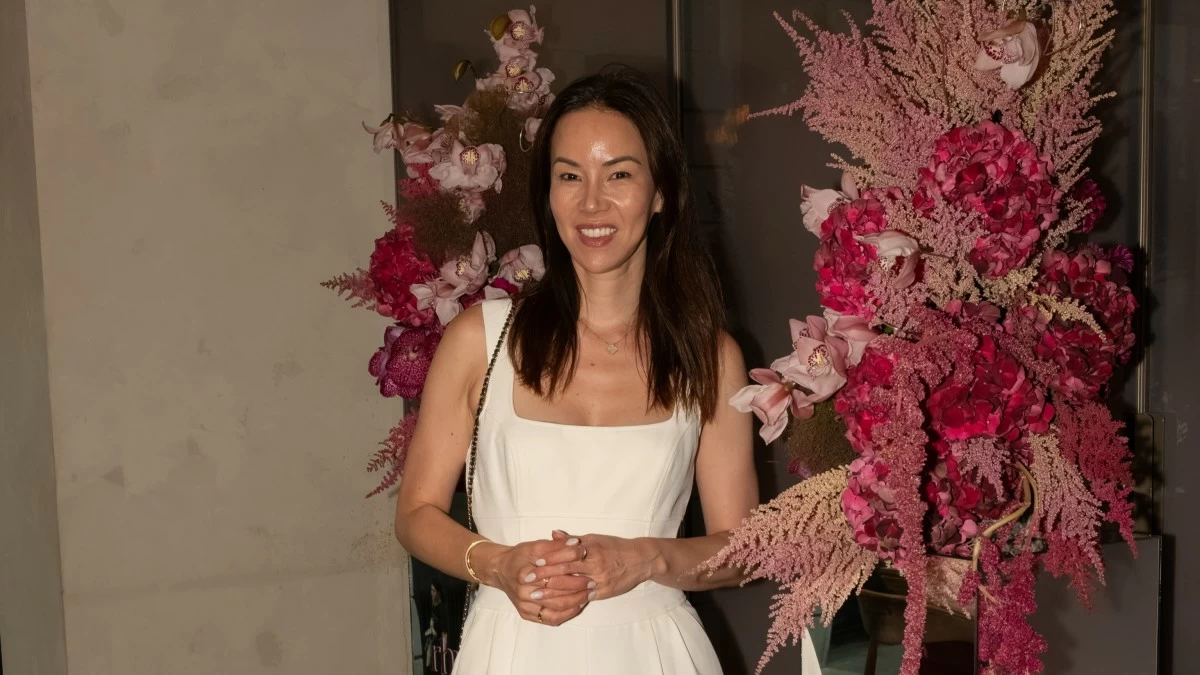
I’ve since seen more international press start to put P-beauty in the same sentence as K-beauty and J-beauty, and I wanted to explore this further. So I asked Dr. Christine Hall, a UK-based aesthetics doctor known for tracking Korean and Asian beauty science, what she saw from the outside looking in.
Dr. Christine Hall (Photo: Dr. Christine Hall/Instagram)
I first met Dr. Christine through a friend at a coffee shop in BGC in July. She was just as she is on social media: deeply knowledgeable and culturally grounded without ever feeling intimidating. She was kind enough to accommodate my questions.
The rise of P-Beauty
I asked Dr. Christine where she thought Philippine beauty fit in the broader Asian beauty landscape. “I genuinely believe P-Beauty is the fourth force in Asian beauty,” she told me. When we say Asian beauty, K-beauty, J-beauty, and C-beauty are usually the first ones that come to mind. Each of them has its own distinct identities, ranging from Korean innovations to Japanese rituals and China’s power in scale. “The Philippines has something equally distinctive to contribute, and I think we’re only beginning to see the scale of it.”
She pointed out that the Philippines’ tropical climate creates genuinely different skincare needs than the colder markets that shaped K-beauty and J-beauty. Citing heat, humidity, sun exposure, and sweat, these “make P-Beauty much more than just a variation of K-Beauty,” she said. “It can be a response to a different environment, a different culture and a different understanding of beauty. P-Beauty doesn’t need to sit underneath another country’s beauty category. It can stand proudly in its own right.”
Don’t copy Korea
With K-Pop culture deeply integrated in our society, I thought it would be natural to consult her expertise on best practices that the Philippines can take from how K-beauty went global.
“I don’t think the lesson for the Philippines is to copy Korea. Quite the opposite,” she remarked. K-beauty’s rise came from a philosophy around skin health, constant innovation, sharp branding, and an entertainment export machine most countries simply don’t have.
But the Philippines, she expressed, already has its own unique proposition. Particularly, “an incredibly engaged domestic audience, a huge and passionate Filipino diaspora, a powerful creator culture, and an enormous amount of pride in Filipino identity.”
Social media, she explained, has bridged a gap that a generation ago would have been nearly impossible to close. “The opportunity is to build on what is already uniquely Filipino, not to recreate K-Beauty.”
P-Beauty’s relevance to the world
“The world is getting warmer, and more consumers are looking for products that perform in heat, humidity, and strong sun,” she replied in response to my query on how P-Beauty can resonate beyond the Philippines. “Lightweight skincare, high-performing sunscreens, sweat-resistant makeup, and formulas designed to feel comfortable in tropical climates aren’t niche requirements anymore. They’re becoming increasingly relevant globally.”
She pointed to color and skin tone as well. She called out the morena movement specifically as having “enormous international potential,” and described Filipino makeup’s saturated, confident color palette as “incredibly refreshing” in a region she felt had sometimes leaned toward muted, soft aesthetics. “I don’t just think P-Beauty could resonate internationally. It will.”
Filipinos are one of the greatest global communities
"Warmth and community are commercial strengths," Dr. Christine said, referring to the edge she thought Filipino brands specifically had. These “create something brands spend enormous amounts of money trying to manufacture,” which she declared was “genuine trust.”
She talked about the diaspora as one of the world’s great global communities, and about how a product can build loyalty at home, travel through that diaspora, and resonate with consumers who have no Filipino connection at all, “simply because the product is genuinely good.”
Moreover, with P-beauty, affordability and desirability can coexist. “Inclusive shades, accessible prices, and products that genuinely perform aren’t compromises. They can be the reason people want the brand.”
P-beauty’s diversity
If K-beauty gave the world “glass skin” as shorthand, for Dr. Christine, P-beauty doesn’t need its equivalent of that.
“I don’t think P-beauty needs to find its own equivalent of glass skin,” she affirmed that “inclusivity, adaptability, confidence and resourcefulness” are areas that P-beauty can be better known for. “It doesn’t have to mean one particular skin tone, one particular aesthetic, or one particular type of beauty. P-beauty could be about celebrating the incredible diversity of beauty rather than defining what it is supposed to look like.”
Beauty flowing back out
P-beauty has been around for years, but it took time for Filipinos to shift from an “imported is better” mindset to “proudly local.” I asked if she felt Filipinos needed validation from abroad first before they truly embraced their own brands. She strongly disagreed.
“I’d actually gently challenge the premise. I don’t think Filipinos were ever lacking appreciation for their own beauty or creativity,” she said. “What’s changed is visibility.”
Ingredients like pili, papaya, and moringa have deep local histories, but what’s new is the platform. She’s seen it in her own audience. Followers with no connection to the Philippines asking her where to buy products she’s featured, simply because the products stand on their own.
“For a long time, beauty trends largely flowed into the Philippines. I think we’re starting to see something different now,” Dr. Christine mused. “Beauty is beginning to flow back out. And that’s when you know a beauty movement is becoming genuinely global.”