






Manila Bulletin
 Business
Trade & Industry
Philippines lifts import ban on canned pork, Japanese poultry
Business
Trade & Industry
Philippines lifts import ban on canned pork, Japanese poultry
Business
Trade & Industry
Philippines lifts import ban on canned pork, Japanese poultry
Philippines lifts import ban on canned pork, Japanese poultry
Published Aug 14, 2026 05:17 pm


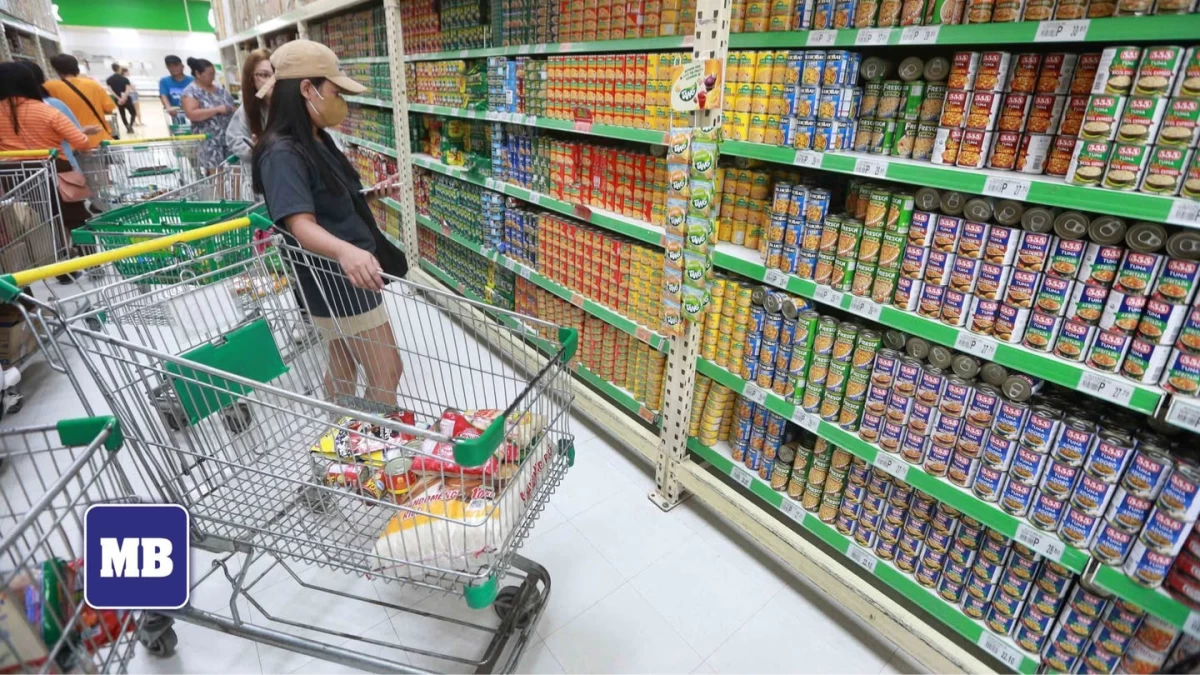
Consumers can expect steady prices for basic commodities like canned sardines and instant noodles for another three weeks. Following consultations with manufacturers and retailers, the government has pushed the price freeze deadline to May 10, citing recent significant rollbacks in fuel prices. (Photo by Mark Balmores | MB file)
The Philippines will once again import canned pork products following the lifting of a temporary ban imposed in response to the spread of African swine fever (ASF).
Agriculture Secretary Francisco Tiu Laurel issued Department Circular (DC) No. 42 on Aug. 11 to lift the ban on the importation of industrially manufactured, hermetically sealed, and heat-treated canned pork products.
The move follows the Department of Agriculture’s (DA) import risk analysis, which determined that biosecurity risks are negligible when imports are strictly limited to canned pork products that exceed the baseline requirement of being heated to a temperature of 70 degrees Celsius for 30 minutes.
According to the World Organization for Animal Health (WOAH), ASF would be eliminated in canned pork products when subjected to heat treatment for at least 30 minutes at a minimum temperature of 70 degrees Celsius.
“The WOAH’s principle of Safe Commodities asserts that specific industrial treatments-specifically hermetic sealing and thermal sterilization-effectively neutralize ASF,” the DA said.
To uphold the country’s safeguards against ASF, the DA said it will only allow the entry of canned pork products, provided that they have undergone heat treatment in a hermetically sealed container under the baseline heat treatment requirement.
The products must also be industrially manufactured and hold valid registration in the Philippines.
“All import transactions for the aforementioned commodities must strictly comply with the existing rules and regulations of the DA,” it added.
The order is set to take effect 15 days after its publication on the DA’s official website and upon its filing with the Office of the National Administrative Register.
The Philippines started imposing bans on the entry of canned pork products as early as 2018, in line with efforts to prevent the spread of ASF in the country.
To date, the local swine industry continues to reel from the devastating impact of ASF, as the fatal disease affecting hogs actively threatens production.
As of Aug. 7, over 60 barangays in 41 municipalities across 20 provinces still have active ASF cases, based on data from the Bureau of Animal Industry (BAI).
The BAI said ASF has infected 6,636 barangays in 1,091 municipalities across 76 provinces since it first emerged in the country in 2019.
In a related development, the DA said it has lifted the temporary ban on imports of domestic and wild birds from Japan after the country was declared free of highly pathogenic avian influenza (HPAI).
Based on the risk assessment, the likelihood of disease transmission through imports from Japan is now considered negligible, paving the way for the resumption of trade.
Tiu Laurel said the move restores access to an important source of poultry breeding stock while maintaining safeguards to protect the country’s livestock and poultry industries.
"We will never compromise the health of our poultry industry, but we also recognize the importance of keeping reliable supply channels open when science tells us the risk has been effectively eliminated," he said in a statement.