ADVERTISEMENT

Filipinos turn selective as soaring prices squeeze spending on everyday consumer goods

Published Aug 14, 2026 03:23 pm
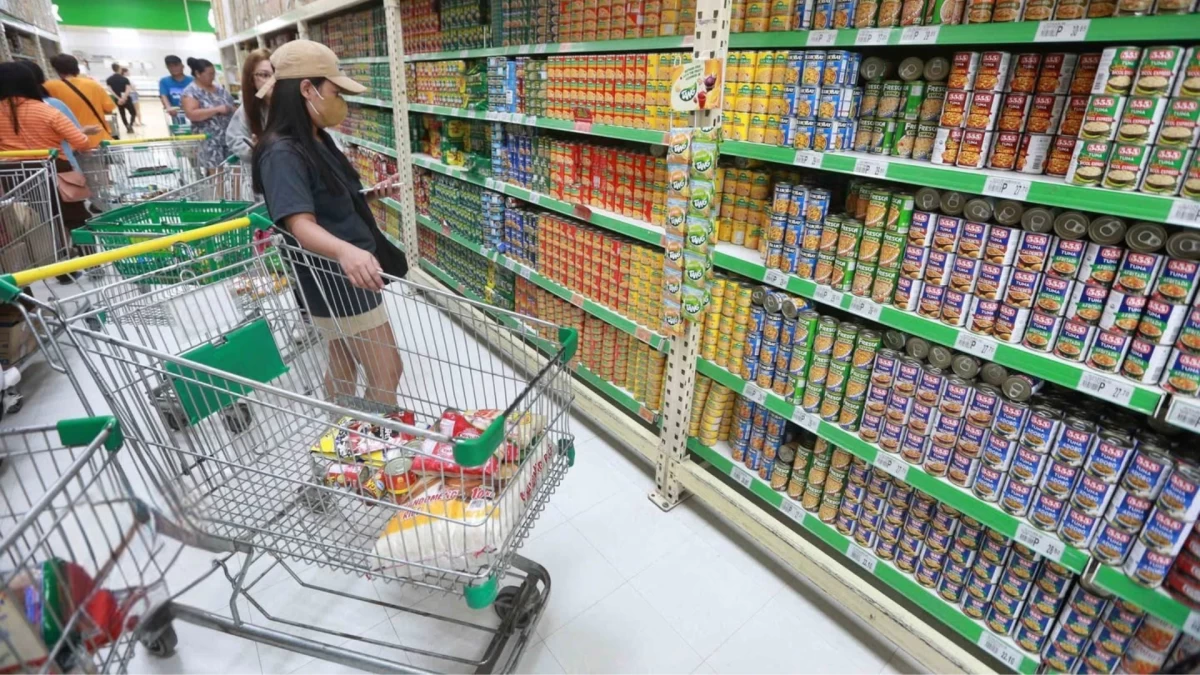
A shopper pauses in a grocery aisle in Manila, where the rising cost of staples has made every purchase a strategic decision. As global price shocks thin the margins for Philippine households, earners are increasingly relying on financial literacy and secure, transparent credit platforms to act as a shield against both inflation and the rising threat of predatory lending scams. (Manila Bulletin file photo)

Spending on fast-moving consumer goods (FMCG), or everyday consumer goods, is on track to grow by only one to two percent this year as consumers become more selective amid higher prices of essential goods, according to a report by Worldpanel by Numerator.

Based on the Shopperscope 2026 report, the moving annual total (MAT) of FMCG spending by the end of June registered minimal growth of 1.6 percent. For the second quarter alone, spending declined by 0.8 percent.

So far, consumer spending on FMCG is in line with the worst-case scenario forecast of one- to two-percent growth, which is below the status quo projection of three to four percent.

Last year, FMCG spending rose by 5.2 percent, surpassing an initial forecast of four- to five-percent growth.

Laurice Obana, shopper insights director at Worldpanel by Numerator, told a press briefing on Friday, Aug, 14, that the minimal growth this year is a direct result of the conflict in the Middle East, which prompted a dramatic surge in the prices of essential goods.

The report showed that a quarter of consumers now expect their financial outlook to “worsen” this year, up from only four percent before March, when the impact of the conflict was still relatively subdued.

This is higher than the 24 percent of consumers who expect their financial standing to somewhat improve and the 11 percent who expect their conditions to “greatly improve.”

Meanwhile, the report also found that 68 percent of Filipinos are only managing to keep their finances steady at breakeven, down from an initial 75 percent before March.

Only eight percent consider themselves comfortable, or those who have more resources to afford most things, declining from a previous 16 percent.

The remaining 25 percent are struggling with their finances, having always been short of money to meet their needs. This is an increase from only nine percent before the conflict.

Given their current financial situation, Filipinos are becoming more selective with their spending, with cheaper products and discounts becoming the top priorities for many.

The report said hard-discount stores like Dali and O!Save grew by 40 percent in the second quarter, with frozen meats and non-sweet snacks being the most-bought items.

While traditional channels such as supermarkets and groceries still corner a large share of the market, growth in FMCG spending in the second quarter declined by five percent and four percent, respectively.

“Retailers can no longer rely on old habits to attract shoppers. It is important to understand how and why Filipinos choose where they buy their essentials,” said Obana.

“While proximity is key, shoppers also place important considerations on completeness of assortment or product range as well as value delivery in these trying times,” she added.

Related Tags

fast-moving consumer goods (FMCG) consumer spending Worldpanel by Numerator
ADVERTISEMENT
.most-popular .layout-ratio{ padding-bottom: 79.13%; } @media (min-width: 768px) and (max-width: 1024px) { .widget-title { font-size: 15px !important; } }

{{ articles_filter_1561_widget.title }}

.most-popular .layout-ratio{ padding-bottom: 79.13%; } @media (min-width: 768px) and (max-width: 1024px) { .widget-title { font-size: 15px !important; } }

{{ static_articles_1562_widget.title }}

.most-popular .layout-ratio{ padding-bottom: 79.13%; } @media (min-width: 768px) and (max-width: 1024px) { .widget-title { font-size: 15px !important; } }

{{ articles_filter_1563_widget.title }}

{{ articles_filter_1564_widget.title }}

.mb-article-details { position: relative; } .mb-article-details .article-body-preview, .mb-article-details .article-body-summary{ font-size: 17px; line-height: 30px; font-family: "Libre Caslon Text", serif; color: #000; } .mb-article-details .article-body-preview iframe , .mb-article-details .article-body-summary iframe{ width: 100%; margin: auto; } .read-more-background { background: linear-gradient(180deg, color(display-p3 1.000 1.000 1.000 / 0) 13.75%, color(display-p3 1.000 1.000 1.000 / 0.8) 30.79%, color(display-p3 1.000 1.000 1.000) 72.5%); position: absolute; height: 200px; width: 100%; bottom: 0; display: flex; justify-content: center; align-items: center; padding: 0; } .read-more-background a{ color: #000; } .read-more-btn { padding: 17px 45px; font-family: Inter; font-weight: 700; font-size: 18px; line-height: 16px; text-align: center; vertical-align: middle; border: 1px solid black; background-color: white; } .hidden { display: none; }
function initializeAllSwipers() { // Get all hidden inputs with cms_article_id document.querySelectorAll('[id^="cms_article_id_"]').forEach(function (input) { const cmsArticleId = input.value; const articleSelector = '#article-' + cmsArticleId + ' .body_images'; const swiperElement = document.querySelector(articleSelector); if (swiperElement && !swiperElement.classList.contains('swiper-initialized')) { new Swiper(articleSelector, { loop: true, pagination: false, navigation: { nextEl: '#article-' + cmsArticleId + ' .swiper-button-next', prevEl: '#article-' + cmsArticleId + ' .swiper-button-prev', }, }); } }); } setTimeout(initializeAllSwipers, 3000); const intersectionObserver = new IntersectionObserver( (entries) => { entries.forEach((entry) => { if (entry.isIntersecting) { const newUrl = entry.target.getAttribute("data-url"); if (newUrl) { history.pushState(null, null, newUrl); let article = entry.target; // Extract metadata const author = article.querySelector('.author-section').textContent.replace('By', '').trim(); const section = article.querySelector('.section-info ').textContent.replace(' ', ' '); const title = article.querySelector('.article-title h1').textContent; // Parse URL for Chartbeat path format const parsedUrl = new URL(newUrl, window.location.origin); const cleanUrl = parsedUrl.host + parsedUrl.pathname; // Update Chartbeat configuration if (typeof window._sf_async_config !== 'undefined') { window._sf_async_config.path = cleanUrl; window._sf_async_config.sections = section; window._sf_async_config.authors = author; } // Track virtual page view with Chartbeat if (typeof pSUPERFLY !== 'undefined' && typeof pSUPERFLY.virtualPage === 'function') { try { pSUPERFLY.virtualPage({ path: cleanUrl, title: title, sections: section, authors: author }); } catch (error) { console.error('ping error', error); } } // Optional: Update document title if (title && title !== document.title) { document.title = title; } } } }); }, { threshold: 0.1 } ); function showArticleBody(button) { const article = button.closest("article"); const summary = article.querySelector(".article-body-summary"); const body = article.querySelector(".article-body-preview"); const readMoreSection = article.querySelector(".read-more-background"); // Hide summary and read-more section summary.style.display = "none"; readMoreSection.style.display = "none"; // Show the full article body body.classList.remove("hidden"); } document.addEventListener("DOMContentLoaded", () => { let loadCount = 0; // Track how many times articles are loaded const offset = [1, 2, 3, 4, 5, 6, 7, 8, 9, 10]; // Offset values const currentUrl = window.location.pathname.substring(1); let isLoading = false; // Prevent multiple calls if (!currentUrl) { console.log("Current URL is invalid."); return; } const sentinel = document.getElementById("load-more-sentinel"); if (!sentinel) { console.log("Sentinel element not found."); return; } function isSentinelVisible() { const rect = sentinel.getBoundingClientRect(); return ( rect.top < window.innerHeight && rect.bottom >= 0 ); } function onScroll() { if (isLoading) return; if (isSentinelVisible()) { if (loadCount >= offset.length) { console.log("Maximum load attempts reached."); window.removeEventListener("scroll", onScroll); return; } isLoading = true; const currentOffset = offset[loadCount]; window.loadMoreItems().then(() => { let article = document.querySelector('#widget_1690 > div:nth-last-of-type(2) article'); intersectionObserver.observe(article) loadCount++; }).catch(error => { console.error("Error loading more items:", error); }).finally(() => { isLoading = false; }); } } window.addEventListener("scroll", onScroll); });

Sign up by email to receive news.