







Q2 growth disappoints as economy lags behind BSP expectations
By Derco Rosal
Published Aug 14, 2026 02:38 pm


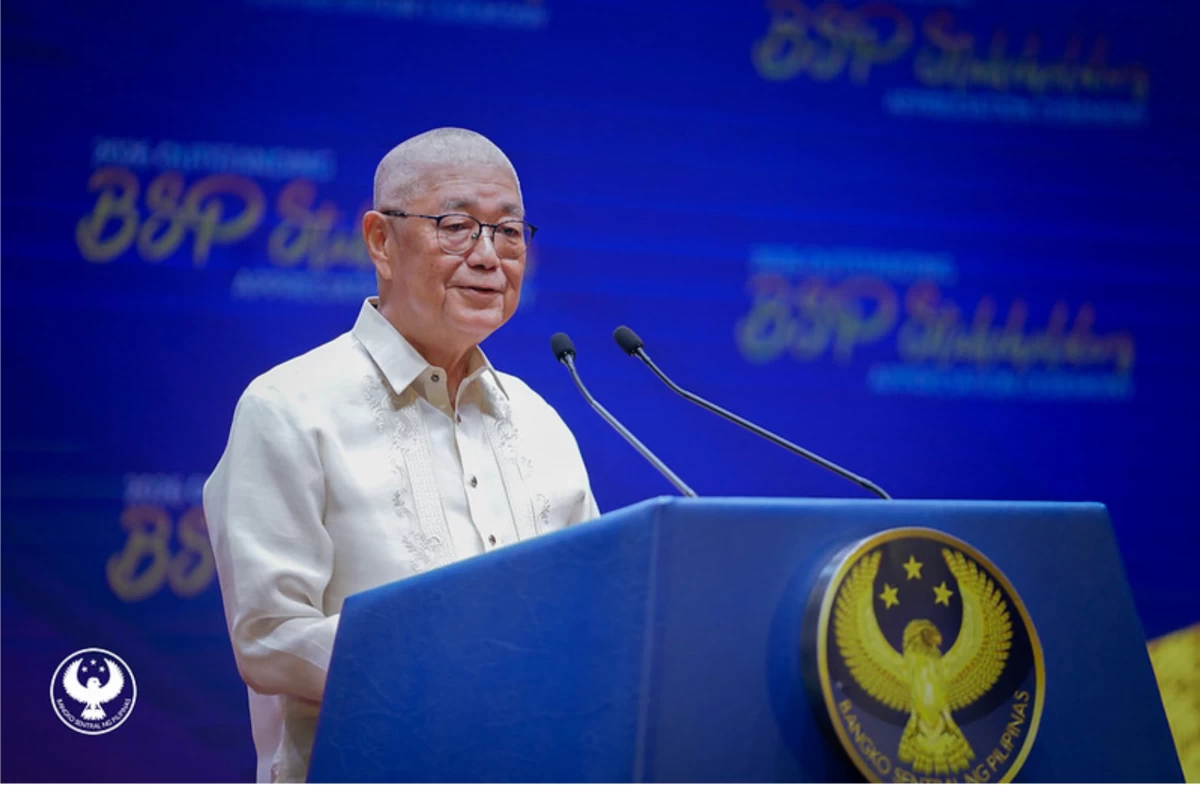
Bangko Sentral ng Pilipinas (BSP) Governor Eli M. Remolona Jr. said the central bank had projected second-quarter economic growth to pick up faster than the actual reading, but noted that output remains weak.
Speaking at the Economic Journalists Association of the Philippines (EJAP) economic forum on Friday, Aug. 14, Remolona said that while a drop in investments dragged gross domestic product (GDP) growth down to a post-pandemic low of 2.3 percent, the expansion “is not as weak as it seems.”
He noted that the central bank had expected considerably stronger growth in the second quarter. “It was more like 3.2 percent. So that makes a big difference. It makes a difference in the way we decide on monetary policy,” he said.
However, he added that the BSP’s outlook remains cautious “because potential growth is more like 5.5 percent to 5.8 percent. That means weak growth remains a consideration,” referring to the upcoming Aug. 27 policy meeting. The benchmark rate currently stands at 4.75 percent following two quarter-point hikes since the flare-up of conflict in the Middle East in late February.
Citing former Finance Secretary Ralph G. Recto, Remolona explained that the BSP’s baseline assumption accounted for slower growth in 2025 due to the impact of the flood control controversy on public construction.
“Government construction was reassessed by deducting 70 percent of flood control disbursements from actual government construction expenditure in the second quarter of 2025,” Remolona’s report read. Consequently, growth in the second quarter of 2025 was revised down to 4.6 percent from the actual 5.4 percent.
Remolona made it clear that sluggish growth could allow the policy-setting Monetary Board (MB) to ease up on rate increases. “The weaker growth that we’re seeing means we can be less aggressive in trying to tame inflation,” he said.
However, the BSP chief stressed that the MB needs to see a “more convincing” disinflation trend before considering a pause in its tightening cycle. “With the growth and inflation numbers, I think we need a more convincing downward trend for inflation before we can relax,” Remolona said.
“But in the face of an unpredictable opponent—oil prices, for example—we need to keep our eye on the ball,” he added.
Headline inflation remained above the 4 percent target ceiling in July despite easing to a three-month low of 6.2 percent. The BSP raised its average inflation forecasts for this year and next to 6.4 percent and 4.5 percent, respectively.
Year-to-date inflation averaged 5 percent as of end-July, staying above the government’s 2 percent to 4 percent target range deemed manageable and conducive to economic growth.
Meanwhile, the BSP’s operational inflation target remains at 3 percent, which Remolona described as the “sweet spot for inflation in an economy that’s growing fast and an economy where you find that some prices are sticky downward.”