






 Business
Trade & Industry
Philippines races to rebuild nuclear expertise as atomic energy plans advance
Business
Trade & Industry
Philippines races to rebuild nuclear expertise as atomic energy plans advance
Philippines races to rebuild nuclear expertise as atomic energy plans advance


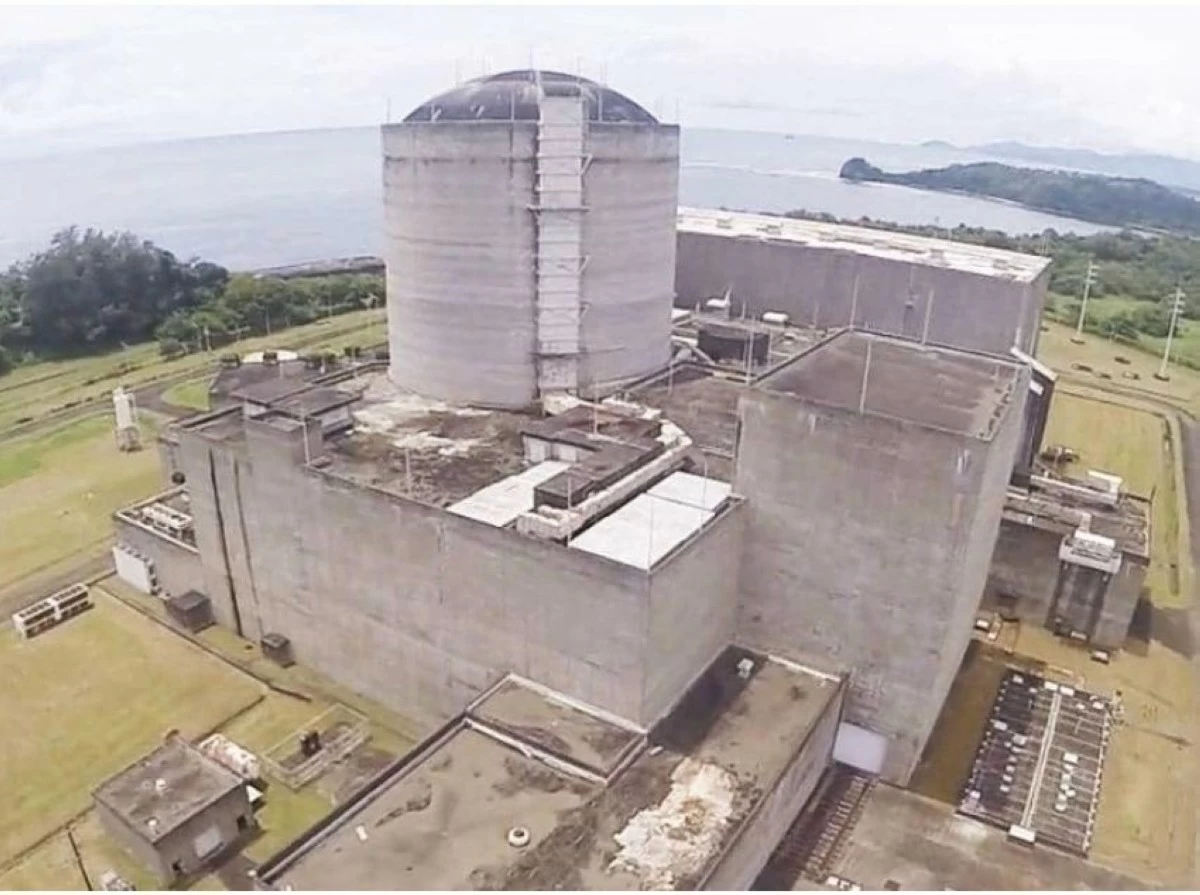
The Philippines needs to rebuild its pool of nuclear-trained workers as it moves closer to developing nuclear power, with many local experts having either retired or taken their skills overseas, according to state-run National Power Corp. (Napocor).
Following a recent meeting with the Vienna-based International Atomic Energy Agency (IAEA), Napocor President and Chief Executive Officer (CEO) Jericho Nograles said workforce development should be a top priority as the country works to meet 19 infrastructure requirements for nuclear energy development.
“Many of our nuclear-trained personnel have since retired. Others took their expertise overseas, where Filipino engineers and skilled workers have contributed to nuclear facilities around the world,” Nograles told a press briefing, noting that about 80 percent of the workers at Barakah nuclear facility in United Arab Emirates (UAE) are Filipinos.
Apart from human resource (HR) development, the other areas that the Philippines needs to address are national position, nuclear safety, management, funding and financing, legal framework, safeguards, regulatory framework, radiation protection, electrical grid, stakeholder involvement, site and supporting facilities, environmental protection, emergency planning, nuclear security, nuclear fuel cycle, radioactive waste management, industrial involvement, and procurement.
The Department of Energy (DOE) recently met with the IAEA to address these key infrastructure requirements. The IAEA noted that the Philippines is ready to advance to the second phase of its nuclear energy roadmap, following the first phase’s focus on foundational policy and planning considerations.
The government has already laid some groundwork through Executive Order (EO) No. 116, which focuses on nuclear energy studies, and EO 164, which mandated the DOE to include nuclear energy in the generation mix.
Furthermore, the country has already signed the 123 Agreement for civilian nuclear cooperation with the United States (US) and is partnering with South Korea to assess the viability of rehabilitating Bataan Nuclear Power Plant (BNPP), which was initially constructed under Napocor.
Meanwhile, the second phase is set to focus on infrastructure development that would allow the government to invite bids or negotiate project contracts. Under this phase, the DOE is looking at potential funding and financing pathways, such as public-private partnerships (PPPs), consortium arrangements, and build-own-operate models, among others.
The DOE is also looking at finalizing the third phase of its nuclear roadmap, which focuses on preparing the country for nuclear commissioning and operations.
So far, the agency has identified Bataan, Palawan, Masbate, Pangasinan, and Camarines Norte provinces as initial areas for potential power plant sites.
While these locations are subject to further assessment, DOE Undersecretary Giovanni Bacordo said nuclear power plant construction is just one part of the country’s integration of nuclear energy.
“Nuclear energy is not simply about deciding to build a power plant. We must build the institutions, the regulatory system, the technical capability, the financing framework, and the public confidence to support it. Our progress shows that the Philippines is putting those foundations in place,” Bacordo said.