







Davao City dad seeks housing project for Indigenous Peoples
By Ivy Tejano
Published Aug 12, 2026 11:15 pm


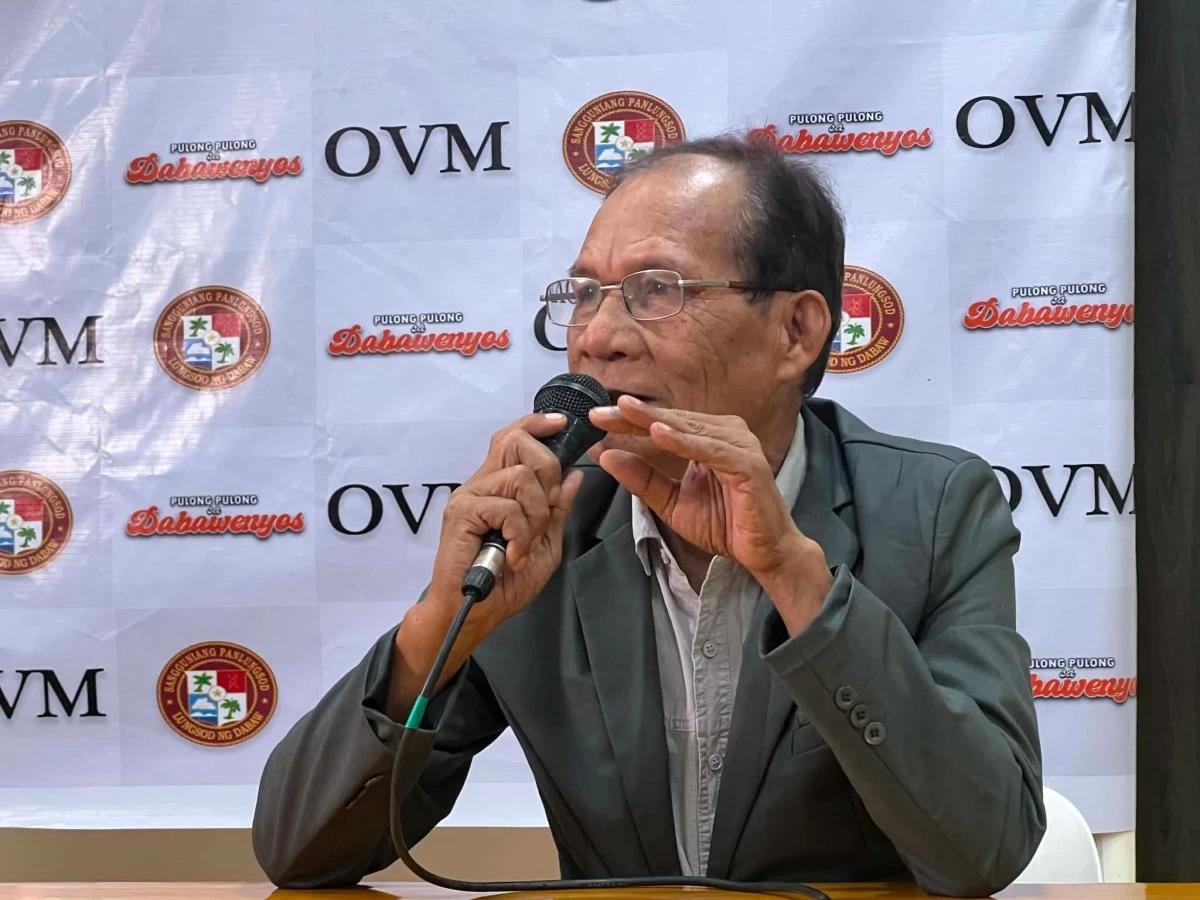
Committee on Indigenous People, Cultural Communities, and Muslim Affairs chairperson and Indigenous Peoples Mandatory Representative Councilor Demetrio Bolo Sr. (Photo via Ivy Tejano)
DAVAO CITY – A Davao City councilor is pushing to establish a tribal village to provide hundreds of housing units and other assistance for the Indigenous Peoples across several districts.
Committee on Indigenous People, Cultural Communities, and Muslim Affairs head Councilor Demetrio Bolo Sr. said the plan came from consultations with the city's 11 Indigenous tribes.
"I asked them to submit common, tribe-wide project proposals instead of individual requests from each barangay, since I only have 3 years in my post. This is what they agreed to," Bolo said.
Bolo, who is an Indigenous Peoples Mandatory Representative, said the tribal village could serve Indigenous communities in the Baguio, Calinan, and Tugbok, covering around 42 barangays.
The councilor emphasized that the project is intended to benefit tribal officials and their families through a common facility rather than provide assistance on an individual basis.
"Several tribes have already submitted proposals, which are being prepared for proper action by the Davao City Council," Bolo said during the Pulong-Pulong sa Dabawenyos on August 11.
He said some projects need permits and clearances from the Department of Environment and Natural Resources and other agencies, especially if the sites are in or near protected areas.
Ancestral-domain 'not for sale'
Meanwhile, Bolo identified one of the main problems in Marilog District here as the double sale of ancestral land and attempts to reclaim land that has already been sold.
"Some ancestral-domain properties had been sold or transferred, only for another person or clan to later attempt to reclaim or resell the same land," he said.
The disputes have created conflicts between Indigenous landholders and migrant buyers, with some cases escalating into violence, according to Bolo.
He said his committee is coordinating with clan holders, tribal leaders, government agencies, and public-safety officials to address the disputes.
Bolo urged clan holders to follow the proper process before reclaiming land transferred years ago to avoid further conflict and ensure a fair settlement for all parties.
"Ancestral domain is not for sale," the councilor said, reminding Indigenous communities and prospective buyers that ancestral-domain land cannot be treated like ordinary private property.
Bolo emphasized that ancestral domain land remains part of Indigenous communities' inheritance and should be protected for their future generations.
He said leases and other agreements may be allowed, but they must follow the proper process and involve recognized clan leaders and Indigenous political structures.
The councilor urged families to consult their tribal leaders, the National Commission on Indigenous Peoples, and relevant city offices before agreeing to sell, lease, or use ancestral land.
Bolo said the city is continuing its information and education campaign to help clan holders and tribal leaders protect their ancestral land and properly document agreements.
"Many past disputes arose from informal land deals that were later questioned or reclaimed, causing conflicts between Indigenous owners and buyers," he added.
Bolo also raised concerns over the construction of structures and resorts in upland Indigenous areas without complete permits or proper environmental review.
Some establishments, the IP representative said, have been built in areas that may be vulnerable to landslides and other hazards.
He said the city is working with planning offices and other agencies to help Indigenous communities and businesses understand the development requirements.
Bolo said the goal is not simply to close establishments but to help legitimate operators comply with regulations while ensuring public safety and environmental protection.