






Manila Bulletin
 Philippines
Mindanao
Davao pushes plastic bottle recovery, recycling in Kadayawan Festival
Philippines
Mindanao
Davao pushes plastic bottle recovery, recycling in Kadayawan Festival
Philippines
Mindanao
Davao pushes plastic bottle recovery, recycling in Kadayawan Festival
Davao pushes plastic bottle recovery, recycling in Kadayawan Festival
By Ivy Tejano
Published Aug 12, 2026 11:04 pm


Coca-Cola Europacific Philippines highlights “Tapon to Ipon,” a nationwide Coca-Cola initiative that promotes the recovery and recycling of clear PET plastic bottles, regardless of brand, in celebration of the 2026 Kadayawan Festival in Davao City. (Photo via Ivy Tejano)
DAVAO CITY – Coca-Cola Europacific Philippines is expanding its sustainability and community initiatives in Davao City while supporting the Kadayawan Festival, highlighting plastic-bottle recovery, recycling partnerships, and its long-standing presence in the local retail market.
Speaking at the Media Kumustahan on Wednesday, Aug. 12, Coca-Cola representatives said the company is using its Kadayawan participation not only to promote its beverage brands but also to encourage consumers to take part in its nationwide "Tapon to Ipon" bottle-recovery program.
Jeffrey Lazarte, Commercial Unit Director for Southeast Mindanao, said Coca-Cola has operated in the Philippines for 114 years and currently maintains a broad manufacturing and distribution network serving consumers and small businesses across the country.
Based on their presentation, the company has eight manufacturing plants nationwide and employs about 9,000 people across manufacturing, logistics, sales, and other operations.
In Southeast Mindanao, Coca-Cola maintains facilities and distribution operations serving Davao City, Tagum, Cotabato City, and General Santos City.
Lazarte said the company reaches about 1.2 million micro-retailers nationwide, including sari-sari stores, carinderias, groceries, wholesalers, and supermarkets.
He noted that beverages account for a substantial part of the business of many small neighborhood stores, making consistent production and distribution important to their daily income.
The company is also participating in this year's Kadayawan Festival as a major sponsor.
Lazarte said Coca-Cola will support the August 15 concert and will bring Coke Studio into the celebration as part of its effort to remain relevant to younger consumers.
Coca-Cola will also hold brand activations and support food bazaars and festival sites around the city. Among the areas mentioned during the presentation were Magsaysay Park, Rizal Park, Coastal Road, and other Kadayawan activity venues.
Lazarte said one of the company's major sustainability programs is "Tapon to Ipon," which promotes the collection and recycling of used clear PET plastic bottles.
He said the initiative is part of Coca-Cola's push for a circular economy, in which used packaging is collected, processed, and returned to productive use instead of becoming waste.
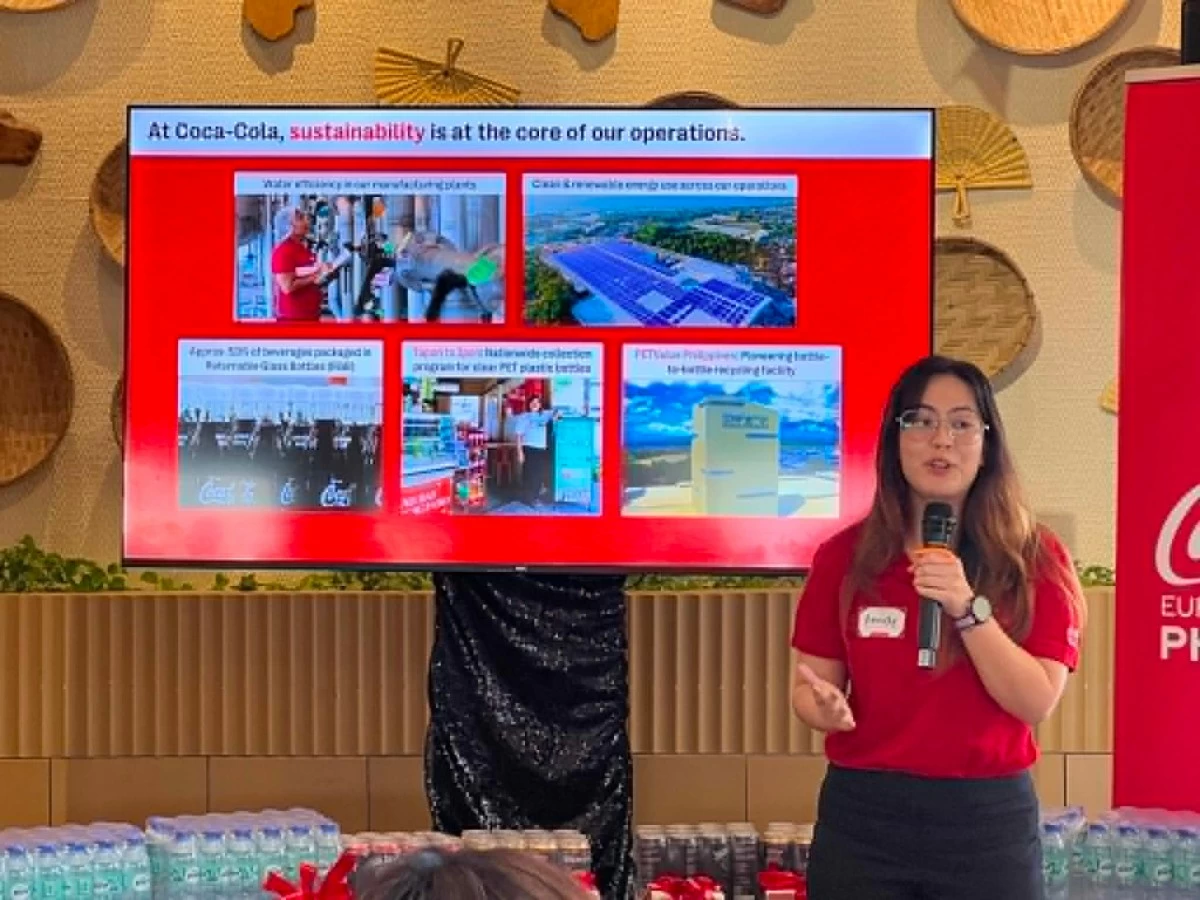
Andy Alarcon, Coca-Cola's communications lead, said sustainability is integrated into the company's operations, including water efficiency, water replenishment, renewable energy use, and the continued use of returnable glass bottles.
She said that about half of Coca-Cola beverages are packed in returnable glass bottles, while selected products are also available in packaging made from 100 percent recycled PET.
Among the examples cited were selected packages of Coca-Cola, Wilkins Pure, and Sprite made from recycled PET as part of the company's packaging initiatives.
Alarcon said "Tapon to Ipon" accepts clear PET beverage bottles of any brand and is designed to strengthen local collection systems by working with sari-sari stores, customers, local governments, and other community partners.
"The program has established more than 6,000 collection points," Alarcon said. "Many of these are in neighborhood stores, which serve both as product outlets and accessible collection sites for consumers returning empty plastic bottles."
Recovered bottles are diverted to PETValue Philippines in General Trias, Cavite, a bottle-to-bottle recycling facility that processes used clear PET bottles into food-grade recycled PET material for new packaging.
According to the company's presentation, PETValue Philippines began operations in 2022 and has the capacity to process up to 2 billion PET bottles annually. Coca-Cola said the facility reached a milestone of recycling one billion PET bottles in 2024.
Alarcon said the company's recycling effort also depends on partnerships with local governments and private establishments.
In Davao, Coca-Cola has collection bins at selected partner locations, including Shell Select outlets, where consumers may drop off empty clear PET bottles.
The company also cited its 2023 partnership with the Provincial Government of Davao del Sur to help clear large stockpiles of PET bottles and divert them for recycling.
Alarcon said Coca-Cola is continuing to build longer-term collection partnerships in the province.
She added that the company has worked on large-scale bottle collection initiatives with the Island Garden City of Samal and with partners in Davao Oriental.
For Kadayawan, Coca-Cola is scheduled to activate its "Tapon to Ipon" program at Rizal Park from August 14 to 16, where consumers may exchange eligible clear PET bottles through the company's collection booth and participate in related activities.
Lazarte said the company's participation in Kadayawan reflects its goal of becoming part of the wider Davao community rather than limiting its presence to commercial operations.
He said businesses should not operate solely for profit and must also contribute to local economic activity and waste-management solutions.
The company, Lazarte added, considers community partnerships and sustainability programs important parts of maintaining its long-term presence in Davao and the rest of Southeast Mindanao.