ADVERTISEMENT

DENR-12 says five endemic orchids found in foothills of Mt. Apo

Published Aug 12, 2026 01:57 pm
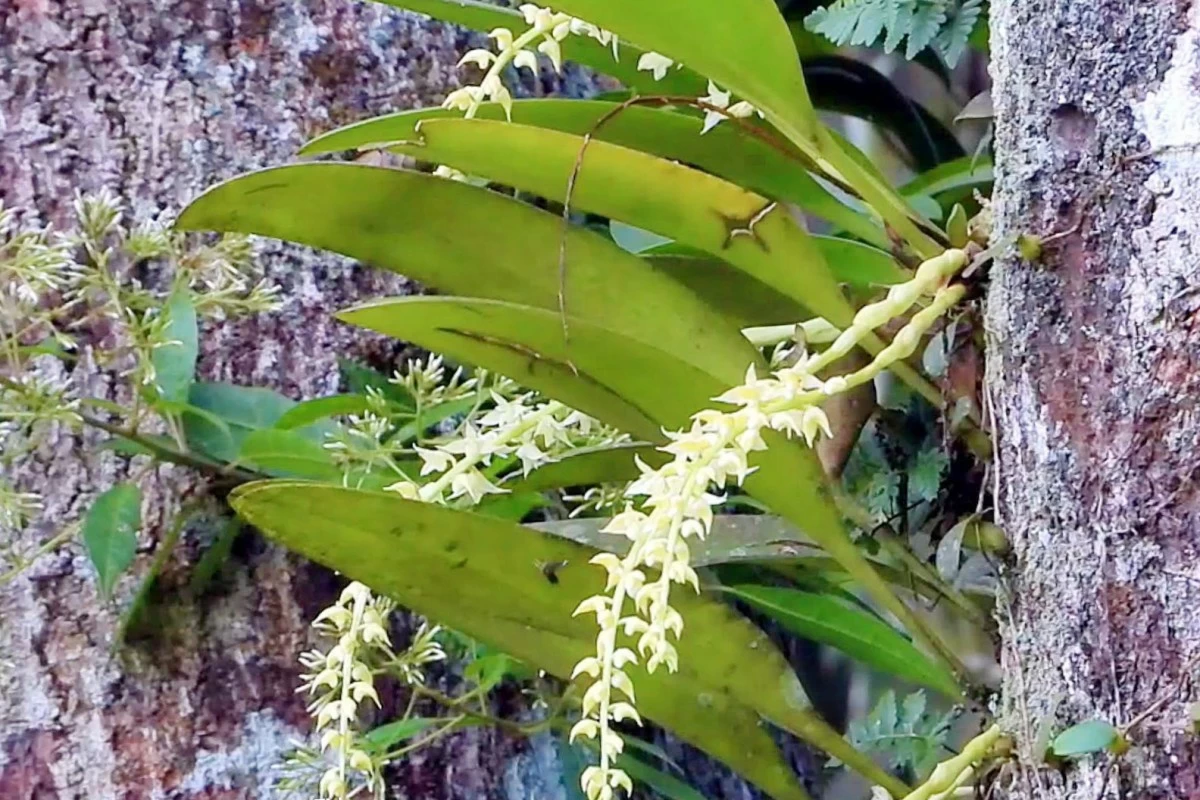
The endangered Bulbophyllum cf. apodum Hook.f. ( CENRO Matalam photo)
DAVAO CITY – The Department of Environment and Natural Resources (DENR) in Soccsksargen Region recently reported that five of the seven rare and wild orchids that were found in the forests of Magpet in Cotabato Province are endemic to the country.
Four of these orchids have been classified as endangered under the DENR Administrative Order No. 2026-20.
According to DENR, the five endemic orchids were Dendrobium treacherianum, Dendrobium rhombeum, Phalaenopsis sp., Robiquetia cf. micramphora, and  Stichorkis sp.
Those classified as endangered were Robiquetia cf. micramphora, Dendrobium rhombeum, Phalaenopsis sp., and Blepharoglossum cf. condylobulbon. While the Dendrobium treacherianum was listed as vulnerable.
Moreover, the Bulbophyllum cf. apodum Hook.f. was categorized as endangered under the International Union for Conservation of Nature  (IUCN) Red List of Threatened Species.
The report was released on August 11 following the biodiversity monitoring activity conducted by the  Community Environment and Natural Resources Office (CENRO) of Matalam (Cotabato), particularly by the personnel of the Wildlife Resource and Conservation Unit (WRCU) team from August 4 to 6.
The orchids were identified by botanist Aaron Froilan Raganas of the University of the Philippines-Mindanao.
With the discovery, the agency said that it calls for strengthened efforts to conserve and protect the biodiversity in the area.  
According to CENRO-Matalam, the orchids were found growing in open canopy forests as well as in mossy forests of Magpet.
Magpet is one of the towns that sits on the foothills of Mt. Apo Natural Park.
“Ang presensya ng mga ito ay nagbibigay-diin sa kahalagahan ng pagpapanatili ng malulusog na kagubatan sa kabundukan, na nagsisilbing espesyal na tirahan para sa mga uri ng halaman na nabubuhay lamang sa mga partikular na taas at kondisyon ng kapaligiran,” DENR Soccsksargen emphasized.
Soccsksargen, also known as Region 12, is composed of the provinces of South Cotabato, Cotabato, Sultan Kudarat, Sarangani, and General Santos City.
The presence of the orchids also provide a vital information on the geographical distribution of the species for researchers as well as a database of different living organisms.
Furthermore, the agency also emphasized that the beauty of orchids indicates a healthy and diverse  forest ecosystem.

Related Tags

DENR Orchids
ADVERTISEMENT
.most-popular .layout-ratio{ padding-bottom: 79.13%; } @media (min-width: 768px) and (max-width: 1024px) { .widget-title { font-size: 15px !important; } }

{{ articles_filter_1561_widget.title }}

.most-popular .layout-ratio{ padding-bottom: 79.13%; } @media (min-width: 768px) and (max-width: 1024px) { .widget-title { font-size: 15px !important; } }

{{ static_articles_1562_widget.title }}

.most-popular .layout-ratio{ padding-bottom: 79.13%; } @media (min-width: 768px) and (max-width: 1024px) { .widget-title { font-size: 15px !important; } }

{{ articles_filter_1563_widget.title }}

{{ articles_filter_1564_widget.title }}

.mb-article-details { position: relative; } .mb-article-details .article-body-preview, .mb-article-details .article-body-summary{ font-size: 17px; line-height: 30px; font-family: "Libre Caslon Text", serif; color: #000; } .mb-article-details .article-body-preview iframe , .mb-article-details .article-body-summary iframe{ width: 100%; margin: auto; } .read-more-background { background: linear-gradient(180deg, color(display-p3 1.000 1.000 1.000 / 0) 13.75%, color(display-p3 1.000 1.000 1.000 / 0.8) 30.79%, color(display-p3 1.000 1.000 1.000) 72.5%); position: absolute; height: 200px; width: 100%; bottom: 0; display: flex; justify-content: center; align-items: center; padding: 0; } .read-more-background a{ color: #000; } .read-more-btn { padding: 17px 45px; font-family: Inter; font-weight: 700; font-size: 18px; line-height: 16px; text-align: center; vertical-align: middle; border: 1px solid black; background-color: white; } .hidden { display: none; }
function initializeAllSwipers() { // Get all hidden inputs with cms_article_id document.querySelectorAll('[id^="cms_article_id_"]').forEach(function (input) { const cmsArticleId = input.value; const articleSelector = '#article-' + cmsArticleId + ' .body_images'; const swiperElement = document.querySelector(articleSelector); if (swiperElement && !swiperElement.classList.contains('swiper-initialized')) { new Swiper(articleSelector, { loop: true, pagination: false, navigation: { nextEl: '#article-' + cmsArticleId + ' .swiper-button-next', prevEl: '#article-' + cmsArticleId + ' .swiper-button-prev', }, }); } }); } setTimeout(initializeAllSwipers, 3000); const intersectionObserver = new IntersectionObserver( (entries) => { entries.forEach((entry) => { if (entry.isIntersecting) { const newUrl = entry.target.getAttribute("data-url"); if (newUrl) { history.pushState(null, null, newUrl); let article = entry.target; // Extract metadata const author = article.querySelector('.author-section').textContent.replace('By', '').trim(); const section = article.querySelector('.section-info ').textContent.replace(' ', ' '); const title = article.querySelector('.article-title h1').textContent; // Parse URL for Chartbeat path format const parsedUrl = new URL(newUrl, window.location.origin); const cleanUrl = parsedUrl.host + parsedUrl.pathname; // Update Chartbeat configuration if (typeof window._sf_async_config !== 'undefined') { window._sf_async_config.path = cleanUrl; window._sf_async_config.sections = section; window._sf_async_config.authors = author; } // Track virtual page view with Chartbeat if (typeof pSUPERFLY !== 'undefined' && typeof pSUPERFLY.virtualPage === 'function') { try { pSUPERFLY.virtualPage({ path: cleanUrl, title: title, sections: section, authors: author }); } catch (error) { console.error('ping error', error); } } // Optional: Update document title if (title && title !== document.title) { document.title = title; } } } }); }, { threshold: 0.1 } ); function showArticleBody(button) { const article = button.closest("article"); const summary = article.querySelector(".article-body-summary"); const body = article.querySelector(".article-body-preview"); const readMoreSection = article.querySelector(".read-more-background"); // Hide summary and read-more section summary.style.display = "none"; readMoreSection.style.display = "none"; // Show the full article body body.classList.remove("hidden"); } document.addEventListener("DOMContentLoaded", () => { let loadCount = 0; // Track how many times articles are loaded const offset = [1, 2, 3, 4, 5, 6, 7, 8, 9, 10]; // Offset values const currentUrl = window.location.pathname.substring(1); let isLoading = false; // Prevent multiple calls if (!currentUrl) { console.log("Current URL is invalid."); return; } const sentinel = document.getElementById("load-more-sentinel"); if (!sentinel) { console.log("Sentinel element not found."); return; } function isSentinelVisible() { const rect = sentinel.getBoundingClientRect(); return ( rect.top < window.innerHeight && rect.bottom >= 0 ); } function onScroll() { if (isLoading) return; if (isSentinelVisible()) { if (loadCount >= offset.length) { console.log("Maximum load attempts reached."); window.removeEventListener("scroll", onScroll); return; } isLoading = true; const currentOffset = offset[loadCount]; window.loadMoreItems().then(() => { let article = document.querySelector('#widget_1690 > div:nth-last-of-type(2) article'); intersectionObserver.observe(article) loadCount++; }).catch(error => { console.error("Error loading more items:", error); }).finally(() => { isLoading = false; }); } } window.addEventListener("scroll", onScroll); });

Sign up by email to receive news.