ADVERTISEMENT

Youth job market stalls across region including Philippines—ILO

Published Aug 12, 2026 12:07 pm
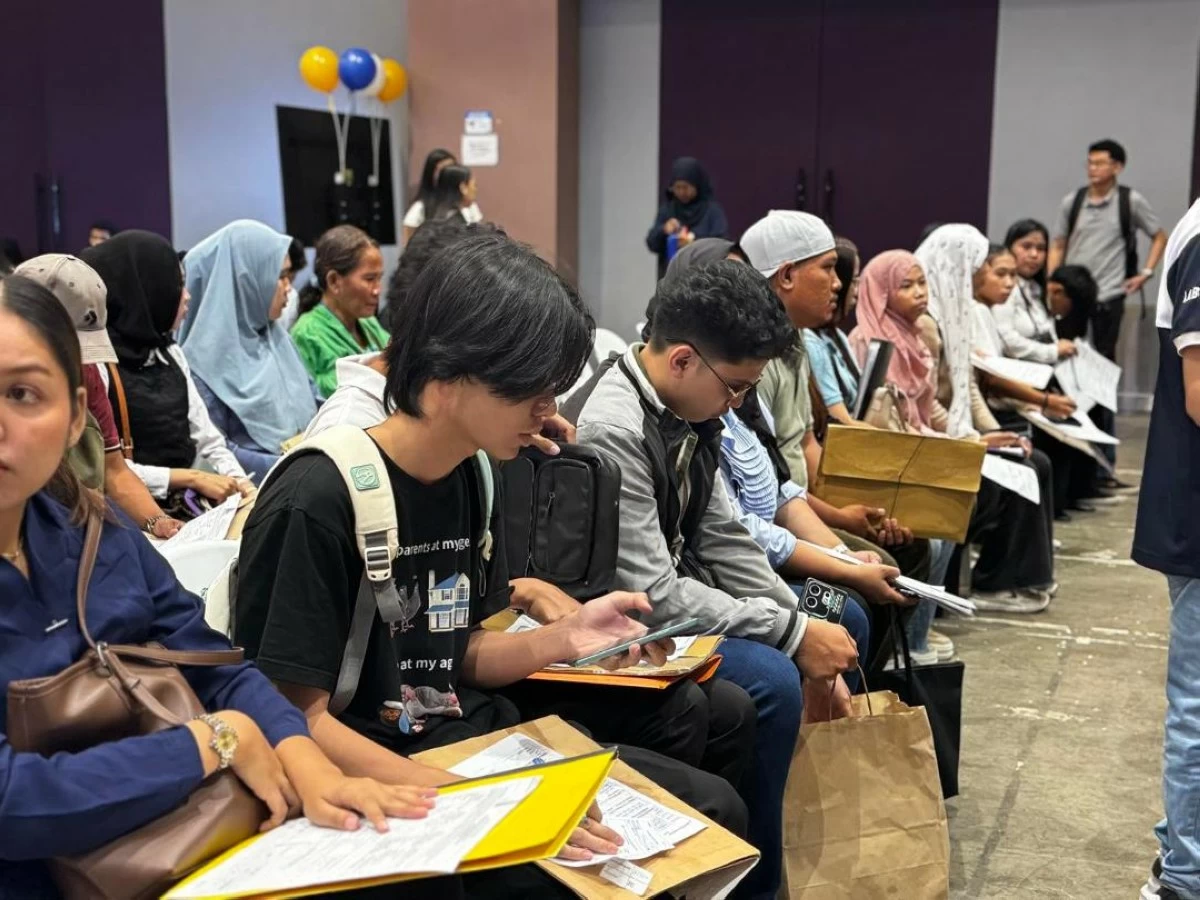
APPLICANTS at the DOLE-9 Labor Day job fair in Zamboanga City. (DOLE-9 photo)

Young people across South-Eastern Asia and the Pacific, the subregion that includes the Philippines, are facing worsening employment prospects as youth joblessness and disengagement rise despite the region’s relatively low headline unemployment rate, according to the International Labor Organization (ILO).

In its Global Employment Trends for Youth 2026: Back to the future report published last Tuesday, Aug. 11, the Geneva-headquartered ILO said the global youth unemployment rate rose to 12.4 percent in 2025 from its post-pandemic low of 12.3 percent in 2023, equivalent to 67 million unemployed young people worldwide.

The global share of young people not in employment, education or training (NEET) also increased to 20 percent in 2025 from 19.7 percent in 2023, adding nine million young people to bring the total number in NEET status to 257 million. More than two-thirds of young people in NEET status were women.

South-Eastern Asia and the Pacific was among the subregions where both the youth unemployment rate and NEET rate increased between 2023 and 2025, signaling a halt in the improvement of youth labor market conditions.

While the subregion’s youth unemployment rate remained below 10 percent in 2025, the ILO cautioned that low unemployment does not necessarily signal healthier labor market conditions, as it can mask deteriorating job quality or rising inactivity among young people.

Country-level data also showed that 11 of 22 economies in South-Eastern Asia and the Pacific with available information recorded higher youth unemployment rates in 2025 than in 2023, while four were unchanged and seven posted lower rates.

The region also had one of the world’s widest disparities between youth and adult unemployment. Together with Southern Asia, South-Eastern Asia and the Pacific posted youth-to-adult unemployment rate ratios of between five and seven, meaning young people faced a risk of unemployment several times higher than adults.

First-time jobseekers were also encountering increasing difficulty entering the labor market. The share of unemployed people aged 20 to 29 who were first-time entrants in South-Eastern Asia and the Pacific rose to 45.8 percent in the latest period from 44.3 percent around 2016.

The ILO said rising tertiary education attainment could partly explain later labor market entry, but evidence of high unemployment among those aged 20 to 24 and shrinking employment suggests that first-time job entrants are confronting an increasingly challenging labor market.

Young people with tertiary education in South-Eastern Asia and the Pacific also had a higher unemployment rate of 6.9 percent in 2025, compared with 6.1 percent among those with secondary education and 3.7 percent among those with basic education.

At the same time, the region’s youth employment-to-population ratio (EPR) declined by more than two percentage points from 2023, while the longer-term decline from 2016 to 2025 pointed to greater competition among young people for available jobs. The ILO cautioned, however, that a lower EPR is not automatically negative because some young people may remain in education rather than enter the labor market.

For 2026, the ILO expects the subregion’s youth unemployment rate to ease to 9.1 percent from 9.5 percent in 2025 and further decline to nine percent in 2027.

The number of unemployed young people in the region is also projected to decline to 4.7 million in both 2026 and 2027 from 4.8 million in 2025.

However, the region’s NEET rate is projected to increase further to 16.4 percent in 2026 and 16.5 percent in 2027 from 16.3 percent in 2025, corresponding to 19.4 million and 19.7 million young people, respectively, from 19.2 million last year.

Another emerging challenge is artificial intelligence (AI). The ILO estimated that 8.1 percent of jobs held by people aged 15 to 29 in South-Eastern Asia and the Pacific are among occupations with significant or high AI exposure, equivalent to about 7.16 million jobs.

The report called for integrated policies that create employment opportunities, prepare young people for work through quality education, apprenticeships and lifelong learning, improve employment services and active labor market programs, and strengthen social protection and support for disadvantaged groups.

The ILO also recommended a human-centered approach to AI governance, investment in both technical and social skills, stronger lifelong learning systems, modernized employment services, and wider social protection coverage.

Earlier, the Philippine Statistics Authority (PSA) reported that the country’s unemployment rate rose to 4.9 percent in June, equivalent to 2.59 million unemployed Filipinos.

Many of the new entrants to the labor force were fresh graduates, with about half of the 639,000 new entrants still looking for jobs as of June. - Danielle T. Bayani

Related Tags

International Labor Organization (ILO) youth employment
ADVERTISEMENT
.most-popular .layout-ratio{ padding-bottom: 79.13%; } @media (min-width: 768px) and (max-width: 1024px) { .widget-title { font-size: 15px !important; } }

{{ articles_filter_1561_widget.title }}

.most-popular .layout-ratio{ padding-bottom: 79.13%; } @media (min-width: 768px) and (max-width: 1024px) { .widget-title { font-size: 15px !important; } }

{{ static_articles_1562_widget.title }}

.most-popular .layout-ratio{ padding-bottom: 79.13%; } @media (min-width: 768px) and (max-width: 1024px) { .widget-title { font-size: 15px !important; } }

{{ articles_filter_1563_widget.title }}

{{ articles_filter_1564_widget.title }}

.mb-article-details { position: relative; } .mb-article-details .article-body-preview, .mb-article-details .article-body-summary{ font-size: 17px; line-height: 30px; font-family: "Libre Caslon Text", serif; color: #000; } .mb-article-details .article-body-preview iframe , .mb-article-details .article-body-summary iframe{ width: 100%; margin: auto; } .read-more-background { background: linear-gradient(180deg, color(display-p3 1.000 1.000 1.000 / 0) 13.75%, color(display-p3 1.000 1.000 1.000 / 0.8) 30.79%, color(display-p3 1.000 1.000 1.000) 72.5%); position: absolute; height: 200px; width: 100%; bottom: 0; display: flex; justify-content: center; align-items: center; padding: 0; } .read-more-background a{ color: #000; } .read-more-btn { padding: 17px 45px; font-family: Inter; font-weight: 700; font-size: 18px; line-height: 16px; text-align: center; vertical-align: middle; border: 1px solid black; background-color: white; } .hidden { display: none; }
function initializeAllSwipers() { // Get all hidden inputs with cms_article_id document.querySelectorAll('[id^="cms_article_id_"]').forEach(function (input) { const cmsArticleId = input.value; const articleSelector = '#article-' + cmsArticleId + ' .body_images'; const swiperElement = document.querySelector(articleSelector); if (swiperElement && !swiperElement.classList.contains('swiper-initialized')) { new Swiper(articleSelector, { loop: true, pagination: false, navigation: { nextEl: '#article-' + cmsArticleId + ' .swiper-button-next', prevEl: '#article-' + cmsArticleId + ' .swiper-button-prev', }, }); } }); } setTimeout(initializeAllSwipers, 3000); const intersectionObserver = new IntersectionObserver( (entries) => { entries.forEach((entry) => { if (entry.isIntersecting) { const newUrl = entry.target.getAttribute("data-url"); if (newUrl) { history.pushState(null, null, newUrl); let article = entry.target; // Extract metadata const author = article.querySelector('.author-section').textContent.replace('By', '').trim(); const section = article.querySelector('.section-info ').textContent.replace(' ', ' '); const title = article.querySelector('.article-title h1').textContent; // Parse URL for Chartbeat path format const parsedUrl = new URL(newUrl, window.location.origin); const cleanUrl = parsedUrl.host + parsedUrl.pathname; // Update Chartbeat configuration if (typeof window._sf_async_config !== 'undefined') { window._sf_async_config.path = cleanUrl; window._sf_async_config.sections = section; window._sf_async_config.authors = author; } // Track virtual page view with Chartbeat if (typeof pSUPERFLY !== 'undefined' && typeof pSUPERFLY.virtualPage === 'function') { try { pSUPERFLY.virtualPage({ path: cleanUrl, title: title, sections: section, authors: author }); } catch (error) { console.error('ping error', error); } } // Optional: Update document title if (title && title !== document.title) { document.title = title; } } } }); }, { threshold: 0.1 } ); function showArticleBody(button) { const article = button.closest("article"); const summary = article.querySelector(".article-body-summary"); const body = article.querySelector(".article-body-preview"); const readMoreSection = article.querySelector(".read-more-background"); // Hide summary and read-more section summary.style.display = "none"; readMoreSection.style.display = "none"; // Show the full article body body.classList.remove("hidden"); } document.addEventListener("DOMContentLoaded", () => { let loadCount = 0; // Track how many times articles are loaded const offset = [1, 2, 3, 4, 5, 6, 7, 8, 9, 10]; // Offset values const currentUrl = window.location.pathname.substring(1); let isLoading = false; // Prevent multiple calls if (!currentUrl) { console.log("Current URL is invalid."); return; } const sentinel = document.getElementById("load-more-sentinel"); if (!sentinel) { console.log("Sentinel element not found."); return; } function isSentinelVisible() { const rect = sentinel.getBoundingClientRect(); return ( rect.top < window.innerHeight && rect.bottom >= 0 ); } function onScroll() { if (isLoading) return; if (isSentinelVisible()) { if (loadCount >= offset.length) { console.log("Maximum load attempts reached."); window.removeEventListener("scroll", onScroll); return; } isLoading = true; const currentOffset = offset[loadCount]; window.loadMoreItems().then(() => { let article = document.querySelector('#widget_1690 > div:nth-last-of-type(2) article'); intersectionObserver.observe(article) loadCount++; }).catch(error => { console.error("Error loading more items:", error); }).finally(() => { isLoading = false; }); } } window.addEventListener("scroll", onScroll); });

Sign up by email to receive news.