ADVERTISEMENT

When the Court and the mass media strengthen democracy

Published Aug 11, 2026 12:05 am  |  Updated Aug 10, 2026 05:21 pm
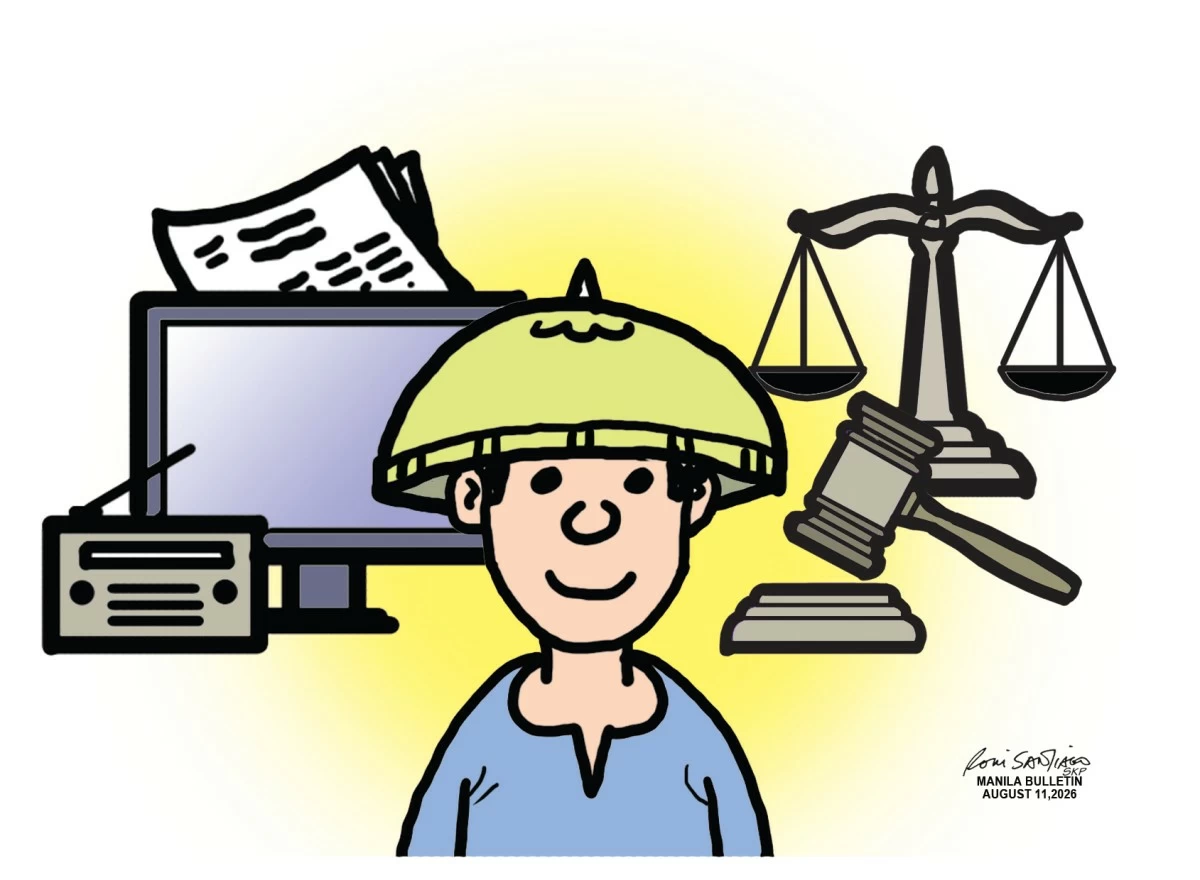
There are institutions whose independence must never be compromised, yet whose interaction can make democracy stronger. The Judiciary and the mass media belong to this category.
Chief Justice Alexander G. Gesmundo’s recent address before the Manila Overseas Press Club (MOPC) offered a timely reminder of this important relationship. The Judiciary and the Fourth Estate have distinct constitutional and professional roles, but both ultimately serve the public interest. The courts uphold the Constitution, interpret the law and resolve disputes. The press informs citizens, scrutinizes the exercise of power and helps hold institutions accountable.
Neither should trespass upon the proper domain of the other. Yet neither can afford to be indifferent to the other.
The Supreme Court’s Strategic Plan for Judicial Innovations (SPJI) 2022-2027, launched and implemented by the full Court under Chief Justice Gesmundo’s leadership, provides a useful illustration of how institutional reform can reinforce public trust. Its emphasis on efficiency, innovation and access to justice recognizes that judicial independence must be accompanied by institutional competence and accountability.
Among the significant reforms is the promulgation of the 2025 Code of Judicial Conduct and Accountability. By setting clearer and more demanding ethical standards for judges and justices, the Code reinforces the principle that judicial authority carries with it an equally compelling responsibility to the public.
The Unified Legal Aid Service rules likewise seek to make legal assistance more accessible to indigent litigants. Justice cannot be meaningful if it is available only to those who can afford it.
Digitalization represents another important frontier. Electronic filing of cases and continuing development of the Judiciary’s digital systems can reduce paperwork, speed up procedures, improve case management and make courts more accessible. Technology, properly harnessed, can help bridge the distance between the halls of justice and ordinary citizens.
These reforms deserve public understanding—and here the media has a unique role.
The press must report judicial developments accurately, explain complex decisions in language citizens can understand, and place controversial rulings in their proper constitutional and legal context. It must also remain willing to ask difficult questions when the Judiciary or any other institution falls short of its responsibilities.
This is no easy task. The speed of the digital news cycle, misinformation, social media commentary and the temptation toward sensationalism can reduce complicated legal questions to simplistic narratives. Judicial independence can also be misunderstood as immunity from scrutiny, but this should not be the case.
Judicial independence seeks to protect judges from improper pressure. It does not exempt the institution from legitimate public accountability. Conversely, press freedom does not free journalists from the obligations of accuracy, fairness and responsible reporting.
The way forward, therefore, is not greater distance but principled engagement.
The Judiciary should communicate more effectively, make its decisions and processes more accessible, and help journalists understand the law without compromising judicial independence or commenting improperly on pending cases. The media should deepen legal literacy, strengthen fact-checking and resist the pressures of speed and sensationalism.
A healthy democracy needs both institutions to do what only they can do.
The courts must remain independent enough to dispense justice without fear or favor. The press must remain free enough to ask questions without fear or favor.
Their roles are different. Their responsibilities are distinct. But when both are anchored on truth, accountability and fidelity to the Constitution, their separate paths converge on the same democratic destination: A society where the rule of law is understood, respected and faithfully upheld.
ADVERTISEMENT
.most-popular .layout-ratio{ padding-bottom: 79.13%; } @media (min-width: 768px) and (max-width: 1024px) { .widget-title { font-size: 15px !important; } }

{{ articles_filter_1561_widget.title }}

.most-popular .layout-ratio{ padding-bottom: 79.13%; } @media (min-width: 768px) and (max-width: 1024px) { .widget-title { font-size: 15px !important; } }

{{ static_articles_1562_widget.title }}

.most-popular .layout-ratio{ padding-bottom: 79.13%; } @media (min-width: 768px) and (max-width: 1024px) { .widget-title { font-size: 15px !important; } }

{{ articles_filter_1563_widget.title }}

{{ articles_filter_1564_widget.title }}

.mb-article-details { position: relative; } .mb-article-details .article-body-preview, .mb-article-details .article-body-summary{ font-size: 17px; line-height: 30px; font-family: "Libre Caslon Text", serif; color: #000; } .mb-article-details .article-body-preview iframe , .mb-article-details .article-body-summary iframe{ width: 100%; margin: auto; } .read-more-background { background: linear-gradient(180deg, color(display-p3 1.000 1.000 1.000 / 0) 13.75%, color(display-p3 1.000 1.000 1.000 / 0.8) 30.79%, color(display-p3 1.000 1.000 1.000) 72.5%); position: absolute; height: 200px; width: 100%; bottom: 0; display: flex; justify-content: center; align-items: center; padding: 0; } .read-more-background a{ color: #000; } .read-more-btn { padding: 17px 45px; font-family: Inter; font-weight: 700; font-size: 18px; line-height: 16px; text-align: center; vertical-align: middle; border: 1px solid black; background-color: white; } .hidden { display: none; }
function initializeAllSwipers() { // Get all hidden inputs with cms_article_id document.querySelectorAll('[id^="cms_article_id_"]').forEach(function (input) { const cmsArticleId = input.value; const articleSelector = '#article-' + cmsArticleId + ' .body_images'; const swiperElement = document.querySelector(articleSelector); if (swiperElement && !swiperElement.classList.contains('swiper-initialized')) { new Swiper(articleSelector, { loop: true, pagination: false, navigation: { nextEl: '#article-' + cmsArticleId + ' .swiper-button-next', prevEl: '#article-' + cmsArticleId + ' .swiper-button-prev', }, }); } }); } setTimeout(initializeAllSwipers, 3000); const intersectionObserver = new IntersectionObserver( (entries) => { entries.forEach((entry) => { if (entry.isIntersecting) { const newUrl = entry.target.getAttribute("data-url"); if (newUrl) { history.pushState(null, null, newUrl); let article = entry.target; // Extract metadata const author = article.querySelector('.author-section').textContent.replace('By', '').trim(); const section = article.querySelector('.section-info ').textContent.replace(' ', ' '); const title = article.querySelector('.article-title h1').textContent; // Parse URL for Chartbeat path format const parsedUrl = new URL(newUrl, window.location.origin); const cleanUrl = parsedUrl.host + parsedUrl.pathname; // Update Chartbeat configuration if (typeof window._sf_async_config !== 'undefined') { window._sf_async_config.path = cleanUrl; window._sf_async_config.sections = section; window._sf_async_config.authors = author; } // Track virtual page view with Chartbeat if (typeof pSUPERFLY !== 'undefined' && typeof pSUPERFLY.virtualPage === 'function') { try { pSUPERFLY.virtualPage({ path: cleanUrl, title: title, sections: section, authors: author }); } catch (error) { console.error('ping error', error); } } // Optional: Update document title if (title && title !== document.title) { document.title = title; } } } }); }, { threshold: 0.1 } ); function showArticleBody(button) { const article = button.closest("article"); const summary = article.querySelector(".article-body-summary"); const body = article.querySelector(".article-body-preview"); const readMoreSection = article.querySelector(".read-more-background"); // Hide summary and read-more section summary.style.display = "none"; readMoreSection.style.display = "none"; // Show the full article body body.classList.remove("hidden"); } document.addEventListener("DOMContentLoaded", () => { let loadCount = 0; // Track how many times articles are loaded const offset = [1, 2, 3, 4, 5, 6, 7, 8, 9, 10]; // Offset values const currentUrl = window.location.pathname.substring(1); let isLoading = false; // Prevent multiple calls if (!currentUrl) { console.log("Current URL is invalid."); return; } const sentinel = document.getElementById("load-more-sentinel"); if (!sentinel) { console.log("Sentinel element not found."); return; } function isSentinelVisible() { const rect = sentinel.getBoundingClientRect(); return ( rect.top < window.innerHeight && rect.bottom >= 0 ); } function onScroll() { if (isLoading) return; if (isSentinelVisible()) { if (loadCount >= offset.length) { console.log("Maximum load attempts reached."); window.removeEventListener("scroll", onScroll); return; } isLoading = true; const currentOffset = offset[loadCount]; window.loadMoreItems().then(() => { let article = document.querySelector('#widget_1690 > div:nth-last-of-type(2) article'); intersectionObserver.observe(article) loadCount++; }).catch(error => { console.error("Error loading more items:", error); }).finally(() => { isLoading = false; }); } } window.addEventListener("scroll", onScroll); });

Sign up by email to receive news.