ADVERTISEMENT

Philippines ranks among world's most generous nations

Published Aug 10, 2026 06:02 am
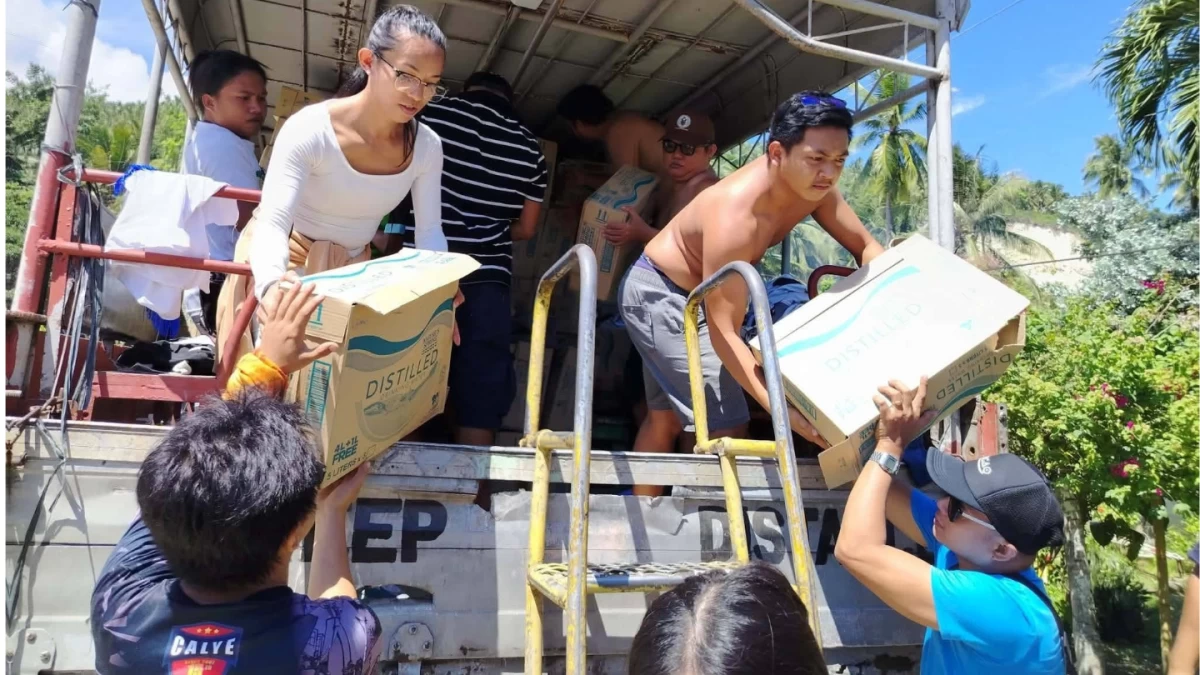
Volunteers of RD Foundation, Inc. distribute relief goods in the aftermath of the earthquake that struck Southern Mindanao in June 2026. (Photo credit: RD Foundation, Inc.)
The Philippines retained its position as Southeast Asia’s second-most favorable environment for philanthropy, trailing only Singapore, as widespread individual donations and strong corporate backing helped cushion civil society groups against rising operational costs.
According to the 2026 Doing Good Index published by the Centre for Asian Philanthropy and Society, the Philippines maintained its “Doing Better” status for the fifth consecutive edition. The country remains one of only five Asian economies in the tier, alongside mainland China, Hong Kong, Japan, and South Korea, while Singapore stood alone in the top “Doing Excellent” category.
Complementary findings from the World Giving Report 2026, published by the Charities Aid Foundation, showed that 78 percent of Filipinos made charitable donations in 2025, exceeding both the Asian average of 68 percent and the global average of 61 percent.
The Association of Foundations serves as the local partner for both studies.
Corporate support has emerged as the major revenue stream for non-governmental organizations (NGOs) in the country. The index revealed that 79 percent of Philippine NGOs receive corporate funding, with business contributions accounting for an average of 34 percent of organizational budgets. That figure is significantly higher than the regional average of 19 percent in Asia.
“There is a great opportunity to leverage corporate philanthropy and to make sure that it has the needed impact and to fill some of the gaps,” Kithmina Hewage, director of policy engagement at the Centre for Asian Philanthropy and Society, said.
Despite strong personal generosity, a clear gap persists between general charitable giving and direct financial support for institutional non-profits.
While nearly eight in 10 Filipinos donated money last year, only 34 percent gave directly to NGOs. Faith-based giving dominated individual contributions, with 45 percent of respondents donating to religious organizations.
This gap comes as local non-profits face growing financial headwinds. About 80 percent of surveyed Philippine NGOs reported that domestic funding needs further strengthening to keep pace with inflation and expanding community needs.
“While funding is consistent, the expenses when it comes to deploying the services of the social sector have increased as well, and the demand for those services has increased as well,” Hewage said. “Expenses have increased, and the funding increase did not match that level.”
Representatives from local networks emphasized that closing this funding gap will require NGOs to streamline how donors engage with them.
Milet Aquino, communications officer at the Association of Foundations, noted that while public willingness to assist is established, organizations must reduce friction for donors, whether through cash contributions, volunteer work, or targeted advocacy.
Public trust remains a key asset for the country’s social sector, supported by high levels of community connection. Roughly 90 percent of Filipinos report a strong sense of local belonging, among the highest rates globally.
Alex Plumb, head of research at the Charities Aid Foundation, noted that individuals who see the direct local impact of NGOs are twice as likely to donate, highlighting community visibility as a vital catalyst for future growth.

Related Tags

2026 Doing Good Index Centre for Asian Philanthropy and Society World Giving Report 2026 Charities Aid Foundation
ADVERTISEMENT
.most-popular .layout-ratio{ padding-bottom: 79.13%; } @media (min-width: 768px) and (max-width: 1024px) { .widget-title { font-size: 15px !important; } }

{{ articles_filter_1561_widget.title }}

.most-popular .layout-ratio{ padding-bottom: 79.13%; } @media (min-width: 768px) and (max-width: 1024px) { .widget-title { font-size: 15px !important; } }

{{ static_articles_1562_widget.title }}

.most-popular .layout-ratio{ padding-bottom: 79.13%; } @media (min-width: 768px) and (max-width: 1024px) { .widget-title { font-size: 15px !important; } }

{{ articles_filter_1563_widget.title }}

{{ articles_filter_1564_widget.title }}

.mb-article-details { position: relative; } .mb-article-details .article-body-preview, .mb-article-details .article-body-summary{ font-size: 17px; line-height: 30px; font-family: "Libre Caslon Text", serif; color: #000; } .mb-article-details .article-body-preview iframe , .mb-article-details .article-body-summary iframe{ width: 100%; margin: auto; } .read-more-background { background: linear-gradient(180deg, color(display-p3 1.000 1.000 1.000 / 0) 13.75%, color(display-p3 1.000 1.000 1.000 / 0.8) 30.79%, color(display-p3 1.000 1.000 1.000) 72.5%); position: absolute; height: 200px; width: 100%; bottom: 0; display: flex; justify-content: center; align-items: center; padding: 0; } .read-more-background a{ color: #000; } .read-more-btn { padding: 17px 45px; font-family: Inter; font-weight: 700; font-size: 18px; line-height: 16px; text-align: center; vertical-align: middle; border: 1px solid black; background-color: white; } .hidden { display: none; }
function initializeAllSwipers() { // Get all hidden inputs with cms_article_id document.querySelectorAll('[id^="cms_article_id_"]').forEach(function (input) { const cmsArticleId = input.value; const articleSelector = '#article-' + cmsArticleId + ' .body_images'; const swiperElement = document.querySelector(articleSelector); if (swiperElement && !swiperElement.classList.contains('swiper-initialized')) { new Swiper(articleSelector, { loop: true, pagination: false, navigation: { nextEl: '#article-' + cmsArticleId + ' .swiper-button-next', prevEl: '#article-' + cmsArticleId + ' .swiper-button-prev', }, }); } }); } setTimeout(initializeAllSwipers, 3000); const intersectionObserver = new IntersectionObserver( (entries) => { entries.forEach((entry) => { if (entry.isIntersecting) { const newUrl = entry.target.getAttribute("data-url"); if (newUrl) { history.pushState(null, null, newUrl); let article = entry.target; // Extract metadata const author = article.querySelector('.author-section').textContent.replace('By', '').trim(); const section = article.querySelector('.section-info ').textContent.replace(' ', ' '); const title = article.querySelector('.article-title h1').textContent; // Parse URL for Chartbeat path format const parsedUrl = new URL(newUrl, window.location.origin); const cleanUrl = parsedUrl.host + parsedUrl.pathname; // Update Chartbeat configuration if (typeof window._sf_async_config !== 'undefined') { window._sf_async_config.path = cleanUrl; window._sf_async_config.sections = section; window._sf_async_config.authors = author; } // Track virtual page view with Chartbeat if (typeof pSUPERFLY !== 'undefined' && typeof pSUPERFLY.virtualPage === 'function') { try { pSUPERFLY.virtualPage({ path: cleanUrl, title: title, sections: section, authors: author }); } catch (error) { console.error('ping error', error); } } // Optional: Update document title if (title && title !== document.title) { document.title = title; } } } }); }, { threshold: 0.1 } ); function showArticleBody(button) { const article = button.closest("article"); const summary = article.querySelector(".article-body-summary"); const body = article.querySelector(".article-body-preview"); const readMoreSection = article.querySelector(".read-more-background"); // Hide summary and read-more section summary.style.display = "none"; readMoreSection.style.display = "none"; // Show the full article body body.classList.remove("hidden"); } document.addEventListener("DOMContentLoaded", () => { let loadCount = 0; // Track how many times articles are loaded const offset = [1, 2, 3, 4, 5, 6, 7, 8, 9, 10]; // Offset values const currentUrl = window.location.pathname.substring(1); let isLoading = false; // Prevent multiple calls if (!currentUrl) { console.log("Current URL is invalid."); return; } const sentinel = document.getElementById("load-more-sentinel"); if (!sentinel) { console.log("Sentinel element not found."); return; } function isSentinelVisible() { const rect = sentinel.getBoundingClientRect(); return ( rect.top < window.innerHeight && rect.bottom >= 0 ); } function onScroll() { if (isLoading) return; if (isSentinelVisible()) { if (loadCount >= offset.length) { console.log("Maximum load attempts reached."); window.removeEventListener("scroll", onScroll); return; } isLoading = true; const currentOffset = offset[loadCount]; window.loadMoreItems().then(() => { let article = document.querySelector('#widget_1690 > div:nth-last-of-type(2) article'); intersectionObserver.observe(article) loadCount++; }).catch(error => { console.error("Error loading more items:", error); }).finally(() => { isLoading = false; }); } } window.addEventListener("scroll", onScroll); });

Sign up by email to receive news.