ADVERTISEMENT

Philippines electricity spot prices set to drop as rooftop solar adoption expands

Published Aug 10, 2026 12:01 am
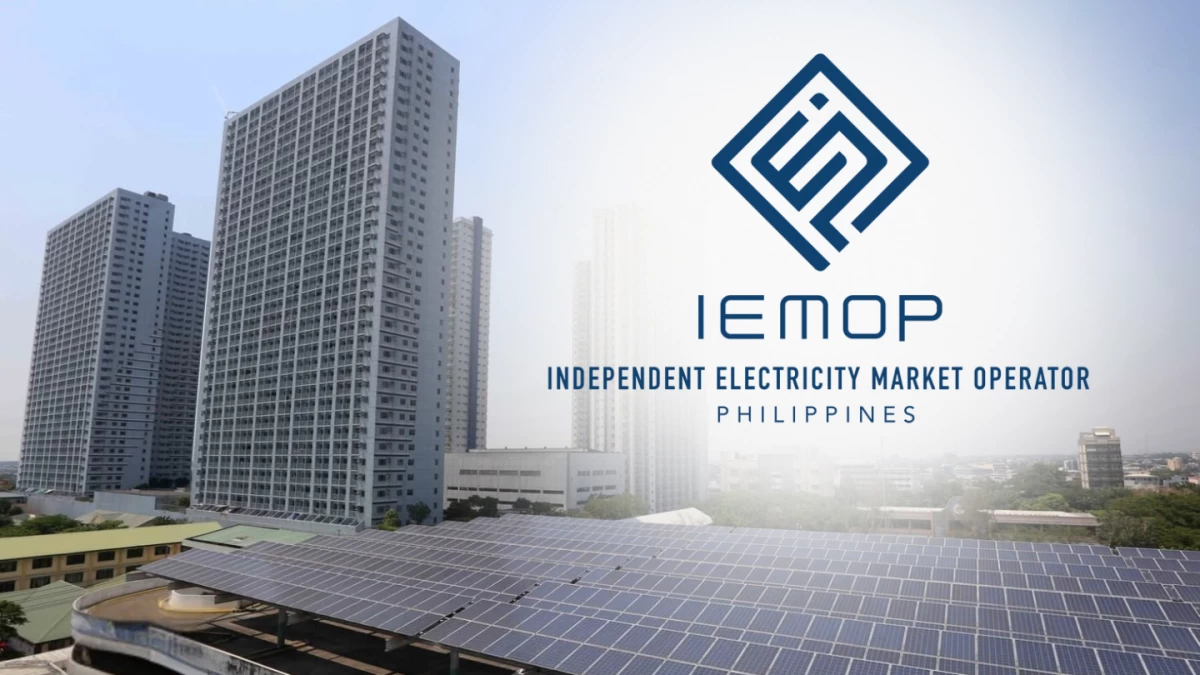
Rapid adoption of household rooftop solar power in the country is poised to reduce wholesale spot market electricity prices by curbing overall grid demand and broadening supply cushions, according to the country’s independent market operator.
Amid growing number of residential consumers generate their own power, demand in the Wholesale Electricity Spot Market (WESM) will likely drop, according to Isidro Cacho, vice president for trading operations at the Independent Electricity Market Operator of the Philippines Inc. (IEMOP). The lower market demand will automatically expand supply margins, placing downward pressure on spot rates.
The market projection comes as lawmakers advance House Bill No. 10431, titled the proposed Sariling Kuryente Act.
The proposed measure aims to eliminate regulatory bottlenecks for rooftop solar panels, battery storage, and related behind-the-meter energy systems installed by end-users.
Under the proposed bill, consumers setting up solar arrays strictly for self-use without grid export can skip lengthier regulatory permits and utility approvals, submitting only a post-installation notification.
For systems capable of exporting surplus electricity back into the grid, distribution utilities will be legally required to fast-track the application and approval workflow.
Residential solar installations have already gained momentum ahead of the bill’s passage. While IEMOP has not yet quantified the exact total financial impact of the proposed law, Cacho said adding 10 megawatts to 20 megawatts of combined capacity from rooftop solar would be enough to noticeably drive down market demand.
Commercial rooftop configurations already reach up to 10 megawatts individually, and aggregating residential solar adoption across communities would yield a similar market effect.
The forecast follows a recent decline in average WESM prices to ₱8.31 per kilowatt-hour. The Visayas regional grid registered the steepest price decline among the country's major power networks, primarily driven by reduced demand.
However, severe grid stability challenges remain. The Visayas network recently suffered its third red grid alert of the year after the National Grid Corporation of the Philippines logged a five-hour emergency state on Aug. 8. The shortage was caused by the unplanned unavailability of several major coal-fired plants, including Therma Visayas Inc. Units 1 and 2, Cebu Energy Development Corp., and Toledo Power Co.
Grid strain in the Visayas was further exacerbated by restricted power imports from the neighboring Mindanao grid and technical tripping across three units operated by Panay Energy Development Corp.

Related Tags

IEMOP Solar energy
ADVERTISEMENT
.most-popular .layout-ratio{ padding-bottom: 79.13%; } @media (min-width: 768px) and (max-width: 1024px) { .widget-title { font-size: 15px !important; } }

{{ articles_filter_1561_widget.title }}

.most-popular .layout-ratio{ padding-bottom: 79.13%; } @media (min-width: 768px) and (max-width: 1024px) { .widget-title { font-size: 15px !important; } }

{{ static_articles_1562_widget.title }}

.most-popular .layout-ratio{ padding-bottom: 79.13%; } @media (min-width: 768px) and (max-width: 1024px) { .widget-title { font-size: 15px !important; } }

{{ articles_filter_1563_widget.title }}

{{ articles_filter_1564_widget.title }}

.mb-article-details { position: relative; } .mb-article-details .article-body-preview, .mb-article-details .article-body-summary{ font-size: 17px; line-height: 30px; font-family: "Libre Caslon Text", serif; color: #000; } .mb-article-details .article-body-preview iframe , .mb-article-details .article-body-summary iframe{ width: 100%; margin: auto; } .read-more-background { background: linear-gradient(180deg, color(display-p3 1.000 1.000 1.000 / 0) 13.75%, color(display-p3 1.000 1.000 1.000 / 0.8) 30.79%, color(display-p3 1.000 1.000 1.000) 72.5%); position: absolute; height: 200px; width: 100%; bottom: 0; display: flex; justify-content: center; align-items: center; padding: 0; } .read-more-background a{ color: #000; } .read-more-btn { padding: 17px 45px; font-family: Inter; font-weight: 700; font-size: 18px; line-height: 16px; text-align: center; vertical-align: middle; border: 1px solid black; background-color: white; } .hidden { display: none; }
function initializeAllSwipers() { // Get all hidden inputs with cms_article_id document.querySelectorAll('[id^="cms_article_id_"]').forEach(function (input) { const cmsArticleId = input.value; const articleSelector = '#article-' + cmsArticleId + ' .body_images'; const swiperElement = document.querySelector(articleSelector); if (swiperElement && !swiperElement.classList.contains('swiper-initialized')) { new Swiper(articleSelector, { loop: true, pagination: false, navigation: { nextEl: '#article-' + cmsArticleId + ' .swiper-button-next', prevEl: '#article-' + cmsArticleId + ' .swiper-button-prev', }, }); } }); } setTimeout(initializeAllSwipers, 3000); const intersectionObserver = new IntersectionObserver( (entries) => { entries.forEach((entry) => { if (entry.isIntersecting) { const newUrl = entry.target.getAttribute("data-url"); if (newUrl) { history.pushState(null, null, newUrl); let article = entry.target; // Extract metadata const author = article.querySelector('.author-section').textContent.replace('By', '').trim(); const section = article.querySelector('.section-info ').textContent.replace(' ', ' '); const title = article.querySelector('.article-title h1').textContent; // Parse URL for Chartbeat path format const parsedUrl = new URL(newUrl, window.location.origin); const cleanUrl = parsedUrl.host + parsedUrl.pathname; // Update Chartbeat configuration if (typeof window._sf_async_config !== 'undefined') { window._sf_async_config.path = cleanUrl; window._sf_async_config.sections = section; window._sf_async_config.authors = author; } // Track virtual page view with Chartbeat if (typeof pSUPERFLY !== 'undefined' && typeof pSUPERFLY.virtualPage === 'function') { try { pSUPERFLY.virtualPage({ path: cleanUrl, title: title, sections: section, authors: author }); } catch (error) { console.error('ping error', error); } } // Optional: Update document title if (title && title !== document.title) { document.title = title; } } } }); }, { threshold: 0.1 } ); function showArticleBody(button) { const article = button.closest("article"); const summary = article.querySelector(".article-body-summary"); const body = article.querySelector(".article-body-preview"); const readMoreSection = article.querySelector(".read-more-background"); // Hide summary and read-more section summary.style.display = "none"; readMoreSection.style.display = "none"; // Show the full article body body.classList.remove("hidden"); } document.addEventListener("DOMContentLoaded", () => { let loadCount = 0; // Track how many times articles are loaded const offset = [1, 2, 3, 4, 5, 6, 7, 8, 9, 10]; // Offset values const currentUrl = window.location.pathname.substring(1); let isLoading = false; // Prevent multiple calls if (!currentUrl) { console.log("Current URL is invalid."); return; } const sentinel = document.getElementById("load-more-sentinel"); if (!sentinel) { console.log("Sentinel element not found."); return; } function isSentinelVisible() { const rect = sentinel.getBoundingClientRect(); return ( rect.top < window.innerHeight && rect.bottom >= 0 ); } function onScroll() { if (isLoading) return; if (isSentinelVisible()) { if (loadCount >= offset.length) { console.log("Maximum load attempts reached."); window.removeEventListener("scroll", onScroll); return; } isLoading = true; const currentOffset = offset[loadCount]; window.loadMoreItems().then(() => { let article = document.querySelector('#widget_1690 > div:nth-last-of-type(2) article'); intersectionObserver.observe(article) loadCount++; }).catch(error => { console.error("Error loading more items:", error); }).finally(() => { isLoading = false; }); } } window.addEventListener("scroll", onScroll); });

Sign up by email to receive news.