






Manila Bulletin
 Philippines
National
DOE gets real talk from Dagooc: 'Line rental' is a generation charge, not a transmission one
Philippines
National
DOE gets real talk from Dagooc: 'Line rental' is a generation charge, not a transmission one
Philippines
National
DOE gets real talk from Dagooc: 'Line rental' is a generation charge, not a transmission one
DOE gets real talk from Dagooc: 'Line rental' is a generation charge, not a transmission one
Published Aug 6, 2026 09:14 pm


At A Glance
- Rep. Sergio Dagooc criticizes the DOE and the power generation sector over the "insulting" term "line rental," insisting it should be renamed as a generation charge.
- He says the generation sector collects all costs without losses, receives the largest share of consumer payments, and thus should be the focus of amendments to the Electric Power Industry Reform Act (EPIRA).
- Dagooc urged Congress to give the ERC authority to review generation costs and called on the BIR to remove VAT on system loss.
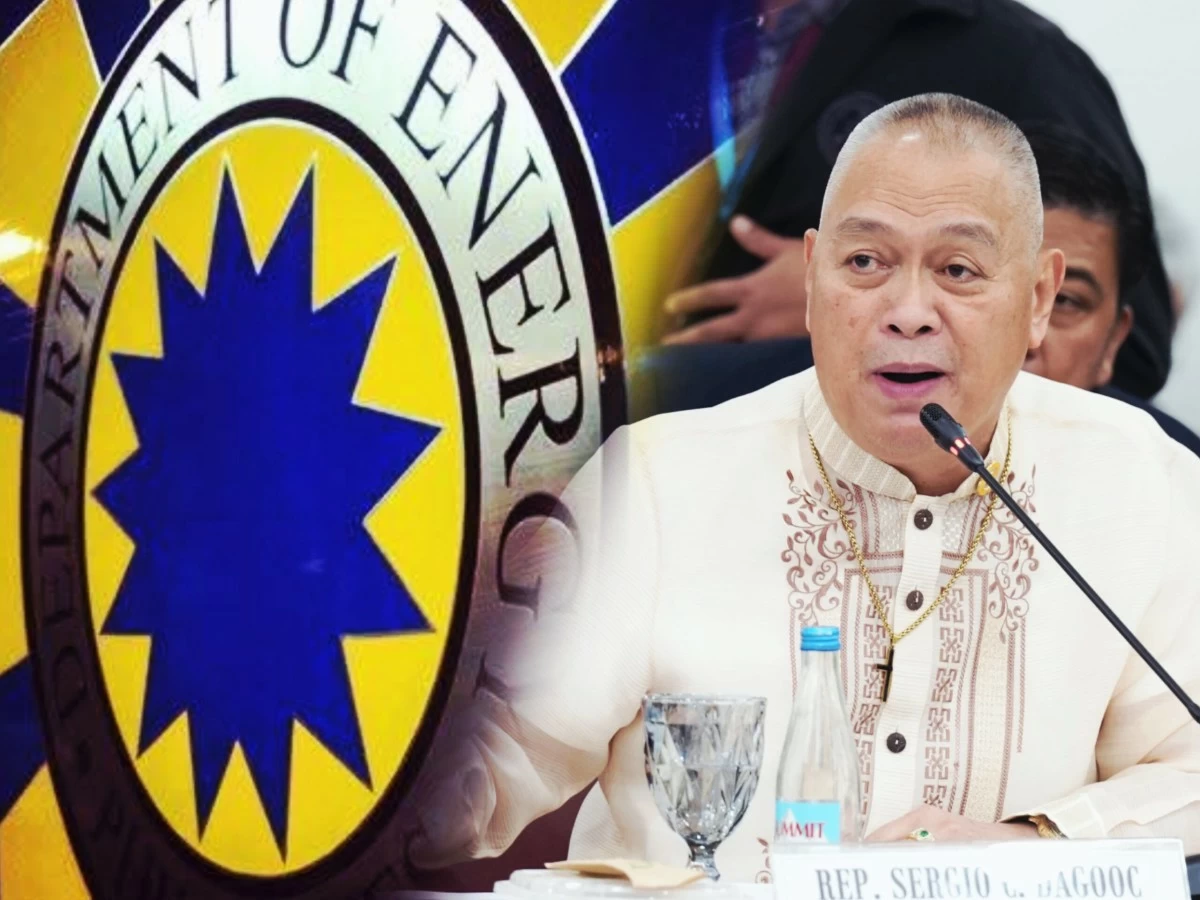
DOE logo (left) APEC Party-list Rep. Sergio Dagooc (Facebook, PPAB)
APEC Party-list Rep. Sergio Dagooc has blasted the Department of Energy (DOE) as well as the power generation sector over the "insulting" misnomer that is "line rental".
In a hearing of the House Committee on Energy on Wednesday, Aug. 5, Dagooc called out DOE officials and told them to revisit its department circular and rename the particular charge, which he said had to do with generation and not transmission.
"For the information of the DOE, I have no objection if consumers are made to pay it," Dagooc said duing the hearing.
"But kindly replace the term 'line rental' because that is an insult to the intellect of the people. Call it what it really is—a generation charge," said the House "Power Bloc" member.
According to Dagooc, the term "line rental" wrongly leads consumers to associate the charge with the transmission operator.
Dagooc said the real issue lies with the generation sector, which accounts for the largest share of consumers' electricity bills but remains beyond the full regulatory scrutiny of the Energy Regulatory Commission (ERC).
"Ang generation sector ang 'special boy' sa power industry. Walang lugi—lahat binabayaran. Lahat ng losses, kinokolekta ng transmission, sinisingil ng distribution, tapos naka-silver platter ibinibigay sa kanila," he said in an apparent jab at the sector.
(The generation sector is the ‘special boy’ in the power industry. There are no losses—all are paid. All losses are collected by transmission, charged by distribution, then handed to them on a silver platter.)
"Kaya kung aamyendahan natin ang EPIRA, dapat doon tayo tumutok dahil mahigit 65 porsyento ng bawat pisong binabayaran ng consumers ay napupunta sa generation," Dagooc said, referring to the Electric Power Industry Reform Act of 2001.
(So if we amend EPIRA, that is where we should focus because more than 65 percent of every peso paid by consumers goes to generation.)
Electricity goes through three phases before it is used by consumers. These are generation, transmission, and then distribution.
Dagooc urged Congress to amend EPIRA to give the ERC the authority to review and validate generation costs before these are passed on to consumers, ensuring that only prudent and reasonable expenses are charged.
The pro-lineman solon also called on the Bureau of Internal Revenue (BIR) to remove the Value-Added Tax (VAT) on system loss without waiting for new legislation.
"Consumers should not be paying VAT on electricity that never even reaches their homes," he said.
Wednesday's hearing was held in response to President Marcos' call to scrap systems loss charges, which he articulated in his July 27 State of the Nation Address (SONA) to a standing ovation.