






Manila Bulletin
 Business
Banking & Finance
Big banks, digital lenders face first wave of mandatory national ID integration
Business
Banking & Finance
Big banks, digital lenders face first wave of mandatory national ID integration
Business
Banking & Finance
Big banks, digital lenders face first wave of mandatory national ID integration
Big banks, digital lenders face first wave of mandatory national ID integration
By Derco Rosal
Published Aug 6, 2026 04:30 pm
|
Updated Aug 6, 2026 04:05 pm


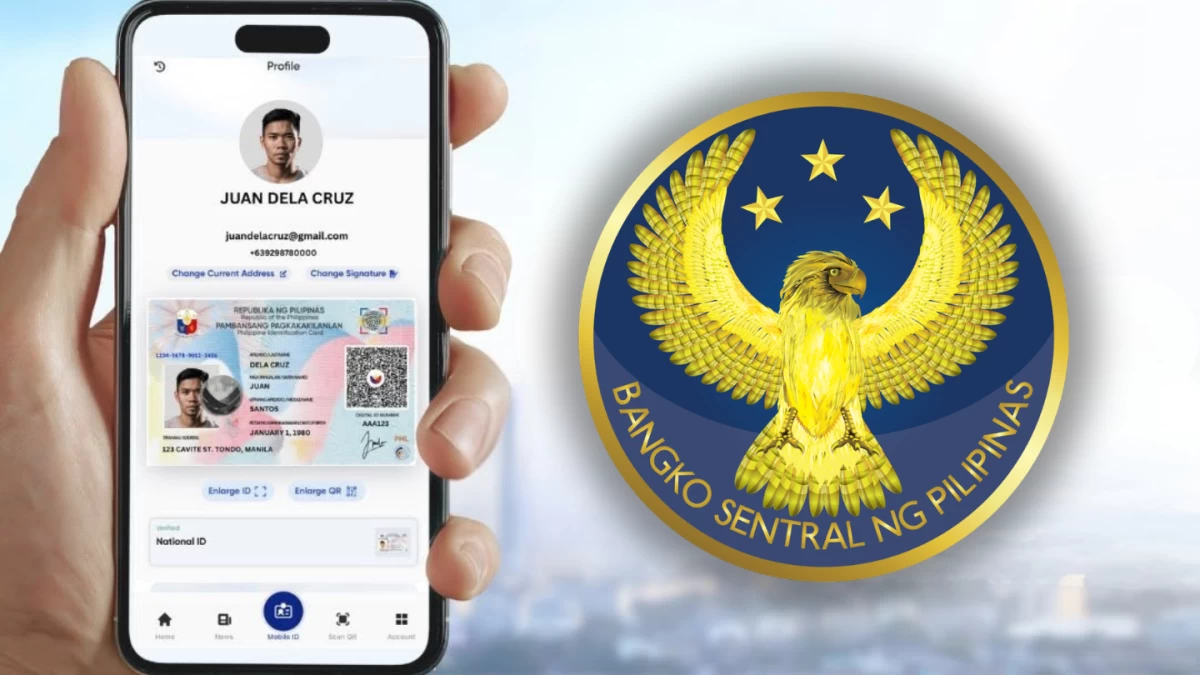
The Bangko Sentral ng Pilipinas (BSP) is preparing to order lenders and digital financial firms to link directly with the government’s National ID system, making digital identity verification mandatory for opening accounts and onboarding customers in the country.
Under the latest draft circular issued by the central bank, BSP-supervised institutions will be required to integrate with the Philippine Statistics Authority’s National ID Authentication Services (NIDAS) for customer due diligence.
The proposed directive shifts national identification from a voluntary option to a strict regulatory requirement, establishing the National ID as the foundational tool for secure digital onboarding.
To ensure an orderly transition, the BSP designed a two-phase implementation schedule that prioritizes high-volume retail institutions. The initial rollout focuses on the most digitally active entities in the local financial sector and will take effect upon the official issuance of the proposed memorandum.
Under the first phase, universal and commercial banks offering retail services, digital banks, electronic money issuers, and virtual asset service providers must finalize their onboarding within three months of the memorandum's issuance.
Once the initial three-month window closes, the mandate expands under the second phase to compel all remaining entities into compliance. This second group includes non-retail commercial institutions, thrift banks, rural and cooperative banks, operators of payment systems handling know-your-customer or know-your-merchant functions, and all remaining supervised financial institutions.
The integration leverages biometric and demographic verification features supplied by the statistics authority to strengthen transaction security. Financial entities will be permitted to adopt risk-appropriate online authentication tiers defined by the central bank. Tier 1 covers basic identity verification, while Tier 2 provides electronic know-your-customer services through pre-agreed demographic data shared between requesting institutions and the government statistics agency.
The directive promises to streamline account opening for the public. The draft rule reiterates that the National ID, across all recognized formats, stands as official proof of identity for government and private sector transactions. Prospective customers will no longer need to present physical identification cards to open bank accounts or conduct transactions, as successful digital verification through NIDAS will serve as sufficient proof of identity.
Enforcement will be active. The central bank warned in the draft circular that it may deploy supervisory enforcement actions to ensure full compliance and force timely corrective steps from lagging institutions.
By creating a unified digital verification architecture, the central bank aims to lower compliance costs for institutions, curb financial fraud, and accelerate financial inclusion throughout the Philippine economy.