






Manila Bulletin
 Business
Trade & Industry
Philippines faces corn tariff decision as lower duties promise ₱17-billion gain
Business
Trade & Industry
Philippines faces corn tariff decision as lower duties promise ₱17-billion gain
Business
Trade & Industry
Philippines faces corn tariff decision as lower duties promise ₱17-billion gain
Philippines faces corn tariff decision as lower duties promise ₱17-billion gain
Published Aug 5, 2026 03:58 pm


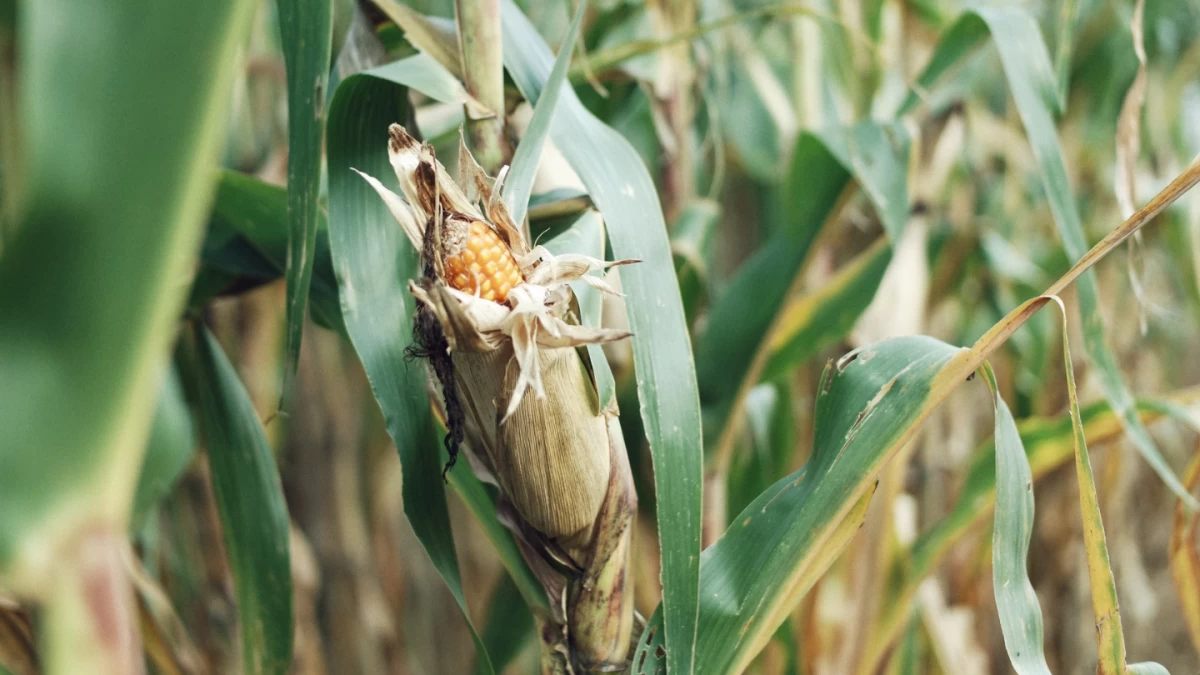
Adopting a uniform five percent tariff rate on corn imports could generate ₱17.2 billion in net economic gains as consumer savings offset losses for local farmers and government revenues, according to advocacy group Foundation for Economic Freedom (FEF).
Speaking at a Tariff Commission (TC) public consultation on Wednesday, Aug. 5, FEF fellow Roehlano Briones said lowering duties on imported corn would directly reduce retail prices for chicken and pork.
Based on FEF projections, the policy could lower retail chicken prices by 1.7 percent and pork prices by two percent.
Briones explained that retailers could pass on savings to consumers due to expected drops in farmgate prices—estimated to fall by 1.9 percent for chicken and 2.3 percent for pork.
FEF filed a petition with the TC in April recommending a uniform five percent most-favored-nation (MFN) tariff rate on corn to replace the current minimum access volume (MAV) quota system.
Under MAV, corn enters at five percent duty up to a quota of 216,940 metric tons (MT), while out-of-quota shipments face a 15 percent duty.
The think tank argued that a flat five percent duty would cut animal feed costs, which represent nearly 70 percent of production expenses for poultry and swine farmers.
Yellow corn makes up as much as 65 percent of animal feed formulations.
“Given the relatively undernourished Filipino population, especially children, this will provide an opportunity for increasing animal protein consumption, which is critical,” Briones said.
Briones estimated total economic gains for consumers at ₱25.54 billion. Offsetting this, local producers—mostly corn farmers—would lose an estimated ₱5.5 billion, while government tariff revenue would drop by ₱2.83 billion, resulting in a net economic gain of ₱17.2 billion.
However, Agriculture Undersecretary Asis Perez contested the projections, warning that the assumed benefits send the wrong message to domestic growers.
“The economic impact appears to be promising. But in our view, the theory is yet to be proven, and existing evidence indicates the contrary,” Perez said.
Perez argued that unilateral tariff cuts on agricultural commodities are not forward-looking and fail to adapt to changing market conditions.
“We believe that a calculated tariff rate—instead of tariff reduction—through FTAs [free trade agreements] or bilateral negotiations is the best way forward for us,” he said.