






Manila Bulletin
 Philippines
Mindanao
Davao City Council urges Davao Light to secure additional power supply
Philippines
Mindanao
Davao City Council urges Davao Light to secure additional power supply
Philippines
Mindanao
Davao City Council urges Davao Light to secure additional power supply
Davao City Council urges Davao Light to secure additional power supply
By Ivy Tejano
Published Aug 4, 2026 09:23 pm


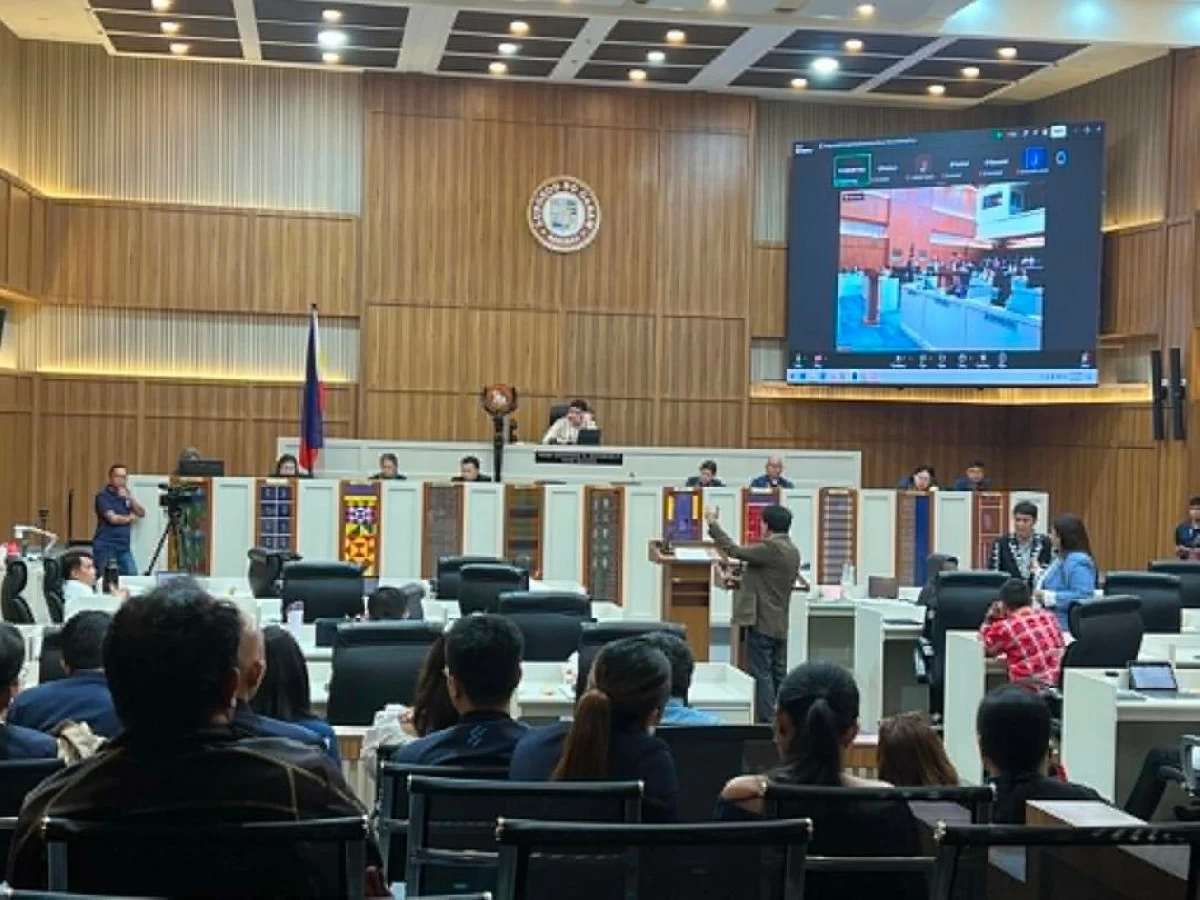
THE Davao City Council, along with the Davao Light and Power Co. Inc. and the Department of Energy in Mindanao, discuss the increase in electricity rates in Davao City and Mindanao. (Photo via Ivy Tejano)
DAVAO CITY – The Davao City Council urged Davao Light and Power Co. Inc. to secure additional power supply outside the volatile Wholesale Electricity Spot Market, as consumers continue to face high electricity rates despite adequate power reserves in Mindanao.
The council approved resolutions urging DLPC to pursue long-term bilateral Power Supply Agreements and interim Emergency Power Supply Agreements with Therma South Inc. and other baseload power generators in Mindanao.
Councilor Louie John Bonguyan, chairperson of the Committee on Energy and Water, introduced the measures following the inquiry into the factors behind the high electricity charges in Davao City.
Bonguyan said the concern raised by the council mirrors that of consumers, particularly why electricity rates remain high despite the Department of Energy-Mindanao's report of sufficient supply and reserves.
"We share the same concern as the public," Bonguyan said during the Pulong-Pulong sa Dabawenyos media forum on Tuesday, Aug. 4, noting that Mindanao has maintained reserves of roughly 729 to 1,000 megawatts in recent months.
Bonguyan said the council cannot set Davao Light's rates because the Energy Regulatory Commission regulates these. However, it can push measures to help the power utility reduce its reliance on expensive WESM power.
The resolution urged Davao Light to secure long-term bilateral PSAs with TSI and other baseload plants within the parameters of Republic Act No. 9136, or the Electric Power Industry Reform Act of 2001.
Bonguyan called on the utility to explore emergency supply agreements that could provide additional power while WESM prices remain elevated. He said these measures are intended to reduce DLPC's reliance on the spot market when prices spike.
He said lower electricity rates could be reflected in consumers' bills within several months if Davao Light secures cheaper baseload power. However, the actual reduction would depend on supply, the agreement, and ERC approval.
The city council also wants Davao Light to look beyond its existing supply arrangements and, when allowed, obtain additional electricity directly from available Mindanao generators.
Mindanao surplus does not mean lower rates
During Tuesday's council session, DOE-Mindanao official Darwin Galang said Mindanao had an average available power capacity of 3,320 MW from January to July 2026, compared with a peak demand of 2,775 MW recorded on May 12.
Galang said Mindanao's reserves ranged from about 729 MW to 1,060 MW, but these figures include power being exported to the Visayas through the inter-island connection. Therefore, the power generated in Mindanao is not exclusive to the island.
Bonguyan said Mindanao sends power to the Visayas when its reserves are low or when the grid is under a yellow alert. As a result, having enough power in Mindanao does not automatically mean lower electricity rates for Davao consumers.
The city council reiterated and emphasized that electricity prices remain affected by WESM conditions, generation costs, plant maintenance, regulatory decisions, and the broader national power market.
Galang earlier explained that when cheaper baseload plants are unavailable, more expensive generators, including diesel-fired plants, are dispatched to meet demand and maintain grid stability, driving up overall generation costs.
"These necessitate the operation of our much more expensive plants, like the diesel plants," Galang said, adding that their operation affected WESM prices and, in turn, increased generation charges passed on to consumers.
Councilor Danilo Dayanghirang, chairperson of the Committee on Finance, Ways and Means, and Appropriations, said consumers pay several components on their electricity bills, and the power rate hike affects households, especially low-income families.
Dayanghirang called on Special Assistant to the President Antonio Lagdameo Jr. and Mindanao Development Authority Secretary Leo Tereso Magno, both Mindanao-based officials, to look into the concerns and help the people of Mindanao.
"It is our duty to serve our constituents. We may belong to different political groups or have different personal relationships, but public service should never be influenced by political friendship or party affiliation," Dayanghirang said.
The councilor said electricity rates in some areas have reached about P15 per kilowatt-hour, compared to around P13 per kilowatt-hour in Davao. While Davao's rate may be lower than in some areas, he said it remains costly for poor households.
"I am therefore appealing to those with access to the national leadership to use their influence and authority to help address the rising cost of electricity. The objective must be to help ease the burden on consumers," Dayanghirang said.
Council seeks more baseload capacity
In a separate resolution, the council urged TSI to study the viability of proceeding with the second phase of its power generation facility.
The city previously authorized TSI to develop up to 645 MW of capacity, but only 300 MW is currently operational.
Bonguyan said expanding TSI's baseload generation could help increase local power availability and reduce dependence on volatile spot market purchases.
The council directed TSI to coordinate with the Department of Energy, ERC, DLPC, and the Davao City government to address the technical, financial, and regulatory requirements for the proposed expansion.
DOE-Mindanao also reported 30 committed power generation projects scheduled for deployment from 2026 to 2031, with a combined capacity of 1,324 MW.
Another 37 indicative projects are under evaluation, representing an additional potential capacity of 3,257 MW.
The proposed projects include renewable energy facilities and non-renewable baseload plants.
Galang said the projects, if realized, could further strengthen the energy security of the Mindanao grid.
Agus-Pulangi supply remains available
During the media forum, Bonguyan also provided an update on the supply from the Agus-Pulangi hydropower complex, noting that its allocation has not been fully withdrawn.
He said an earlier plan reportedly called for reducing the allocation by half. The response from the Power Sector Assets and Liabilities Management Corp. was favorable, allowing the current allocation to remain available, with the remaining portion potentially provided as needed.
"Agus-Pulangi remains important to Mindanao's power supply because hydropower can provide electricity at a lower cost than some thermal generation sources," Bonguyan said.
The facilities, however, are already aging and require rehabilitation and upgrading to recover more of their original generating capacity.
Bonguyan said the long-term solution is not only to manage the current price increases but also to increase reliable generating capacity across Mindanao and the country.
He said WESM prices rise when available supply becomes tight, particularly when several generating units are undergoing maintenance or are forced offline.
Recent plant outages in Mindanao, the Visayas, and Luzon, including facilities affected by earthquakes, have reduced the number of generating units available to supply the spot market, putting upward pressure on prices.
If electricity rates fail to normalize by September or October, Bonguyan said the council will continue to push for alternative supply arrangements and additional generation capacity.
Waste-to-energy project still in early stage
Bonguyan also said Davao City's proposed waste-to-energy project could eventually provide another source of electricity, but consumers should not expect an immediate impact on power rates.
The project remains in a preliminary stage, and the city has expressed interest in participating in the national government's green energy auction process.
"It has yet to be finally selected or approved," Bonguyan said.
The councilor said that if implemented, the project could contribute to the city's power supply while addressing waste management concerns and reducing dependence on more expensive electricity sources.
However, Bonguyan said, the project would still have to undergo evaluation, regulatory approval, development, and construction before it could contribute to the grid.