






 Business
Trade & Industry
DOE eyes nuclear to power Pax Silica AI hub in New Clark City
Business
Trade & Industry
DOE eyes nuclear to power Pax Silica AI hub in New Clark City
DOE eyes nuclear to power Pax Silica AI hub in New Clark City


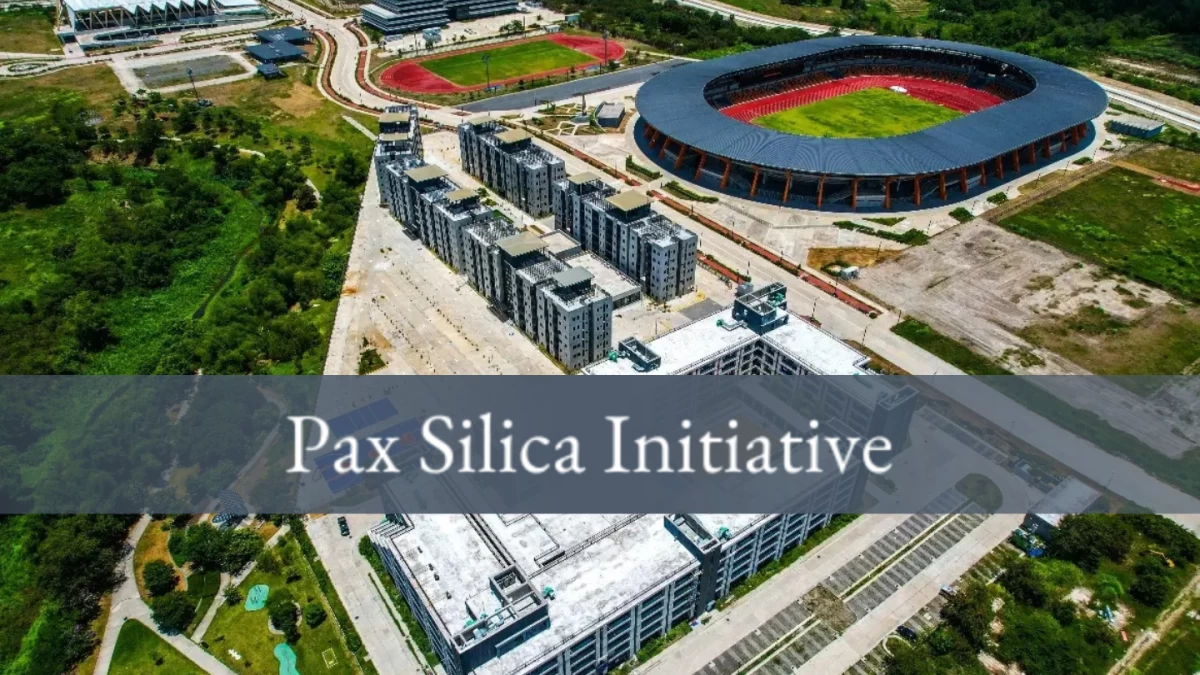
The country’s planned artificial intelligence (AI) hub in New Clark City is already reshaping the government’s nuclear energy plans, with the Department of Energy (DOE) saying future nuclear power projects could help meet the massive electricity requirements of one of the Philippines’ most power-intensive investments.
DOE Director and Nuclear Energy Program Inter-Agency Committee (NEP-IAC) Secretariat Head Patrick Aquino confirmed to Manila Bulletin on Tuesday, July 28, that future nuclear power developers could supply electricity to the incoming Pax Silica project—a United States (US)-backed AI, semiconductor, and advanced manufacturing hub to be built in Capas town, Tarlac province, whose locators could become major power offtakers.
While the DOE is still finalizing key components of the country’s nuclear power program, including the licensing framework, siting, and other regulatory clearances, energy giants such as Manila Electric Co. (Meralco) and Aboitiz Power Corp. (AboitizPower) have already expressed interest in developing nuclear projects, including small modular reactors (SMRs).
“Deployment of nuclear power projects requires compliance with stringent requirements on safety, security, and safeguards,” Aquino told Manila Bulletin.
Despite earlier concerns that the country’s nuclear roadmap could face delays, Aquino said NEP-IAC is still working toward its original target of deploying the Philippines’ first nuclear power project within six years.
“2032 may still be possible, but it will take a lot of coordination and resources,” he said.
Nuclear energy is considered a zero-carbon baseload power source capable of operating around the clock. Small modular reactors, which are viewed as better suited to the Philippines, typically generate around 300 megawatts (MW) of electricity.
The prospect of powering the massive AI hub has intensified discussions within the energy sector over how the Philippines can meet the project’s round-the-clock electricity requirements without placing further strain on an already constrained power grid.
Even if nuclear power eventually becomes part of the AI hub’s long-term energy mix, the government’s 2032 target for the country’s first nuclear power project means the Philippines must still meet the project’s massive electricity requirements as its first phase begins construction in 2028 and development gathers pace.
According to the Department of Energy (DOE), it is set to formulate a department circular focused on ensuring adequate power supply for the mega tech hub.
“We just need to make sure anything we do [to power the data hub] will not put the country at a disadvantage,” Energy Secretary Sharon Garin told a press briefing on Tuesday.
DOE Undersecretary Rowena Guevara further explained that locators will need to identify the capacity they require for their operations, as well as ensure that their lease in the area will last at least 20 years to encourage power generators to supply electricity to the hub.
“This is what we call embedded generation... You will not need to transmit it from a faraway place if it’s already inside the hub,” Guevara said.
“If we already have the timeline for the additional capacities per year, then we can also project the needed transmission, distribution, and generation for each of these years, and put that in the Transmission Development Plan (TDP) and the Philippine Energy Plan (PEP),” she added.
Analysts warned that hyperscale data centers could jeopardize grid stability and drive up electricity costs for ordinary consumers if they are not supported by dedicated power sources or specialized electricity tariffs.
Consumers have also voiced concerns over the project’s potential impact on local water and power supplies because of the industry’s heavy resource requirements. The broader question, they said, is whether the country can support an expansion of this magnitude while continuing to grapple with recurring power plant outages, transmission bottlenecks, and among the highest electricity rates in the region.
Since April, the Luzon grid has experienced several grid alerts driven by surging electricity demand and thin reserve margins. The strain peaked in May when soaring summer demand, coupled with unplanned power plant outages, triggered rotational brownouts across parts of Luzon. On several occasions, Luzon also shared spare generating capacity with the Visayas grid during a prolonged power shortage.
Michael Ricafort, chief economist at Rizal Commercial Banking Corp. (RCBC), said the Pax Silica-led industrial hub would require a reliable 24/7 electricity supply. Without proactive demand planning and additional grid investments, he warned that the project’s heavy power requirements could worsen strains on an already fragile electricity sector, especially as the Philippines continues to post the highest electricity rates in Southeast Asia while experiencing repeated grid alerts.
“Data centers/hyperscalers need a lot of electricity, given the reserves and the need to manage maintenance shutdowns of power plants as seen in recent weeks, amid the need for reliable electricity, water, and other utilities,” Ricafort told Manila Bulletin last week.
Ricafort noted, however, that prospective locators are likely already factoring these challenges into their feasibility studies, particularly with respect to electricity requirements. He also pointed to existing government mechanisms that allow large power consumers to procure electricity directly from their preferred suppliers, including retail electricity initiatives that let companies negotiate supply contracts independently without passing costs on to residential customers.
Energy Regulatory Commission (ERC) Chairperson Francis Saturnino Juan confirmed to Manila Bulletin last week that industrial hubs may take advantage of retail electricity supply (RES) mechanisms such as Retail Competition and Open Access (RCOA) and the Green Energy Option Program (GEOP), allowing locators to source their own renewable energy (RE) supply.
Still, for a 1,620-hectare (ha) industrial hub envisioned under the Luzon Economic Corridor (LEC), supplier choice alone may not be enough.
According to a former energy executive who spoke with Manila Bulletin, preventing a development of this scale from affecting residential consumers would require a special power classification that separates its electricity demand from local distribution utilities (DUs) and electric cooperatives (ECs).
Drawing from international precedents such as Malaysia, the executive said the Philippines could also adopt specialized electricity tariffs for data centers to ensure these facilities shoulder the cost of their massive grid connections and supporting infrastructure.
“In other countries, we already see that the data centers require dedicated power supply or power generation source. This is not only to ensure reliability and steady supply of power to the data centers but also as a matter of fairness in terms of rates or generation cost recovery,” the former energy leader explained.
“We see this also in some states in the US. The same goes for transmission or distribution tariffs, because it would not be fair for the costs of connection and power delivery for these data centers to be shouldered equally with the rest of the customers.”
Toby Arce, Globalinks Securities head of sales trading, said the project represents not only a power generation challenge but also a transmission and grid infrastructure opportunity.
“This [Pax Silica project] creates an opportunity for the Philippines to attract additional investments not only in power generation but also in transmission, substations, battery energy storage systems (BESS), and smart grid technologies,” he said.
“While the Luzon grid generally enjoys greater capacity than the Visayas and Mindanao grids, rapidly adding several large electricity-intensive facilities could substantially increase baseload demand and strain existing transmission infrastructure unless investments are implemented ahead of actual power requirements,” Arce emphasized.
To recall, state-run Bases Conversion and Development Authority (BCDA) said it has coordinated with the National Grid Corp. of the Philippines (NGCP) to build a dedicated substation that will accommodate the expected surge in electricity demand in New Clark City. The project, valued at around ₱6.95 billion, is targeted for completion by the end of 2028.