






 Philippines
National
Marcos cites ASEAN treaty's global legacy as bloc marks 50 years of peace pact
Philippines
National
Marcos cites ASEAN treaty's global legacy as bloc marks 50 years of peace pact
Marcos cites ASEAN treaty's global legacy as bloc marks 50 years of peace pact


At A Glance
- President Marcos said the ASEAN Treaty of Amity and Cooperation has evolved from a regional pact into a global framework for peace and cooperation as it marked its 50th anniversary.
- Four European countries—Sweden, Poland, Romania, and Lithuania—formally joined the treaty earlier Friday, bringing its membership to 62 High Contracting Parties.
- Marcos recalled that his father was among the leaders who signed the treaty in 1976, saying its principles remain relevant in addressing today's regional and global challenges.
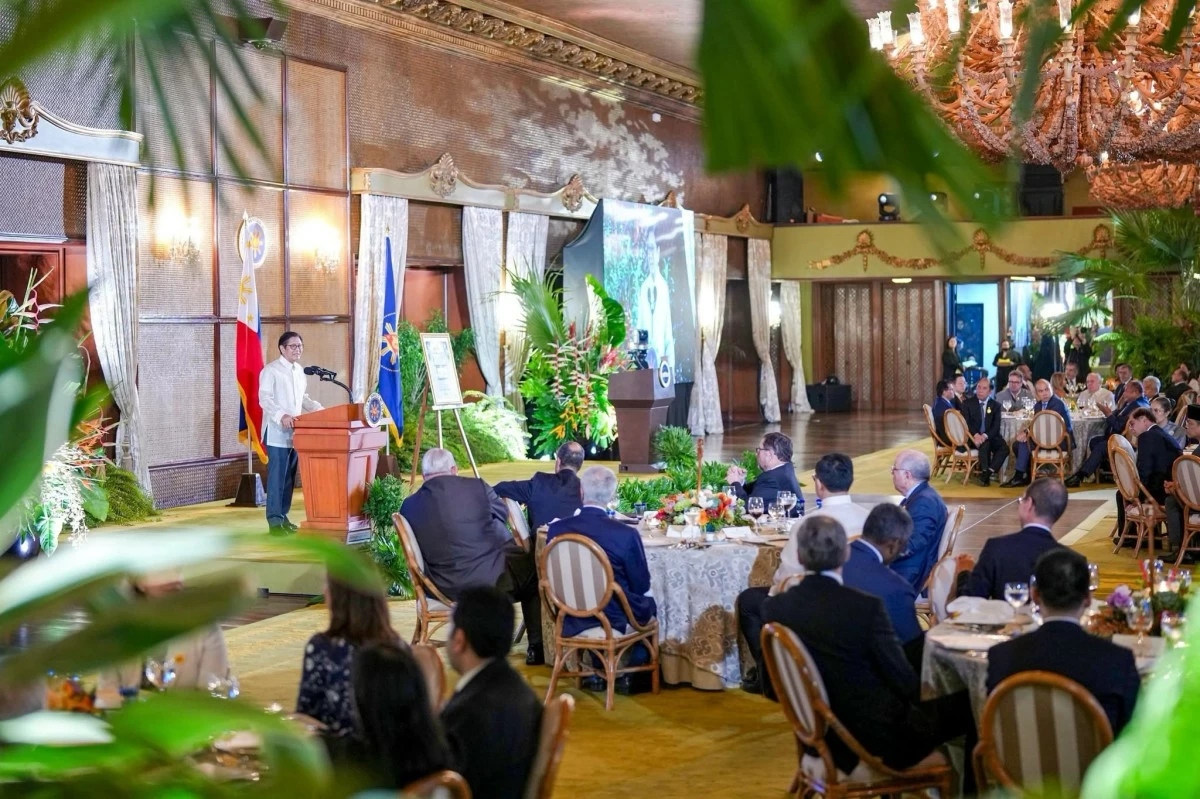
President Marcos has hailed the Treaty of Amity and Cooperation in Southeast Asia (TAC) as a lasting foundation for peace and dialogue, saying the agreement has grown from a regional commitment into a global community united by mutual respect and cooperation over the past five decades.
Speaking during a gala dinner at Malacañan Palace marking the treaty's 50th anniversary on Friday, July 24, Marcos welcomed representatives of the TAC's 62 High Contracting Parties from five continents following the accession of Sweden, Poland, Romania, and Lithuania earlier in the day.
The President said the milestone reflects the treaty's enduring relevance beyond Southeast Asia and the growing international commitment to its principles of peaceful coexistence.
"Fifty years ago, my father joined the founding leaders of ASEAN in signing the Treaty of Amity and Cooperation, affirming that peace is best secured through mutual respect, dialogue and effective cooperation," Marcos said in a Facebook post after the event.
"What was once a regional commitment has become a global community united by the enduring ideals of peace, friendship and cooperation," he added.
Addressing foreign ministers, diplomats, and ASEAN officials, Marcos likened diplomacy to the Filipino tradition of gathering around the hapag-kainan, where relationships are built through conversation and mutual understanding.
"In every Filipino home, there is a place where people come together. In our language, we call it hapag-kainan... Tonight, the Philippines extends its hapag-kainan to all of you," he said.
The President also recalled that his father, the late former president Ferdinand Marcos, was among the leaders who signed the treaty in Bali, Indonesia, in 1976, saying he later realized the document represented "far more than a treaty" but a shared conviction that Southeast Asia could build its security through mutual respect and cooperation.
He likewise associated the treaty's principles with the Filipino value of bayanihan, describing both as reflections of solidarity, trust, and collective responsibility.
Earlier Friday, Sweden, Poland, Romania, and Lithuania formally acceded to the TAC during a ceremony following the 59th ASEAN Foreign Ministers' Meeting and Related Meetings in Manila, bringing the number of High Contracting Parties to 62.
Department of Foreign Affairs (DFA) Secretary Ma. Theresa Lazaro said the accession demonstrates the "universality" of the treaty's principles and affirms ASEAN's role as the "primary driving force" in promoting a rules-based regional architecture anchored on peace, stability, and prosperity.
Adopted in 1976, the TAC serves as ASEAN's code of conduct, committing its parties to respect sovereignty, refrain from interference in one another's internal affairs, settle disputes peacefully, and strengthen cooperation among ASEAN member states and dialogue partners.
To commemorate the treaty's golden anniversary, the Philippines also unveiled a commemorative postage stamp and a sampaguita-inspired anniversary emblem symbolizing five decades of peace and cooperation across five continents.