






 Philippines
National
Manila emerges as diplomatic hub as ASEAN wraps up ministerial meetings
Philippines
National
Manila emerges as diplomatic hub as ASEAN wraps up ministerial meetings
Manila emerges as diplomatic hub as ASEAN wraps up ministerial meetings


At A Glance
- Manila hosted about 120 bilateral meetings among foreign ministers during the four-day ASEAN Foreign Ministers' Meeting, underscoring the Philippines' role as a regional diplomatic hub.
- Foreign Affairs Secretary Ma. Theresa Lazaro said the meetings demonstrated ASEAN's convening power amid rising geopolitical tensions, bringing together major powers including the United States, China and Russia.
- ASEAN concluded the meetings by adopting key agreements on regional security, reaffirming the Five-Point Consensus on Myanmar, and advancing preparations for the East Asia Summit in November.
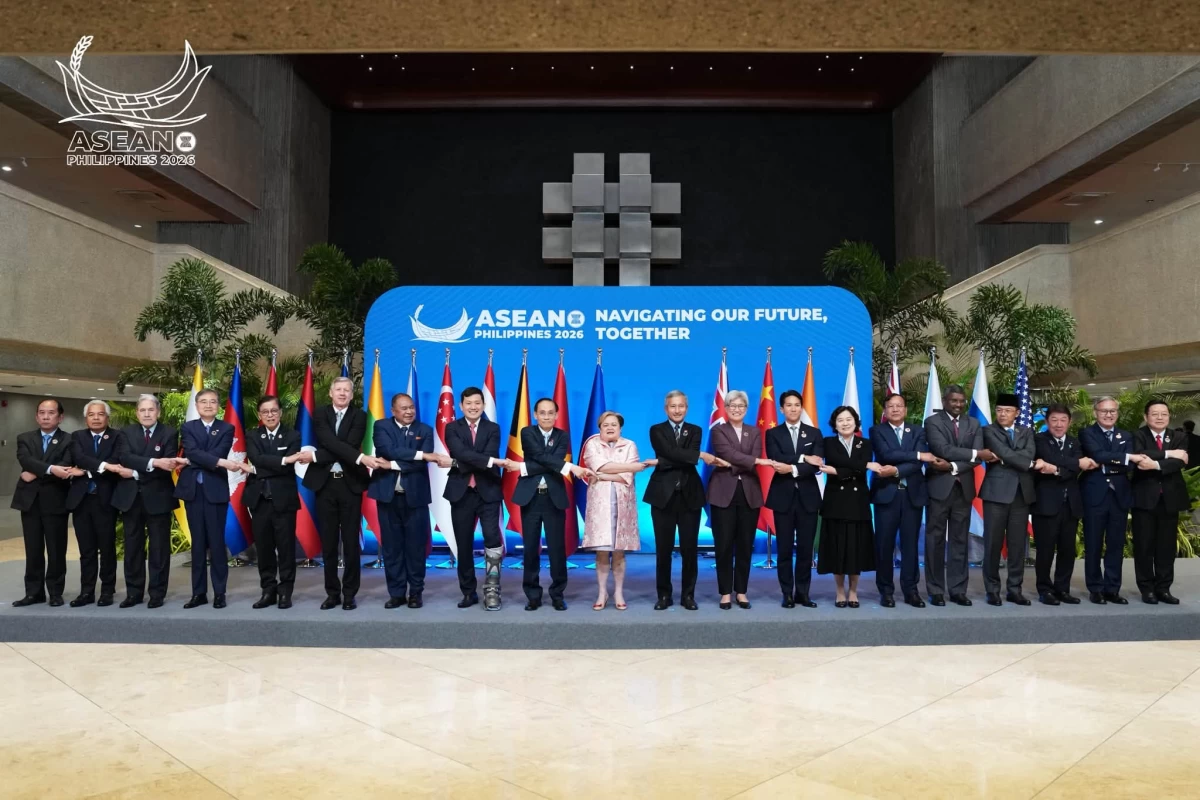
Manila emerged as a diplomatic hub this week as the Philippines concluded the four-day 59th ASEAN Foreign Ministers' Meeting and Related Meetings, hosting around 120 bilateral engagements among foreign ministers alongside discussions on regional security, the South China Sea, Myanmar, and geopolitical conflicts.
In a press briefing, Department of Foreign Affairs (DFA) Secretary Ma. Theresa Lazaro said the series of meetings demonstrated the ability of the Association of Southeast Asian Nations (ASEAN) to convene major powers despite growing global tensions, with Manila serving as the venue for high-level diplomacy among regional and global players.
"Over the past four days, Manila has served as the center of ASEAN diplomacy as I chaired the 59th ASEAN Foreign Ministers' Meeting and Related Meetings," Lazaro said.
She noted that she alone held about 38 bilateral meetings, while foreign ministers collectively conducted around 120 bilateral engagements during the ministerial gathering.
"That shows also the respect for the Philippines from many of these ministers. And if you scour the news all over the world, Manila is in the headlines," Lazaro said.
Among the notable engagements were separate bilateral meetings involving US Secretary of State Marco Rubio, Chinese Foreign Minister Wang Yi, and Russian Foreign Minister Sergey Lavrov, highlighting the Philippines' role as host of one of ASEAN's most consequential diplomatic gatherings.
The meetings concluded with ASEAN foreign ministers adopting the Joint Communiqué and approving the Philippine-backed Guidelines on the Modalities for Engagement of ASEAN with High Contracting Parties to the Treaty of Amity and Cooperation, one of Manila's priorities during its 2026 chairmanship.
ASEAN also reaffirmed that the Five-Point Consensus remains the bloc's sole framework for addressing the crisis in Myanmar while discussing measurable benchmarks for assessing the military government's compliance, including the possible appointment of a multi-year special envoy.
In a separate press briefing, Lazaro said Myanmar's eventual return to high-level ASEAN meetings would depend entirely on compliance with the Five-Point Consensus rather than the views of individual member states.
The foreign ministers also issued a statement on the Middle East calling for restraint, welcomed Türkiye as ASEAN's 12th Dialogue Partner, granted Germany and Qatar Sectoral Dialogue Partner status, and adopted the Manila Plan of Action 2026-2036 for the ASEAN Regional Forum.
Lazaro said the outcomes reflected ASEAN's continuing relevance as a platform for dialogue at a time of increasing geopolitical uncertainty, adding that preparations are now shifting to the 21st East Asia Summit and the ASEAN Leaders Summit, both hosted by the Philippines in November.